


Spanish nuclear power plants continue to operate normally, as designed, during high temperatures and heatwaves
June 26, 2026Spain's seven operating nuclear reactors, which generate close to 20% of the country's electricity, continue to operate normally despite the high temperatures currently being recorded across Spain. The operational status of all plants can be consulted on the website of the Spanish Nuclear Safety Council (CSN).
Spanish nuclear power plants are specifically designed to operate under heatwave conditions, given the high summer temperatures that are common in Spain. They are equipped with cooling towers, and they use seawater for cooling or incorporate cooling systems specifically designed to cope with these conditions.
The Spanish nuclear power plants that use river water for cooling, such as Ascó I and II (Tarragona), Cofrentes (Valencia) and Trillo (Guadalajara), are equipped with cooling towers. This means that the water used to cool the condenser is not discharged directly back into the river. The cooling towers dissipate heat into the atmosphere, reducing the water temperature before discharge and minimising environmental impact.
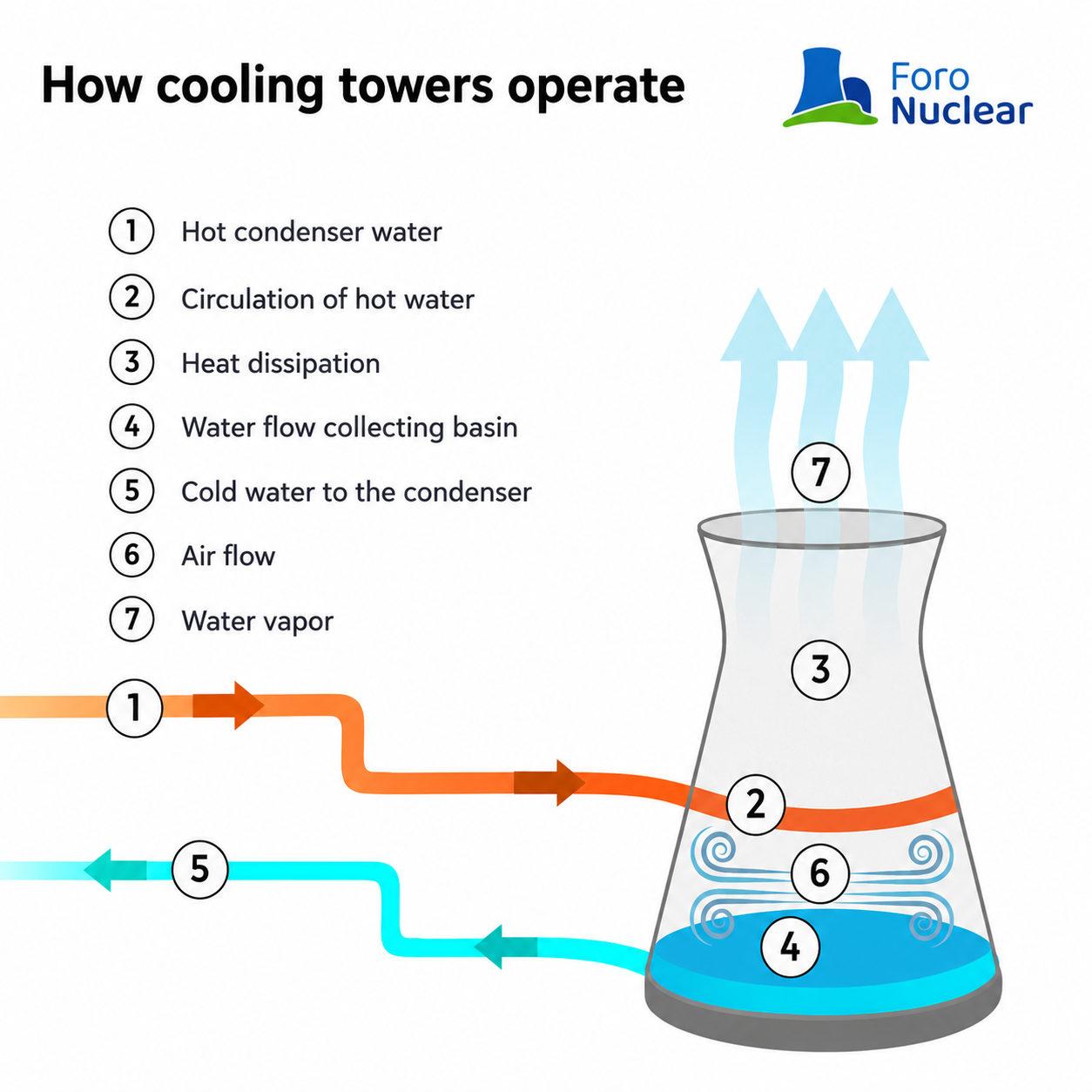
Meanwhile, the Almaraz nuclear power plant in Cáceres uses the Arrocampo artificial reservoir, which was specifically designed as a closed-loop cooling system. This reservoir functions as a large heat exchanger independent of the flow rate or temperature of a natural river, allowing the plant to continue operating normally even under extreme heat conditions.
The Vandellós II nuclear power plant in Tarragona is cooled with water from the Mediterranean Sea. The sea has a much greater thermal capacity than a river, meaning it absorbs heat more efficiently without experiencing a significant increase in temperature. In addition, sea temperatures fluctuate far less than river temperatures, even during heatwaves.
It is important to note that if a nuclear power plant reduces output or temporarily shuts down during periods of extreme heat, this is done solely to protect the aquatic ecosystem by preventing the discharge of excessively warm water into the river, while fully complying with regulatory limits. Such power reductions or shutdowns are not related to nuclear safety in any way.


