What is nuclear fuel?
Nuclear fuel is the material used in nuclear reactors to produce energy through a chain reaction of nuclear fission. Unlike fossil fuels, it is not burned: its atoms are split to release a large amount of energy in the form of heat, which produces steam that generates electricity.
Uranium
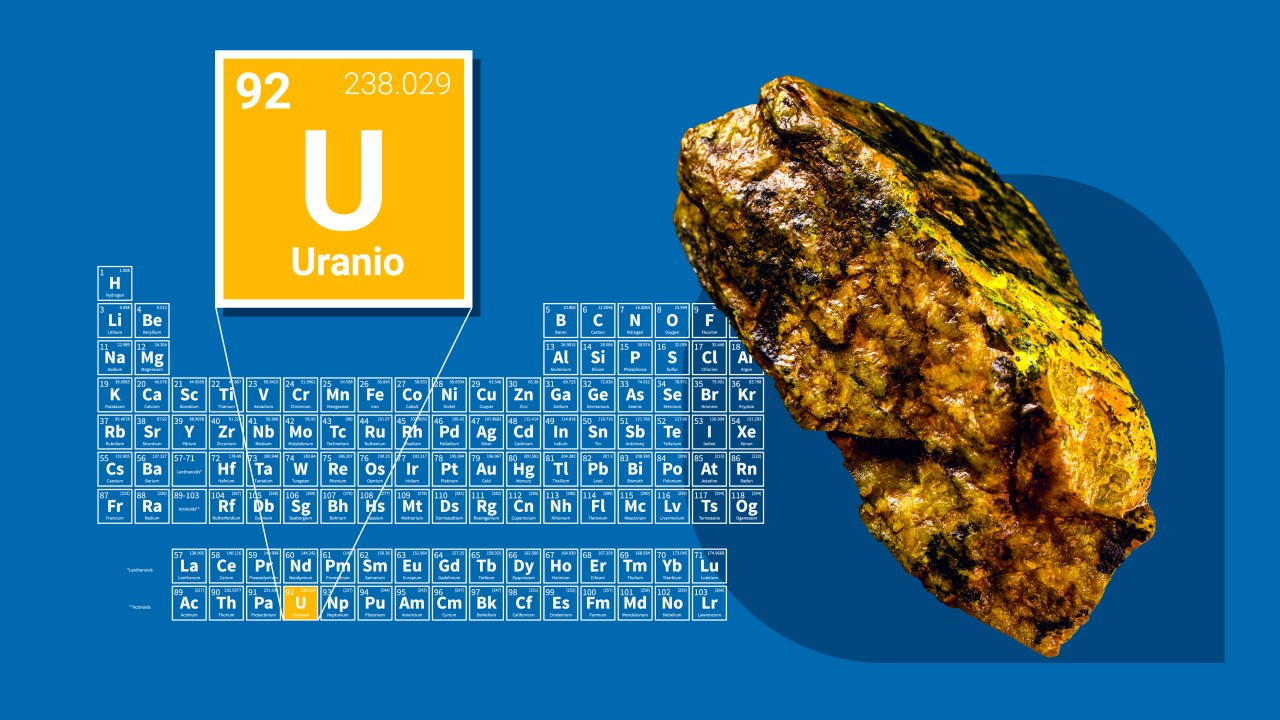
The fuel used in nuclear power plants is uranium.
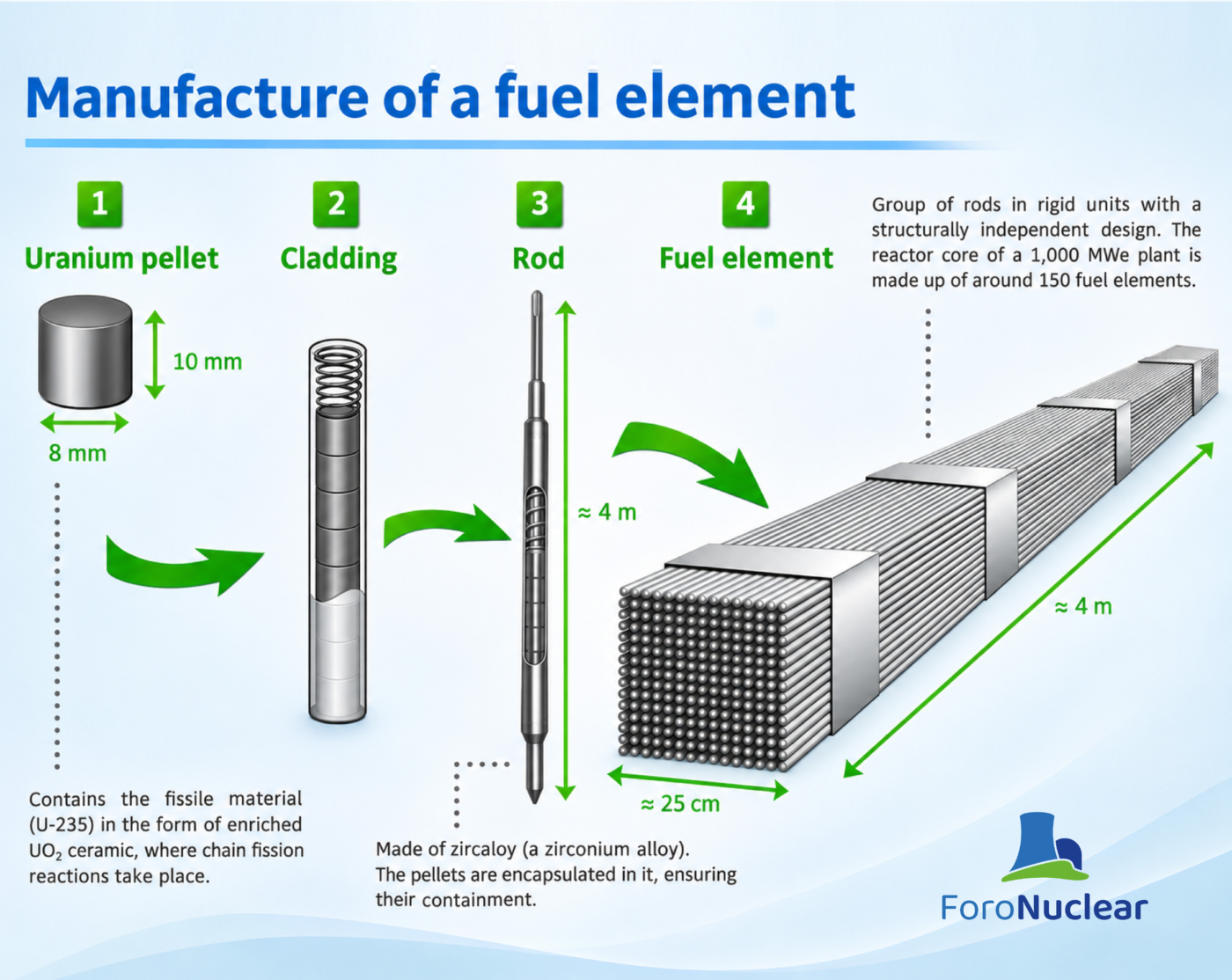
Most commercial reactors use slightly enriched uranium dioxide (UO₂), manufactured in the form of small ceramic pellets. These pellets are placed inside metal tubes known as fuel rods, which are then grouped together to form fuel assemblies housed in the reactor core.
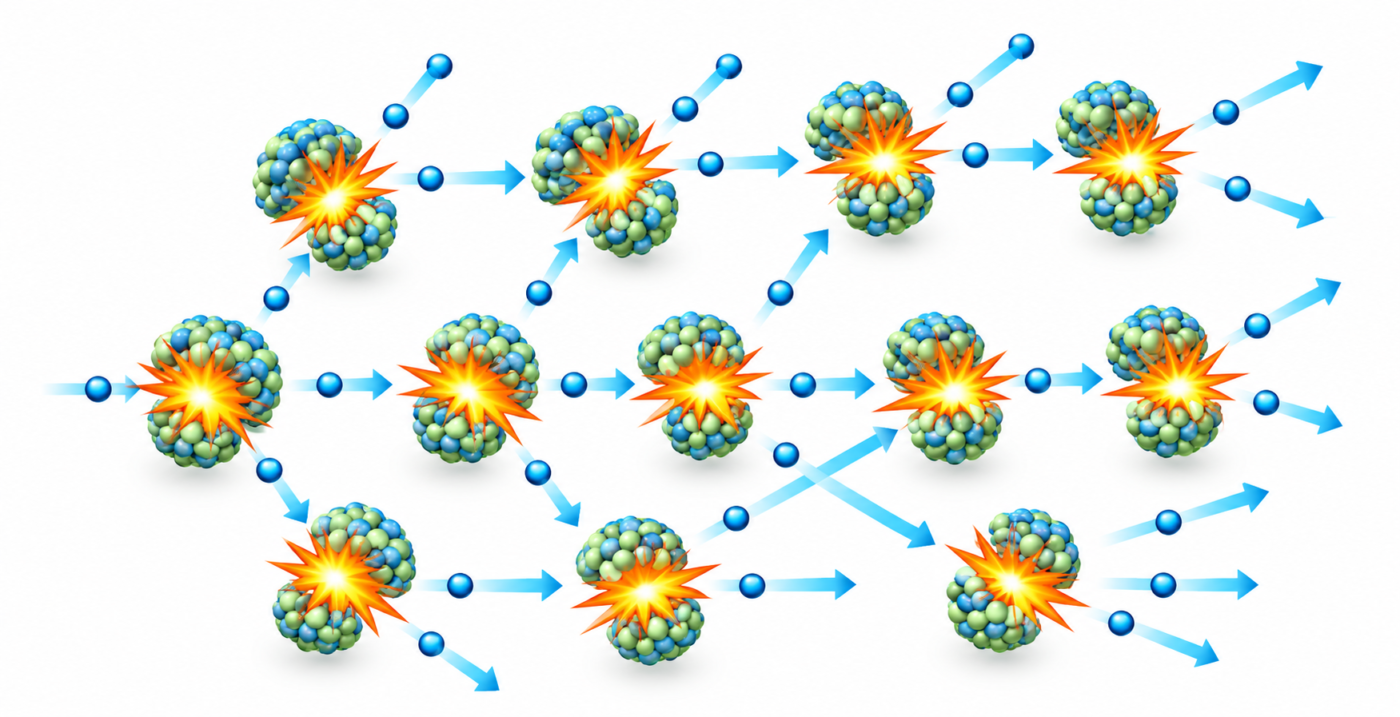
When a uranium-235 nucleus absorbs a neutron, it becomes unstable and splits into smaller nuclei. This process of nuclear fission releases energy and additional neutrons, which can trigger further fissions. This creates a chain reaction that is maintained under controlled conditions in the reactor.
The nuclear fuel cycle
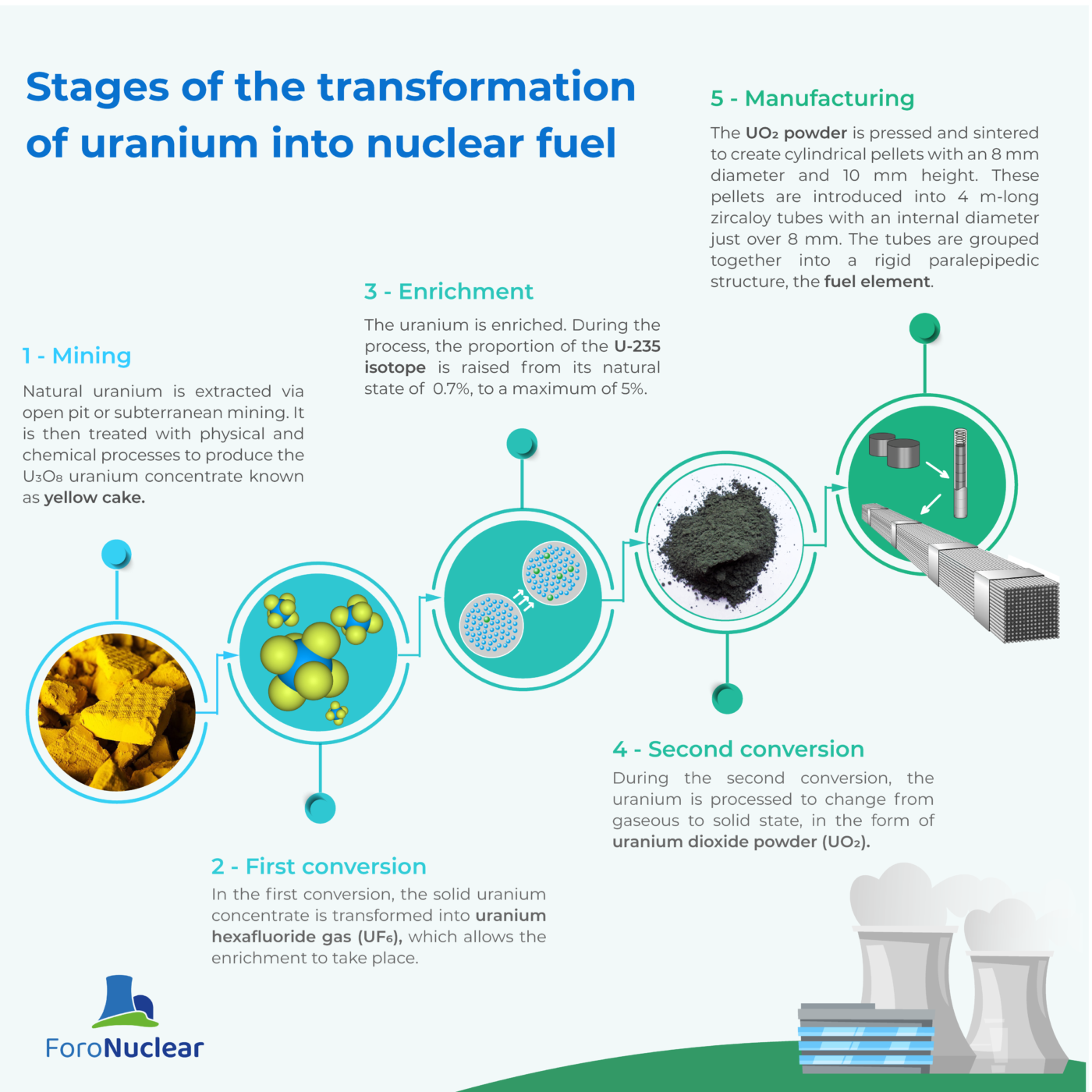
Before reaching the reactor, uranium undergoes several processing stages. After being extracted from the Earth's crust, the ore is processed to obtain a uranium concentrate known as yellowcake. It is then converted and, for most reactors, enriched to increase the proportion of uranium-235. Finally, it is transformed into uranium dioxide and manufactured into fuel pellets and fuel assemblies.
Fuel assemblies generally remain in the reactor for three operating cycles, spending a total of three to five years in the reactor core. Over time, their ability to efficiently sustain the chain reaction decreases, and they are replaced with new fuel assemblies.
During each refuelling outage, approximately one-third of the fuel assemblies in the reactor core are removed: 60 out of 157 in a 1,000 MW pressurised water reactor (PWR) nuclear power plant.
The Juzbado nuclear fuel manufacturing plant
Spain has a nuclear fuel assembly manufacturing plant in Juzbado, in the province of Salamanca, owned by the state-owned company ENUSA Industrias Avanzadas, S.A. The plant began operations in 1985 and has since manufactured nearly 30,000 fuel assemblies.
In 2025, a total of 691 fuel assemblies were manufactured, comprising three types: 433 for pressurised water reactors (PWRs), 216 for boiling water reactors (BWRs) and 42 for VVER-440 reactors, representing a total of 251.25 tonnes of uranium equivalent (tUeq).
Of the fuel assemblies manufactured, 69% were exported to nuclear power plants in France, Belgium and Finland, while the remainder were supplied to Spanish nuclear power plants.
Source: IAEA