Italy's Senate clears the way for the return of nuclear energy
Last Wednesday, September 23, the Italian Senate gave the green light to a framework law establishing the legal foundations for a possible return to nuclear energy in the country. The law was definitively approved by 81 votes in favour, 51 against and 7 abstentions, after the Chamber of Deputies had backed the legislation in June with 155 votes in favour, 86 against and 8 abstentions.
Italy once had four nuclear reactors in operation, but after the 1986 Chernobyl accident, the referendum held in 1987 set the country on the path towards gradually abandoning its nuclear programme. The last Italian nuclear reactor ceased operations in 1990. Howewer, Italy's relationship with nuclear energy did not end there, as the country imports nuclear-generated electricity from other nations. After 40 years, the Italian government believes that technological and safety advances justify reopening the debate on nuclear power.
A delegating act
The legislation approved by the Senate is a delegating act. It is not an immediate authorisation to build power plants; it serves as the regulatory basis needed to propose, assess and approve projects aimed at developing next-generation nuclear technologies. Specifically, the law authorises the Italian government to draft implementing decrees within one year. These will include, among other measures, authorisation and licensing procedures for power plants, safety regulations, waste management provisions and criteria for selecting future sites.
The Italian government believes that techonological and safety advances justify reopening the debate on nuclear energy
The Italian government is examining the potential role of small modular reactors (SMRs) and other advanced technologies. SMRs are lower-power reactors than conventional nuclear power plants, and they could be manufactured in modules and adapted to different industrial and energy needs.

The government defends measure as opposition rejects it
The Minister for the Environment and Energy Security, Gilberto Pichetto Fratin, told the Senate that the nuclear debate needed to change in response to geopolitical tensions, instability in the energy market and the need to reduce greenhouse-gas emissions. Pichetto has also placed the potential start-up of the first reactors between 2033 and 2034. The Energy Minister estimates that nuclear power could account for at least 11% of Italy's electricity generation.
The country’s Prime Minister, Giorgia Meloni, has defended the measure as a courageous and sensible decision that will guarantee energy security while also ensuring compliance with the decarbonisation commitments made by Italian industry.
Italy expects the first reactors to begin operating between 2033 and 2034, with nuclear power supplying at least 11% of the country's electricity generation
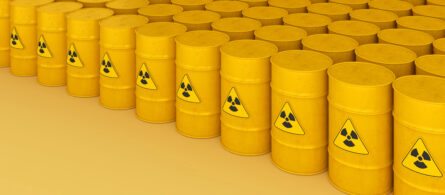
The law has been rejected by opposition parties and environmental groups, which have criticised the cost of the new projects, the timetable for their implementation and the management of radioactive waste.
The Senate's decision does not mean that nuclear power will immediately return to Italy. Instead, it marks the beginning of a new regulatory phase that will depend on the government's ability to approve the implementing regulations, resolve technical and financial issues, and reach social and territorial agreements on the location of the reactors.