Miquel Àngel Ribes
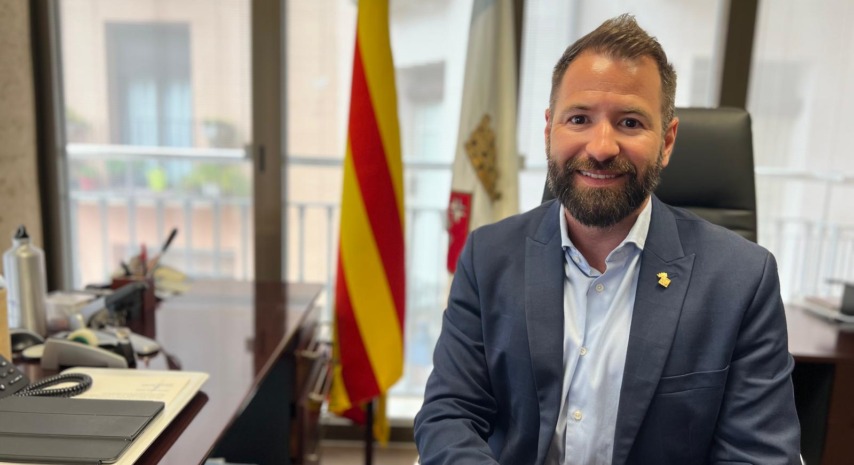
Mayor of Ascó (Tarragona)“The debate isn’t nuclear versus renewables; it’s nuclear versus CO₂”
Miquel Àngel Ribes is the mayor of Ascó, representing the local political group Per Tu (XTU). His municipality is home to the Ascó I and Ascó II reactors, while the province of Tarragona also hosts the Vandellós II nuclear power plant. He has publicly argued that “an extension for Almaraz would set a precedent and offer hope to Catalonia’s nuclear power plants”, which supply around 60% of the region’s electricity. This interview was held after the announcement authorizing the nuclear power plant in Extremadura to operate until 2030. Here, Ribes shares his views on the decision.
What precedent does Almaraz’s continued operation set for the nuclear power plants in Tarragona? Do you believe the reasons that justified extending the operation of the plant in Extremadura also apply to Ascó and Vandellós?
From the perspective of Spain’s energy system, I have no doubt. Nuclear energy is the ideal partner for renewables during the energy transition because it provides stability to the system, and this will not change in the short term. Thus, when the time comes to consider the continued operation of Ascó and Vandellós, the criteria that supported extending Almaraz’s operation will still apply. Regarding the impact on the local area, we are working hard to diversify our economy, but despite our progress, we need more time to offset the effects of closing our reactors.
What specific effects would the closure of Ascó have on employment, population, local businesses and public services in the municipalities of the Ribera d’Ebre area, which include yours?
As I mentioned before, the impact would be substantial. A large proportion of municipal revenue comes from the nuclear power plants. The same is true of direct and indirect employment in our area, as the vast majority of economic activities depend in one way or another on the nuclear sector. Nuclear energy is the area's main economic driver.
What roadmap are Ascó Town Council and the municipalities of Ribera d’Ebre proposing to achieve a review of the closure plan for Catalonia’s nuclear power plants?
We will continue to play an active role in the efforts being made by various sectors to inform the public and, in particular, policymakers. This issue can only be addressed through public debate, but there are highly reasonable arguments to take on this challenge and succeed.
"Nuclear energy is the main economic driver of our area"
What specific request would you like to make to Spain’s central government, the Government of Catalonia and the companies that own the nuclear power plants?
That they take us into account. We and other communities that have hosted nuclear power have always been welcoming and responsible. We have earned the right to have a say in any decisions going forward. And we make no secret of our position: we support the continued operation of nuclear power plants with all necessary safety guarantees, as we always have.
Does it surprise you that this technology continues to be associated with political and ideological debate?
No, because we have been dealing with this for a long time. But it should not be this way. We need to move beyond overly ideological ways of thinking. Providing society with the energy it needs is not a matter of political affiliation; it is a scientific and technological issue. And a matter of pragmatism.
After years of living alongside the nuclear power plant, how do Ascó’s residents view it, and what role does it play in the town’s identity and everyday life?
As a normal part of everyday life. Our experience shows us that it is a safe industry. Our firsthand knowledge also helps us develop a rational understanding of what it means.
“Our experience shows us that the nuclear sector is safe”
You have stated that nuclear energy is the ideal complement to renewables. What role should each technology play in Catalonia’s electricity system over the coming years?
Renewables should continue to play an increasingly important role. However, we are falling behind because of the emerging difficulties in deciding where to locate solar and wind farms. All the more reason to continue relying on nuclear energy, which also provides the stability that renewables, by their very nature, cannot guarantee.
What arguments would you present to those who claim that nuclear energy holds back the development of renewables?
That this is not the case. With both energy sources complementing each other, we can continue to move ahead with decarbonisation until we phase out fossil fuels. The debate should not be nuclear versus renewables; it should be nuclear versus CO₂ emissions.
If you had to prioritise a single reason for the long-term operation of Ascó—security of supply, decarbonisation or the economic and social protection of the local area—which would you choose and why?
The priority is to ensure the stability of the system to prevent blackouts like the one we experienced in 2025 and to provide competitively priced energy. But the case for decarbonisation is also very important. And, of course, as mayor, I have to consider our municipality’s interests, which means diversifying our economy while continuing to rely on nuclear power as an economic driver for as long as possible.
Do you believe there is currently an economic alternative capable of replacing the jobs and economic activity generated by the nuclear power plant?
I think it is very difficult, especially when it comes to matching the jobs and municipal revenue generated by the nuclear power plants. Still, we are working hard to be ready when the time comes.
“When it comes to nuclear energy, technical considerations must take priority over party politics”
Do you sense concern in the local community?
Inevitably. However, our residents are fairly well informed about energy matters, and most understand that nuclear energy is still necessary. Let us hope that the politicians making the decisions also understand this and put technical considerations ahead of party interests.