Amparo Soler
President of Women in Nuclear Spain"Nuclear technology is a fascinating field full of opportunities"
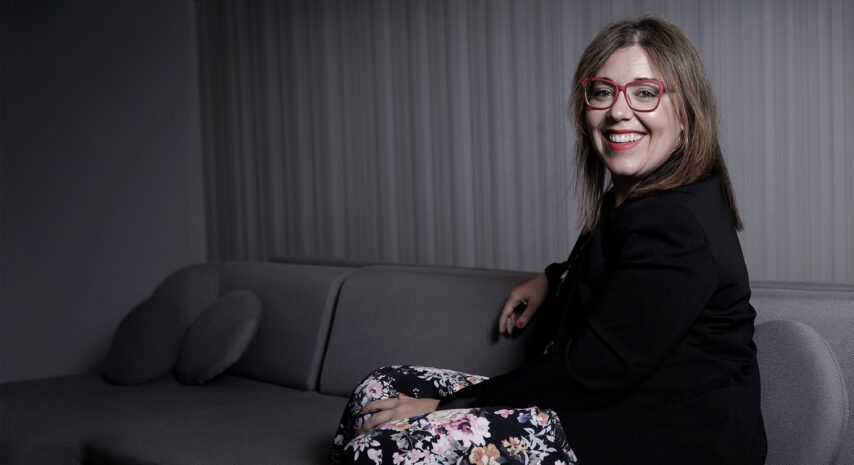
Since February 2024 Amparo Soler has been the president of Women in Nuclear (WiN) Spain, an association of women professionally involved in the nuclear field. In this new phase, WIN Spain is promoting collaboration and networking among their members and developing more outreach and educational initiatives to demystify nuclear energy while continuing to work to empower more women in the nuclear sector. In this interview, Amparo Soler believes listening to and engaging in dialogue with society is essential, addressing its concerns with transparency and empathy. This way, she explains, "it will be easier for nuclear energy to be accepted as a key part of the energy mix."
What are your expectations and goals as president of WiN Spain?
It is a true honor and a great responsibility, which I embrace with enthusiasm. I have the privilege of working with an exceptional Board of Directors composed of 14 individuals with diverse backgrounds and areas of expertise, all sharing the same passion and commitment.
In this new stage we want to strengthen the support network among our members, as we firmly believe that networking and collaboration are essential for personal and professional growth. It is also fundamental to promote outreach and educational initiatives that demystify nuclear energy, highlighting its crucial role in the energy transition and the fight against climate change.
We are especially excited about our recent collaboration agreement with the Spanish Association of Women in Energy (AEMENER), as it reinforces our commitment to the visibility and empowerment of women in the energy industry. Additionally, Women in Nuclear (WiN) Spain holds a prominent position within WiN Global, having been part of the Executive Board for several years. Currently, we are also part of the new Board of Directors, as well as the youngest chapter within WiN Global, known as the Young Generation. Our goal is to capture the interest of younger WiNners and ensure that the new generations feel inspired by and welcome into our community. I would also like to point out that WiN is an inclusive space where men are welcome, as reflected in the presence of a male member of our Board, a pioneering milestone in WiN Spain’s more than 25-year history.
Finally, I would like to express my deepest gratitude to the previous Board of Directors and all the presidents who preceded us. Their efforts and dedication have sown the seeds of what WiN Spain is today.
How would you describe your previous role in WiN as Head of Communications?
It was truly enriching and full of learning experiences. Although it was challenging at first, I took on this role during the preparation for the WiN Global conference in Madrid in 2019, and from that point on I immersed myself in the journey. Little by little, thanks to the incredible team of 14 women that composed WiN Networks, we began to gain visibility across all social platforms, allowing us to grow in impact and outreach.
During the pandemic, we managed to give a strong boost to our communication. This made us a reference and led to us receiving the WiN Award in 2021. This experience reaffirmed my commitment to outreach and education, the fundamental pillars of WiN's mission, and inspired me to continue working to empower more women in the nuclear sector.
"Nuclear energy is a topic that generates debate, and the best way to contribute to it is with truthful and well-communicated information."
What actions do you believe can be implemented to promote a more informed public dialogue about nuclear energy?
Through clear, transparent and accessible information, creating engaging content that manages to catch the attention of different audiences. Nuclear energy is a topic that generates debate, and the best way to contribute to it is with truthful and well-communicated information. Education is key in this process; it would be ideal to organize more open forums, workshops and webinars where people can ask questions, debate and acquire a first-hand understanding of nuclear energy: what it is, how it works and its real impact. Sharing real stories, showcasing success cases and presenting the latest technological advances is an excellent way to dispel myths and build trust.
In recent years, thanks to communicators like Operador Nuclear and The Good Mafo, as well as the initiatives from Nuclear Young Generation, the Spanish Nuclear Society, WiN and Foro Nuclear, we are seeing how nuclear energy is becoming more accessible to the general public.
At Women in Nuclear we also consider it essential to direct our efforts toward women, as they are generally more reluctant regarding nuclear energy.
What was your main motivation for builidng your career in the field of nuclear energy?
I didn’t come to nuclear energy by chance, but rather out of vocation. My father used to buy the Muy Interesante magazine every month and collected them. When I was 13 I read an article about Nikola Tesla and it was fascinated. A few months later they published one about Marie Curie, and that was when I told my parents that I wanted to be a nuclear engineer. They were obviously surprised, but they have always supported me.
"Since I was 13, I knew I wanted to be a nuclear engineer"
From that moment on I leaned towards science and enrolled in Industrial Engineering at the Polytechnic University of Valencia; I chose the energy specialty with a nuclear sub-focus. Industrial Engineering was an experience that profoundly shaped me. The first few years were particularly challenging, and I even came close to quitting. However, thanks to my university friends who helped and encouraged me not to give up, I managed to pull through. In my fourth year I chose the energy specialty, and in my fifth I ventured into the nuclear field, where I began studying simulation codes and modeling nuclear plants and fuel. Later I traveled to the United States to complete my final project at Penn State University, where I stayed to pursue a specialized Master’s Degree in nuclear engineering thanks to a scholarship awarded by Mitsubishi Heavy Industries. After three years in the United States I moved to Munich to work at GRS as an expert in thermohydraulic codes.
"I currently work at Nfoque Advisory Services, a Spanish consulting firm, leading the nuclear department"
In 2012 I returned to Spain and settled in Madrid, where I worked for several years in the fuel department at Iberdrola Engineering and Construction. I now work at Nfoque Advisory Services, a Spanish consulting firm that combines financial consulting with a technological and industrial branch. I have been leading the nuclear department here for several years. My professional life has always been linked to R&D, modeling and comprehensive simulation of nuclear power plants, both under normal and transitory operating conditions.
What achievements would you highlight in your professional career, and how did you accomplish them?
One of my greatest achievements has been completing my doctoral thesis this summer while fulfilling my professional role at Nfq. It has been a constant challenge; however, the values of hard work and perseverance that my family instilled in me pushed me to keep going and not give up. But this achievement is not mine alone, as I could not have accomplished it without the unwavering support of many people along the way. My team at Nfq has been a fundamental pillar, always willing to help and offer support. I am also deeply grateful to my thesis advisors, my family and friends.
"At WiN we work to give visibility to women in the energy sector"
Another achievement was in 2020 when, thanks to a friend's encouragement, I submitted my candidacy for the Fem'Energia Award in the Young Professional Woman from the European Union and Switzerland category. The jury evaluated my candidacy positively and awarded me the silver medal in my category. This not only means recognition to our work but also a boost to continue striving for the visibility of women in the energy sector.
What advice would you offer women who wish to study careers in nuclear technology?
My main advice is to dare to follow their passion without fear. Nuclear technology is a fascinating field full of opportunities and plays a crucial role in a sustainable energy future. Although it may sometimes seem like a male-dominated sector, more and more women are taking on key positions, and our presence is essential to bring new perspectives and approaches.
I would recommend that they stay curious, never stop learning and always seek out the support of mentors and professionals. Continuous learning and networking are powerful tools to advance in any career, but they are especially crucial in the nuclear sector, where innovation and safety are fundamental. I would also encourage them to join associations like WiN, where they will find a network for support and growth. Here they will have the opportunity to connect with other professionals, share experiences and feel empowered in their journey.
What specific actions could companies and institutions take to encourage girls' interest in STEM fields?
There is no single formula, but with creativity, passion and commitment you can implement actions that truly make a difference. One of the most effective strategies is establishing mentorship programs where STEM professional women guide and support young girls who are interested in this field. These initiatives not only provide role models but also help girls build confidence in their abilities and envision a future in these careers.
It is also essential to organize inspiring talks in schools and high schools, inviting outstanding women from the STEM field to share their stories and achievements. Promoting contests and challenges specifically designed for girls is another valuable initiative. Additionally, arranging visits to tech companies, laboratories and research centers is crucial, as it provides the opportunity to get first-hand experience of how STEM disciplines are applied in the real world.
"It is fundamental to encourage and share success stories of women who thrived in their STEM careers"
Another effective strategy could be organizing open house days at company facilities. It would also be beneficial for companies to consider sponsoring and participating in youth STEM competitions, such as science fairs, hackathons or robotics contests. This, along with networking events, would further enrich their experience and connection with the STEM world. Lastly, it is fundamental to encourage and share success stories of women who thrived in their STEM careers.
What new activities and educational or communicative initiatives will WiN Spain be launching?
At WiN Spain we are evolving with a fresh outlook on the future of training and communication in the nuclear sector. We want to go further by promoting initiatives that not only focus on technical aspects but also address more human skills essential to grow and stand out in the professional world.
Imagine a nuclear engineer who, besides being an expert in her field, knows how to negotiate a salary, lead teams confidently and speak publicly with the same conviction she shows when advoating for a reactor model. That is our vision: to train women who are not only technical experts but also leaders. This is why we are preparing a series of workshops on leadership and negotiation, because we believe an empowered woman not only masters numerical codes but also has the tools to define her path and her value in the industry.
"We are convinced that communication is everything. Knowing how to communicate what you do is as important as doing it"
We are also convinced that communication is everything. We live in a world where knowing how to communicate what you do is as important as doing it. That's why one of our upcoming focuses will be on training in communication skills and storytelling. We do not want professionals in the field to just speak about nuclear energy; we also want them to speak in a clear, engaging way that connects with the public, dispelling myths and building trust.
And, of course, we believe in the power of connections and the strength of networks. We want to enhance spaces for networking and building strategic alliances. Through networking and afterwork events and collaborations, we want our professionals to feel they are part of a community where mutual support and opportunities go hand in hand.
We are also expanding our collaborations with other women's associations because together we can reach further. With all these initiatives, we at WiN Spain seek to go beyond simple training: we want to transform, from technical knowledge to leadership, how women see themselves in the nuclear sector and, above all, how others see them.
At WiN Spain we are firmly committed to the continuity of nuclear power plants in our country
Among your goals and activities, are you considering actions for the continuity of nuclear power plants in our country?
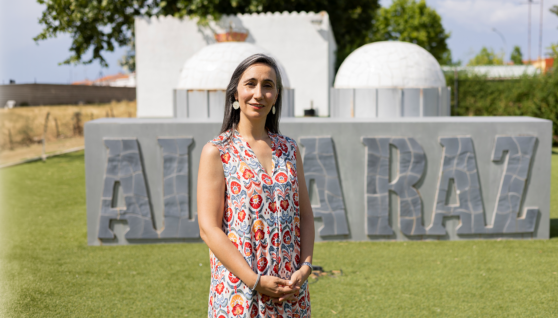
At WiN Spain we are firmly committed to the continuity of nuclear power plants in our country, and we fully align ourselves with the #SalvemosAlmaraz (Save Almaraz) initiative that is being wonderfully driven by the Young Nuclear Generation in Spain.
We have also created a specific WiN Almaraz group that has already over 60 women, both from the plant itself and from nd collaborating companies. This group is full of enthusiasm and energy and is dedicated to promoting public awareness and understanding of the importance of keeping the two Almaraz reactors operational. These reactors not only contribute significantly to the country's energy supply; their operation also has a positive economic and social impact on the area, creating jobs and supporting the local community.
We are convinced that, by empowering our colleagues and fostering collaboration among women in the field, we can play a key role in the defense and continuity of our nuclear power plants.
How can we highlight the importance of nuclear energy in the energy transition and dispel the myths surrounding this technology?
We need to change the conversation and, instead of focusing solely on risks, talk about how nuclear energy is helping to combat climate change. It’s not just a source of energy; it’s a key piece of the puzzle, as it can generate electricity on a large scale without emitting CO₂. This is something people need to hear more about.
Another important aspect is sharing stories that resonate with people, speaking about countries that have already reduced their emissions thanks to nuclear energy, or about new technologies that make reactors safer and more efficient. We need to focus on what nuclear can offer, like 24-hour energy stability, which complements renewables quite well and always guarantees energy availability.
“Nuclear is one of the safest forms of energy there are”
To debunk myths, the best approach is to present data simply and directly. Many people don’t know, for instance, that nuclear is one of the safest forms of energy compared to others, regarding accidents or impact on health . That’s why it is crucial to create accessible content like infographics, short videos, social media posts… Dissemination must be diverse and reach all audiences. On social media, we can catch attention with dynamic and fun content for younger people, while in more traditional media we can focus on reports that debunk myths clearly, with testimonials from experts.
You have worked for Nfoque Advisory Services since 2014. What does your work entail, and what services does Nfoque offer Spanish nuclear power plants?
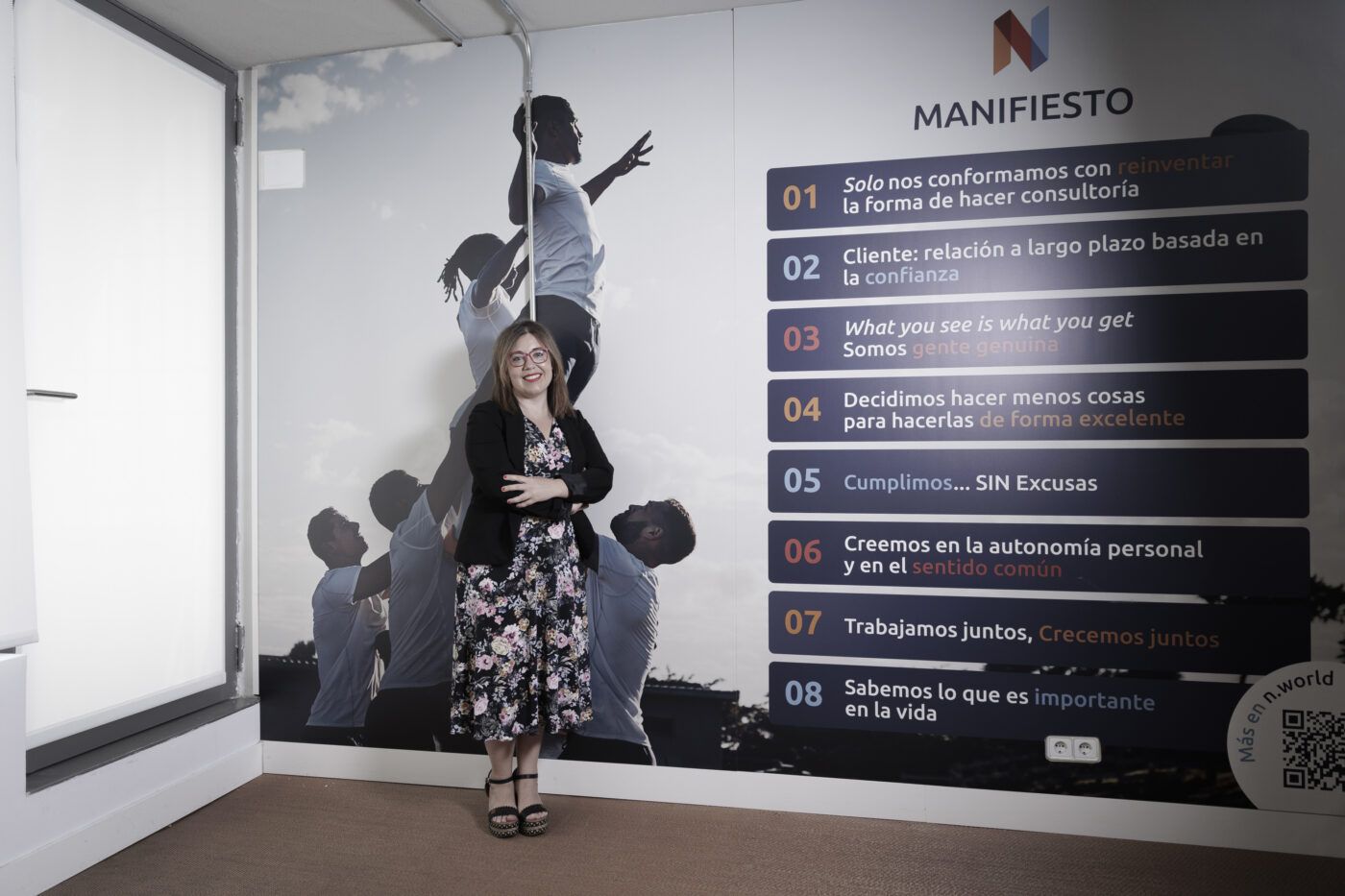
Nfoque Advisory Services (Nfq) is a 100% Spanish strategic consulting firm founded in 2009 and dedicated to providing innovative solutions across various sectors. With a team of approximately 2,000 professionals, we are present in 20 countries operating from five offices and collaborating with around 150 clients, primarily in Europe and America.
Within Nfq, the nuclear branch is part of the industrial sector. For over ten years, we have worked with four of the seven nuclear reactors in Spain, establishing long-term, trusted relationships with the country’s leading electric utilities. Our value proposal is based on an End-to-End vision that integrates each stage of the modelling and simulation chain to optimize safety and efficiency. We focus on key areas such as nuclear safety, system modelling, risk scenario simulation, digital twin creation and operational transient analysis. We are also dedicated to the maintenance and development of licensing codes, offering customized solutions in neutronic, thermohydraulic and thermomechanical nuclear codes.
"At Nfq’s nuclear branch we focus on safety, system modeling, risk scenario simulation, digital twin creation, and operational transient analysis"
In the past two years our team has grown considerably, and is now made up of a multidisciplinary group of engineers, physicists, mathematicians and doctors in nuclear engineering. We are proud to have been named the Best Nuclear R&D Project of the last ten years by the Spanish Institute of Engineering, highlighting our capacity for innovation in the field.
How do you see the future of nuclear energy in Spain and around the world?
The future of nuclear energy, both in Spain and globally, brings many challenges and great opportunities. At the international level we are seeing a renewed interest in nuclear energy as a crucial tool to meet decarbonization goals and combat climate change. Countries like France, the United Kingdom and the United States are investing in modernizing their existing plants and developing new technologies, such as Small Modular Reactors (SMRs) and Generation IV reactors. These innovations not only provide flexibility to adapt to the energy needs of the future but also underscore a commitment to a safer and more sustainable energy supply.
"More and more voices within the sector and society at large are acknowledging that nuclear energy is key"
In the Spanish context, the situation is a bit more complex. With the planned closure of our plants under the National Integrated Energy and Climate Plan, it’s natural to feel concerned. Still, I’m optimistic that this outlook may change. More and more voices within the sector and society at large are acknowledging that nuclear energy is key to maintaining the stability of the electric system and ensuring a steady supply.
Next year will be crucial to see how the trend evolves in Spain. I trust that, with open and proactive dialogue about the benefits of nuclear energy, we can guarantee a future where this technology continues to play an essential role in our country’s energy system.
Would you like to add anything else?
The future of nuclear energy does not just depend on technology, but also on how we communicate and connect with people. Nuclear energy plays a fundamental role in the energy transition, but for it to be truly accepted, it is essential that we listen and engage in dialogue with society, addressing their concerns with transparency and empathy.
Ultimately, what really matters is that we work together to build a cleaner, more balanced, and sustainable energy future, where each technology has its place and adds its value. Nuclear energy can and must continue to contribute to a safer world for future generations.
I would also like to highlight the importance of talent, especially female talent, in this sector. At WiN we are promoting greater female involvement not just in technical roles but also in leadership, communication and strategic decision-making. We want a growing number of people, especially women, acknowledging the real value of nuclear energy and its role in a more sustainable future.
The more informed we are, the easier it will be for society to accept nuclear energy as a key component of the energy mix. At WiN we will continue working to raise awareness, build trust and bring nuclear technology closer to people. This is a challenge, but also an exciting opportunity to redefine how we understand and talk about nuclear energy. And, in this process, diverse voices and female talent will be key to opening new paths and overcoming prejudice.