Carlos Hidalgo
Director of the National Fusion Laboratory at CIEMAT“Nuclear fusion is the most efficient massive energy that exists in nature”
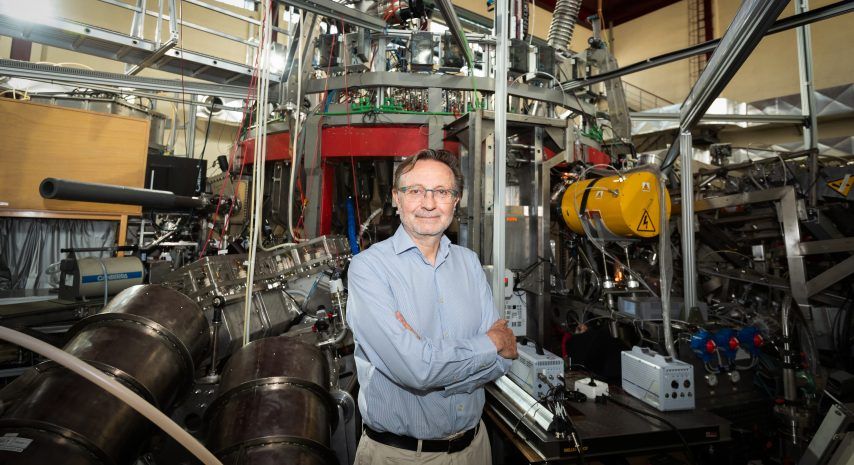
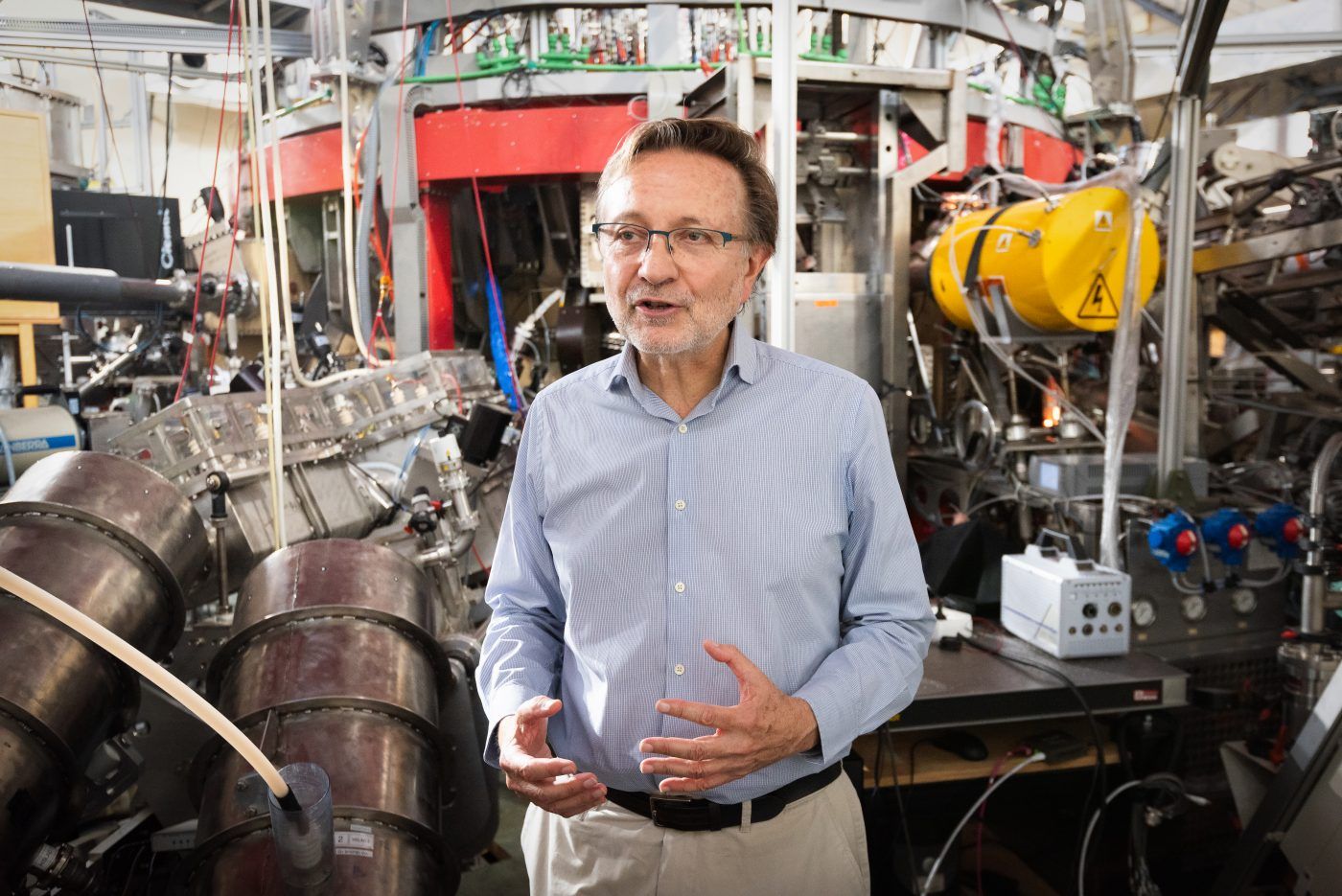
Carlos Hidalgo is the Director of the National Fusion Laboratory at the Research Center for Energy, Environment and Technology (CIEMAT), a department in charge of research on nuclear fusion science and technology. He has a Doctorate in Physics from the Complutense University of Madrid, is President of the Science and Society Group of the European Physical Society (EPS) and teaches the Erasmus Mundus Masters’ Degree in Plasma and Nuclear Fusion Physics.
In this interview with Foro Nuclear, he highlights the recent advances in nuclear fusion and the current situation of Spain and Europe in this regard. He also reveals the challenges of the sector and the demands of the market. "The dream of fusion coming to society is no longer unattainable," he affirms.
How do you reproduce on Earth the energy produced in the stars?
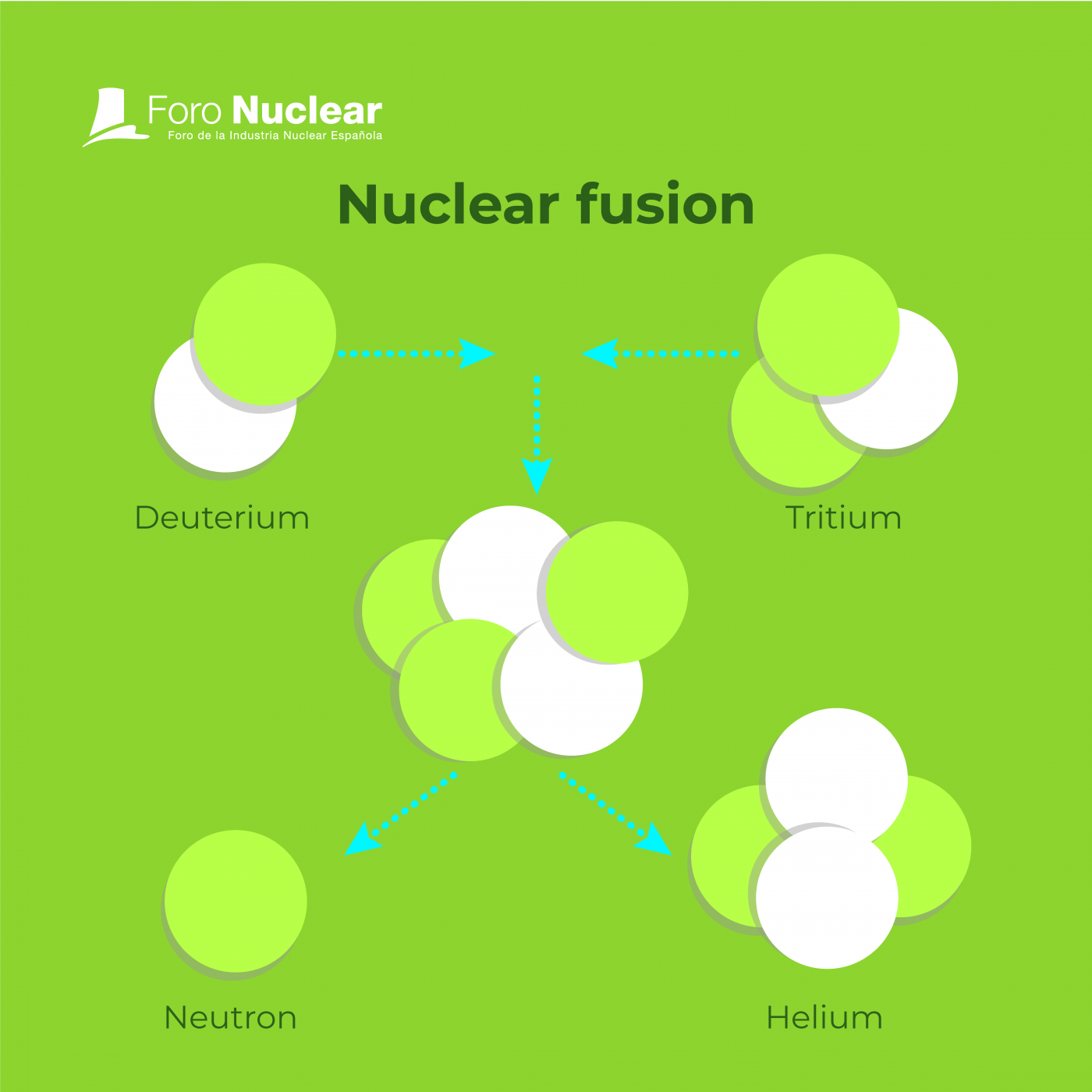
Fusion energy is what keeps stars and the universe alive. The essence of nuclear fusion is that, by merging nuclei from light elements, typically deuterium and tritium, it gives way to heavier elements. In this process there is a small change in mass; this small change is multiplied by the square of the speed of light (Einstein's mythical equation) and gives way to the most efficient massive energy existing in nature.
“It is truly impressive that humans have been able to discover the energy that keeps the universe alive"
What has been your path, and what recent advances in nuclear fusion have been achieved?
Historically speaking, the scientific community has explored two strategies to achieve nuclear fusion: inertial and magnetic strategies.
The advances achieved in 2022 show that humans already made their dream come true: achieving controlled nuclear fusion in a laboratory. Now it is time for the second part of the dream: achieving nuclear fusion for society; that is, when the population can power their refrigerator with fusion energy. This second part of the dream is fascinating as well as a challenge.
"We have achieved nuclear fusion in a laboratory. Now is time for the second part of the dream: achieving nuclear fusion for society"
How can this process be accelerated to reach the second part of the dream?
As a consequence of the great advances in nuclear fusion and the war in Ukraine, which has brought to light the dangers of being dependent on third countries for energy, currently a decision has been made in Europe and also internationally to accelerate the consecutive of the second part of our dream: nuclear fusion energy for society.
In Europe we are analyzing how to update the European roadmap to nuclear fusion in such a way that the entire process is accelerated. Up to now, the European program followed a sequential logic where were tried to achieve goal "a" and then once we reach it follow it with "b", "c" or "d" sequentially. At this moment, the point in consideration is parallel goals. That is: striving for "a" and "b" at the same time to address the great scientific and technological challenges that need to be resolved.
This is a first change in strategy to accelerate the process, but there is also a second one. To date, all research in nuclear fusion has been 100% financed by public funds as it was seen as a faraway dream. Now financing will not be just public; it is necessary to encourage public/private cooperation.
What do you think is the reason for the interest of the media and society in this technology, and its better perception compared to nuclear fission?
Fission energy certainly has advantages. The first one is that it exists, and the technology has been developed. The second one is that its CO2 levels are very low. From an environmental point of view, we should consider it a green energy.
"We should consider nuclear fission a green energy because of its low emissions"
The big problem that fission energy faces is social acceptance, and thus we probably need to improve communication strategies. In the case of nuclear fusion, society has perceived the energy that moves the universe, massive and environmentally sustainable.
“Society has perceived that nuclear fusion is the energy that moves the universe. It considers it massive and environmentally sustainable."
Fusion obviously has one disadvantage: it is still in development and non-operative. There is a big scientific and technological challenge ahead, but society finds this great challenge fascinating. Fusion energy is perceived as fascinating, massive and sustainable energy that will be revolutionary for humanity.
In your conferences, you affirm that Spain is very well positioned regarding fusion. Do you think that your previous experience in nuclear fission power plants had something to do with this?
If we are going to talk about the fusion program I cannot overlook CIEMAT, the Spanish coordinator of the European program. The goals of the Spanish fusion program are two; there is a mid-term goal, which involves making the dream of fusion energy a reality, which is necessary to complete in order to have fusion energy for society.
There is a shorter-term goal: involving the entire Spanish R+D+i system and the Spanish industry in the international fusion program. This means a large investment in components and high-technology services. A network of universities and industries as well as R+D+i public centers has been established, and we have reasons to be proud.
“The Spanish fusion program is one of the paradigmatic examples of great scientific success ”
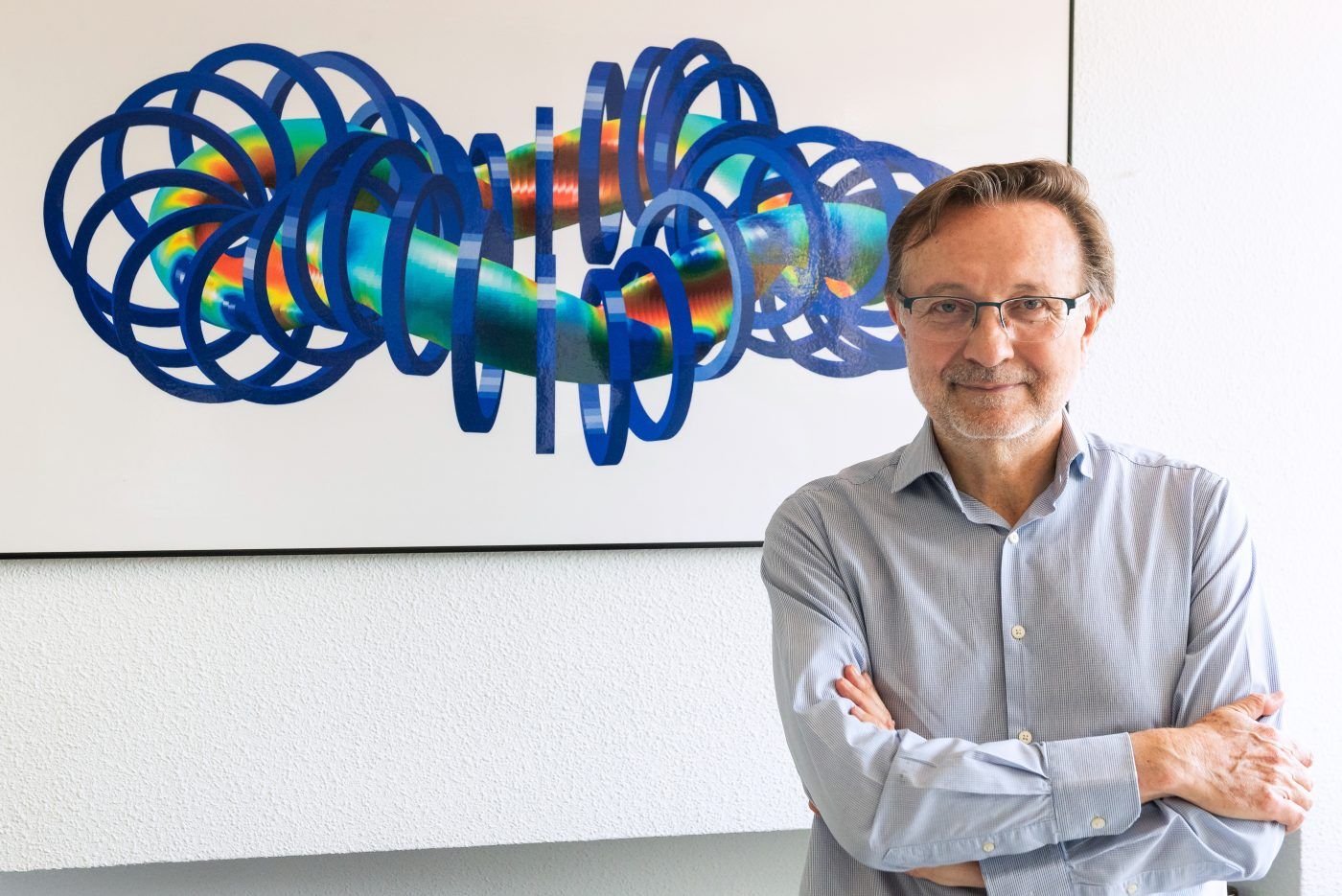
This shows how the Spanish fusion program is one of the paradigmatic examples of great scientific success as well as industrial commitment. Specifically speaking, in the ITER Fusion Project Spain is second country with the most contracts awarded. This success is the consequence of investing in the TJ-II Stallarator Project in CIEMAT and having an industry that is very well-positioned in nuclear technology.
Do you think fusion will coexist along with current nuclear fission plants?
We are at an energy crossroads motivated by the challenge of climate change. When facing these challenges all energies are necessary, each with its own advantages and disadvantages. I believe all are necessary in the energy mix, including consolidated energies such as fission and developing energies like fusion. Obviously it also includes energies like solar, wind, biomass... all are necessary, both those already in operation and those that, being massive and environmentally sustainable like fusion, must be supported and promoted.
“We are at an energy crossroads motivated by the challenge of climate change"
Would you like to add a message for those who do not believe that commercial fusion will be a reality?
Every time these issues arise I give a historical reference: Leonardo da Vinci; his dream was to be able to fly, but he never saw it turned into reality. In his time it was regarded as a madman's dream; it was necessary to wait almost 500 years for humans to be able to fly.
“We will have nuclear fusion in our houses just as we made Leonardo da Vinci's dream of flying a reality"
Science has always advanced safely at large scales, but now all is changing. The rhythm of innovation has risen tremendously, and the dream of achieving nuclear fusion for society - energy in your refrigerator, in your home - is no longer an unattainable dream. It is a dream for which we must all commit; we need to work for the well-being of the next generation, for the development of a better society in the future. I hope these arguments convince those who doubt the need to invest in these great projects. Humans will achieve commercial nuclear fusion just like they achieved flying, Leonardo da Vinci's dream.