Diego Rodríguez
Research Manager at the Foundation for Applied Economic Studies (FEDEA)"It is unreasonable to discard nuclear energy"
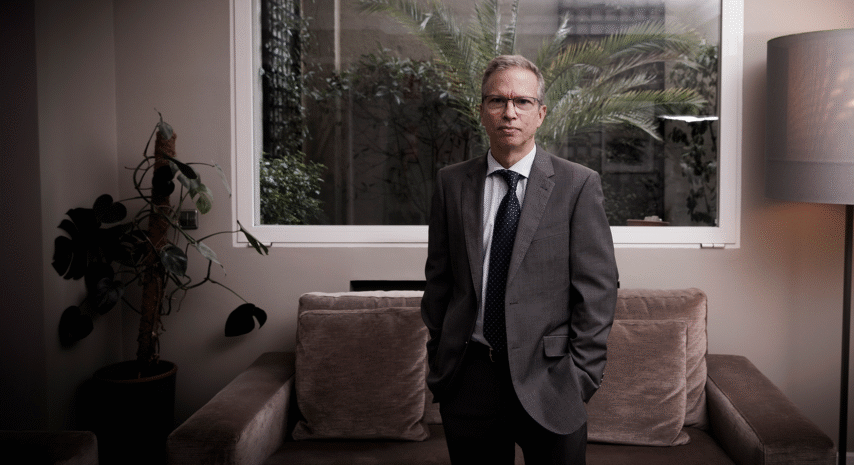
Diego Rodríguez is a Professor at the Department of Applied Economics at the Complutense University of Madrid and Associate Researcher at the Foundation for Applied Economic Studies (FEDEA). In his recent analyses on achieving the targets of the Spanish National Integrated Energy and Climate Plan (PNIEC) (June) and on the future of the Almaraz nuclear power plant (September), he recommends delaying Spain’s nuclear phase-out calendar. In this interview, he argues that the decision to shut down nuclear power plants should be based on a realistic assessment of the expected situation in the electricity sector in 2030, which may not fully align with the objectives set out by the PNIEC.
What are FEDEA’s main research goals, and how are they related to the energy sector?
FEDEA just turned 40, and our mission has always been to be a bridge between academia, civil society, and policy makers. We have carried out extensive research and dissemination work in several areas of the Spanish economy, such as public finances and pensions, the labour market, taxation, and infrastructure, among others. In recent years, we also developed research and outreach activities in the field of energy and the environment, given the evidence that the energy sector is undergoing profound transformations in the context of the energy transition toward more decarbonized forms of generation and consumption.
“We provide rigorous, data-based analyses that contribute to the public debate and to a better policy design”
Our goal at FEDEA is to offer rigorous, data-based analyses and propose improvements that contribute to the public debate and to the design of public policies aligned with the general interest.
You were part of the 2018 Commission of Experts on Energy Transition with Energy, Tourism and Digital Agenda Minister Álvaro Nadal. What conclusions were drawn regarding the role of nuclear energy in Spain?
I was fortunate to participate in this Commission after completing my term at the Spanish National Commission for Markets and Competition. The Commission’s role was defined by the regulation that created it and was based on developing a set of scenarios on the evolution of the energy sector. These scenarios provided a general framework from which, following the mandate of the Council of Ministers, a broad set of energy policy proposals was created in areas such as price signals, market functioning, sustainable mobility, efficiency, and networks, among others.

The report was finalized in April 2018, before the signing of the Protocol of Intent for the orderly closure of Spain’s nuclear power plants. In the report's scenarios, we did not alter the existing nuclear fleet; in fact, we analyzed how extending the operational lifetime of nuclear plants could impact the Enresa fee.
“In the Commission of Experts’ report on energy transition, we stressed the need to maintain synchronous generation capacity in the system”
In the report we also emphasized the importance of maintaining system security, particularly the need to retain synchronous generation capacity amid the ongoing transformation of the energy generation mix. This is a crucial issue, especially given the role of traditional thermal generators, and it has resurfaced after the power blackout in April 2025.
“In Spain, expert committee recommendations are very rarely taken into account”
Do you think the recommendations from that Commission were taken into account?
In Spain, there is a certain tradition of creating expert commissions that carry out intense, unpaid work, but whose proposals are rarely implemented. This was the case with the energy transition scenarios report. The document, which was unanimously approved by the 14 experts involved, included various regulatory improvement proposals that have yet to be developed. Most of them may never be adopted, although some specific measures—such as the capacity mechanism we proposed—are currently being implemented.
Do you believe energy policy makers listen enough to the scientific and technical community?
Less than they should. We all know that the “policy” part in energy policy often weighs heavily, and that discussions in this field frequently have an ideological component. Tradition also plays a role. In that context, the scientific and technical community can bring rationality to the debate and help reduce the tendency to conduct analyses based on assumptions rather than data—for instance, by evaluating which of the available solutions achieve the stated objectives at the lowest possible cost.
The scientific and technical community can bring rationality to debates"
I believe most of us share the general goal that it is essential to decarbonize the ways we produce and consume energy as a necessary means to fight climate change. But it is clear that the transition has costs, and decision-makers should aim to achieve the best results at the lowest possible cost. This requires a dispassionate assessment of all available options.
Decarbonizing the way we generate and consume energy is essential to advance in the fight against climate change”
Based on your research and your latest study on Almaraz, what are the main reasons to reconsider Spain’s planned nuclear phase-out?
Our analysis of the transformation of Spain’s energy generation mix shows that we are doing very well in solar deployment, moderately to poorly in wind energy, and poorly in storage. This matters because the PNIEC's decarbonization and cost targets were built on assumptions that we now know will not be met. The immediate consequence, as I discuss in the study, is more intensive use of combined-cycle plants. This will naturally lead to higher supply costs and emissions than those expected or committed to by the end of the decade.
Moreover, we expect electricity demand to rise, particularly from data centers, which require continuous, thermal-type generation. It seems unreasonable to give up a non-emitting thermal source like nuclear energy, which perfectly fits these characteristics.
Your studies stress the need to adapt energy strategy to current circumstances and base it on realistic analysis. Do policymakers take such research into account?
As researchers, we must contribute positively to the evaluation of possible policy alternatives. It is true that we tend to be satisfied once our analyses are published, but it is also our responsibility to ensure they are disseminated and, ideally, read and used by policymakers. I have serious doubts that this happens. Politicians often argue that researchers overlook the broader context surrounding decisions. That may be partly true, but I would tell policymakers to focus on rigorous and realistic analyses and not let those contextual factors dictate decisions—especially when solid evidence shows that an alternative would better serve the public interest.
“Public decisions must be based on rigorous and realistic analyses”
What factors explain the renewed global interest in nuclear energy?
Global electricity demand is set to rise substantially in the coming years and decades. Part of this will result from higher living standards in many regions—particularly in Asia and Africa—, but another part will stem from electrification trends: electric mobility, households and offices, industrial substitution of hydrocarbons, and new activities such as data centers. For example, according to the International Energy Agency, global data center electricity demand has grown by 12% annually over the past five years, and total consumption for that activity is already 70% higher than Spain’s total annual electricity use.
A significant share of this additional demand will indeed be met by a higher capacity of renewables, but the sheer scale of the demand increase—and the need to displace large volumes of hydrocarbon-based generation—means many countries are exploring all non-emitting generation options, which obviously include nuclear. This interest will grow as modular nuclear solutions emerge with lower costs and smaller waste streams.
“We must remove the labels that too often frame the debate on the generation mix"
What lessons could Spain draw from these international trends?
Above all, we should move beyond the ideological “labels” that often dominate discussions about the generation mix. Countries that rely on nuclear energy as a complement to renewables do not have governments of a single political persuasion, nor do they promote nuclear in opposition to renewables. All generation technologies have advantages and drawbacks, especially when considering their full life cycles, including equipment manufacturing. But at a time when the priority is to fight climate change, international experience shows that it is not reasonable to discard a technology that can decisively help in that effort.
In your study on Almaraz, you also recommend reviewing some fiscal burdens on the sector and note that extending the lifetime of nuclear power plants naturally leads to a reduction in the Enresa fee. Can you elaborate?
We must start with the fact that the electricity sector faces several taxes that stem from different circumstances. For example, no one questions the VAT on energy products, as it is a general, non-discriminatory tax. In my view, it should remain unchanged. Before VAT, consumers also pay the Special Electricity Tax (IEE), whose unusual rate (5.11269632%) is a historical relic from a time when electrification was not a priority. This rate should be reduced in line with the proposed revision of the EU Energy Taxation Directive, which unfortunately has not been completed.
However, the IEE (and then VAT) are applied to bills that already include other sector-specific taxes introduced in 2012 to address the regulated tariff deficit. This deficit, which reached nearly €30 billion by early 2014, has been paid off over the last decade by consumers and is now nearly gone.
“We must avoid regulatory inertia—creating an instrument to solve a problem and then fossilizing it once the problem disappears"
Therefore, we must avoid regulatory inertia—creating instruments to solve temporary problems and then "fossilizing" them once those problems no longer exist. This applies both to the tax on electricity production value and the tax on the generation and storage of spent nuclear fuel, whose revenue has always been used to cover system costs other than networks.
As for the Enresa fee, the situation is simpler: by definition, extending the lifetimes of nuclear power plants increases total revenue from the fee, far more than any additional cost. Since the fee is calculated so that total revenues equal total costs, it will automatically decrease if plants operate for more years.
"Extending the lifetimes of nuclear power plants would increase the revenues of the Enresa fee"
Would you like to share anything else with our readers?
In an environment where polarization is frequent, it is essential to stay calm and insist that public decisions must be based on rigorous and realistic analyses.
It is not about being "anti" or "pro" any specific technology; it is about finding solutions that respect the general goal←reducing emissions←while achieving it at the lowest possible social cost.