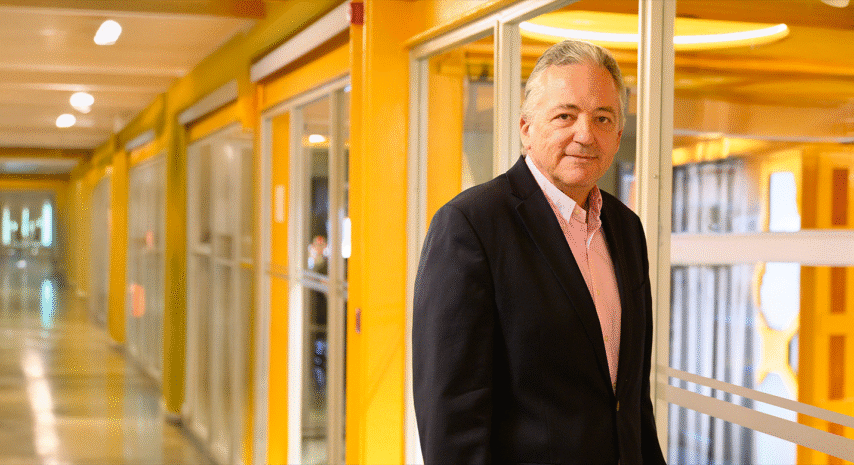
José Antonio Gago
President of WANO, the World Association of Nuclear Operators"The nuclear debate must stay away from noise, ideologies, and polarization"
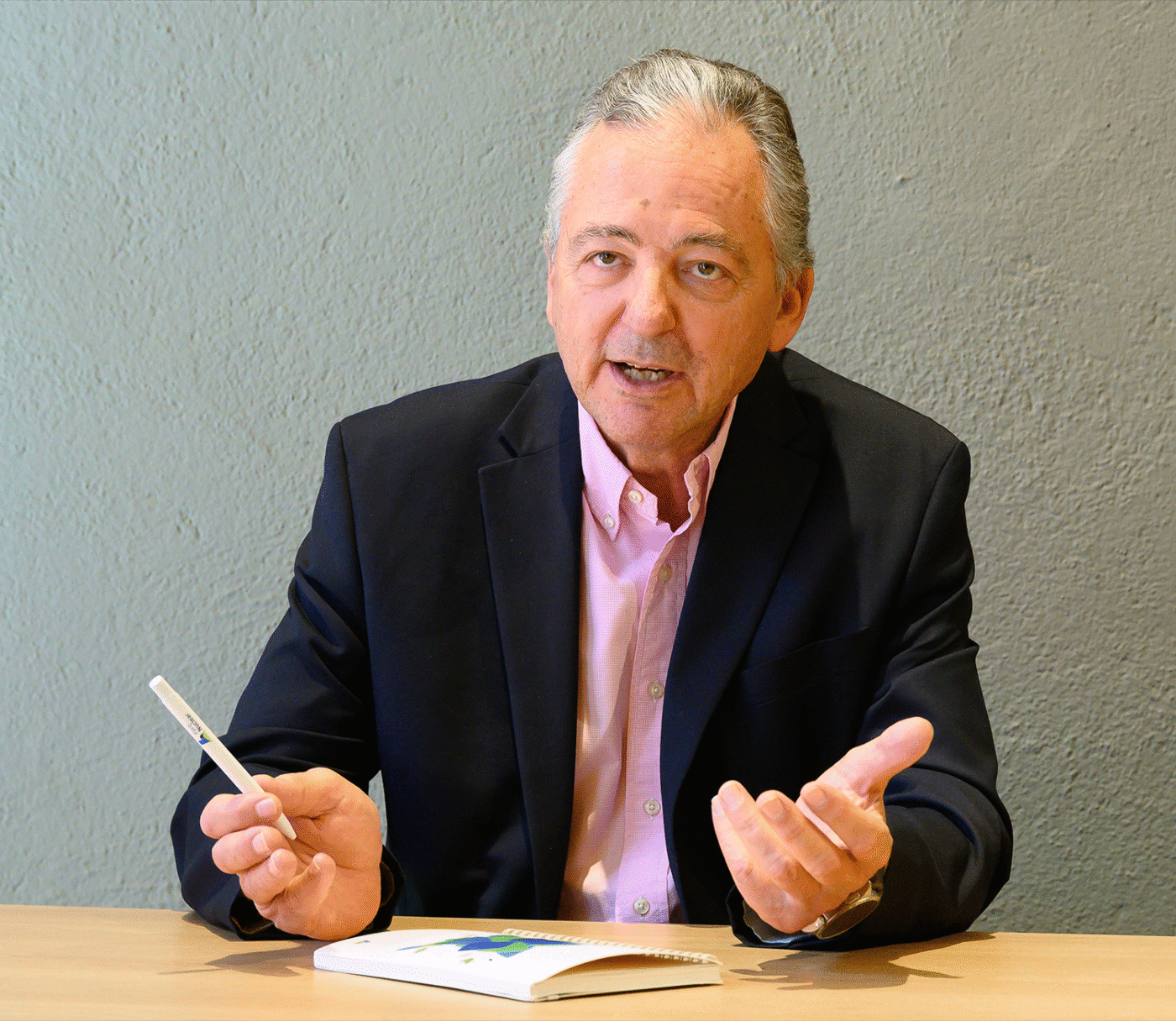
José Antonio Gago, an industrial engineer specializing in Energy and Nuclear Technologies from the Polytechnic University of Madrid, has served as Director General of the Ascó-Vandellós II Nuclear Association, chaired the Spanish Nuclear Society, been a board member of Foro Nuclear, and maintained close ties with the nuclear sector through participation in advisory committees and IAEA expert missions. As the newest President of WANO, the World Association of Nuclear Operators, he shares the Association's work to maximize the safety and reliability of all the world’s nuclear power plants and reflects on nuclear energy’s contribution and development.
What has been your main priority since taking over the presidency of WANO in March?
Since my election at the end of last September, I started a transitional period with the former President, American Tom Mitchell. I would like to emphasize that the handover was exemplary, making my transition into this unique global association smooth and effective. I can only express my gratitude for this process, especially since, after leaving the position of Director General of ANAV and completing my term as president of the WANO Paris Centre in 2022, I did not have steady contact with the association.
Once I settled into the position, my immediate priorities were preparing for the first Council meetings and its different subcommittees held in April, global governance and financial matters, member relations, and promoting a renewed push for the “Action for Excellence” program.
Could you summarize the main goals or missions of the World Association of Nuclear Operators you lead?
WANO’s mission is to maximize the safety and reliability of all the world’s nuclear plants. This is achieved by working together to evaluate, compare, and improve performance through information sharing, operational experience, and best practice emulation.
For over 30 years, WANO has supported members through five main programs: peer reviews, performance analysis, industry learning and development, member support, and corporate communications. In 2019, WANO underwent a strategic review that led to a new operating model launched in 2023. This model includes updates to existing processes and introduces new ones such as leadership development, support for new plants, and enhanced performance monitoring.
“WANO pursues excellence in the operation of all nuclear power plants worldwide”
How does WANO approach cooperation among operators in countries with different regulatory frameworks, resources, and paths?
WANO aims for excellence in nuclear plant operations, regardless of external conditions such as regulatory regimes and regardless of whether a plant is nearing decommissioning or about to start operations. WANO’s standards of operational excellence are independent of such factors and contribute to the smooth functioning of the global nuclear fleet. As Joseph Rees aptly titled his book on the founding of INPO after the Three Mile Island accident, “nuclear plants are hostages to each other.” Commitment to safety and reliability must be the foundation for all operators, and WANO’s role is to evaluate, assist, and support them.
WANO also works with countries that are starting nuclear programs. What steps are taken when a new operator joins the international ecosystem?
One of the main areas of focus in WANO’s strategic plan is precisely new entrants. Currently, over 60 nuclear power plants are under construction, mainly in Asia, and while many are being developed by experienced operators, a growing number—still small—are being developed by companies with no prior experience (e.g., Turkey, Egypt, Bangladesh, Poland...)
Without neglecting veteran operators, WANO is concentrating significant effort on helping future operators benefit from its services as early as possible—services such as access to global operational experience, support and training missions, pre-operational evaluations, etcetera. We often coordinate with the IAEA, especially for countries in the early stages of nuclear development.
You represented the Ascó-Vandellós II Nuclear Association at the WANO Paris Centre for over a decade. What aspects of that experience are especially useful in your current role?
It was extremely helpful to understand WANO from both perspectives: as a recipient of services and peer reviews, and as a participant in governance at the Paris Centre and later at WANO’s global governing bodies. This dual experience was likely a key factor in my election, and now it is one of my greatest strengths in the role.
“The key to an organization’s success lies in people management”
You have led both national and international organizations. What differences have you found in the way teams are managed?
The most important factor in an organization’s success is people management and building the best team possible. This highlights the importance of competency-based selection processes and proper succession planning. WANO strongly emphasizes the critical role of leadership in nuclear organizations—not just at the top but throughout every level of the organization.
It is necessary to have effective leadership that can create a shared vision of excellence, prioritize nuclear safety above all else, and foster genuine teamwork and collaboration. I’ve seen vast differences worldwide—some examples are outstanding, others suffer from misunderstood hierarchies, distrust, or siloed work. I firmly believe that Spanish operators are a good reference for what nuclear leadership should represent.
"The public and political perception of nuclear energy has undergone a radical shift in recent years"
Based on your international experience, what is your view of the global nuclear future?
I have banned the word "renaissance" from my vocabulary when referring to the current state and outlook of the nuclear industry, given the devastating consequences of its premature use at the beginning of this century. However, it is a known fact that public and political perceptions of nuclear energy have shifted dramatically in recent years, mainly due to the increasing threat of nuclear warming. Every day, the specialized press reports on new plans for nuclear plants of varying sizes and technologies. The IAEA's latest 2050 projections for different scenarios estimate that global nuclear capacity could increase by 40% to 250%, similar to estimates by the International Energy Agency (IEA).
In light of climate challenges and the need for energy independence, what is your view on Spain’s current nuclear phase-out schedule?
Allow me to paraphrase the IAEA Director General: “It’s about decarbonization, not denuclearization.” If we take this priority into account, it makes sense to use every available technology, including revisiting Spain’s planned nuclear phase-out calendar. There are more than enough reasons to do so.
“There are more than enough reasons to reconsider Spain’s nuclear phase-out timeline”
As President of WANO, my role is to promote safe, reliable, and responsible operation from start to finish for all nuclear plants. Talking about energy independence in a globalized and interconnected world—despite geographic limitations—seems less useful. It would be more appropriate to focus the debate on security of supply, especially under adverse conditions, and on decarbonization, grid stability, and the expected rise in demand from electrification. That is where nuclear power plants play a key role, as we can see with the growth I previously mentioned.
"We should have a more serious and rigorous [nuclear] debate, free from noise, ideologies, and polarization"
How do you assess the current social acceptance of nuclear energy in Spain and its impact on the sector’s future?
The 2025 Eurobarometer shows that 56% of the EU population believes new nuclear technologies for power generation will positively impact our lives over the next 20 years. In Spain, the figure is similar—53%. We’ve chosen decarbonization, we need to electrify the economy, and if that’s our priority, we must engage in a more serious, evidence-based debate, free from noise, ideology, and polarization.
Would you like to add anything?
I want to thank Foro Nuclear—an organization I’ve long been connected with—for the opportunity to address its members and Spain’s nuclear professionals. I can say, humbly but proudly, that my election as WANO president owes much to the impeccable reputation of the Spanish nuclear sector, especially its operating and service companies. Their professionals are in demand and serve as a reference globally.
I hope this message also conveys optimism. Ultimately, doing our jobs well—or even excellently—in nuclear operations and across the sector is the foundation for building our future.