José María López
Commercial director of Ringo Válvulas“Nuclear energy represents a true engine of development”
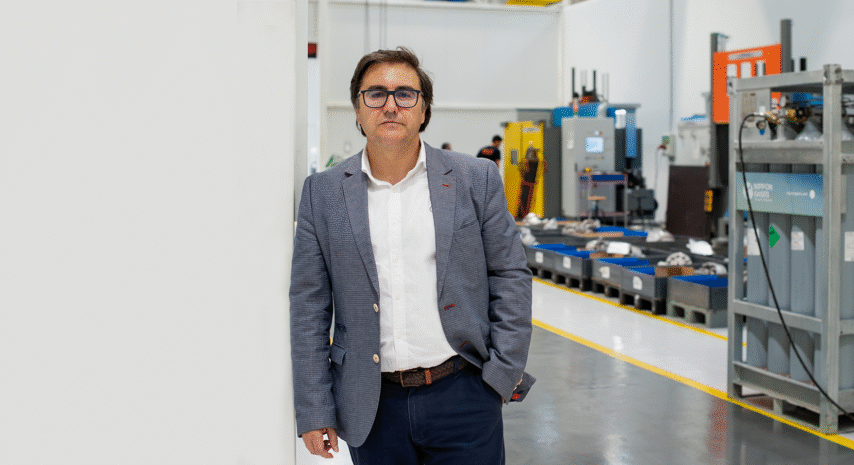
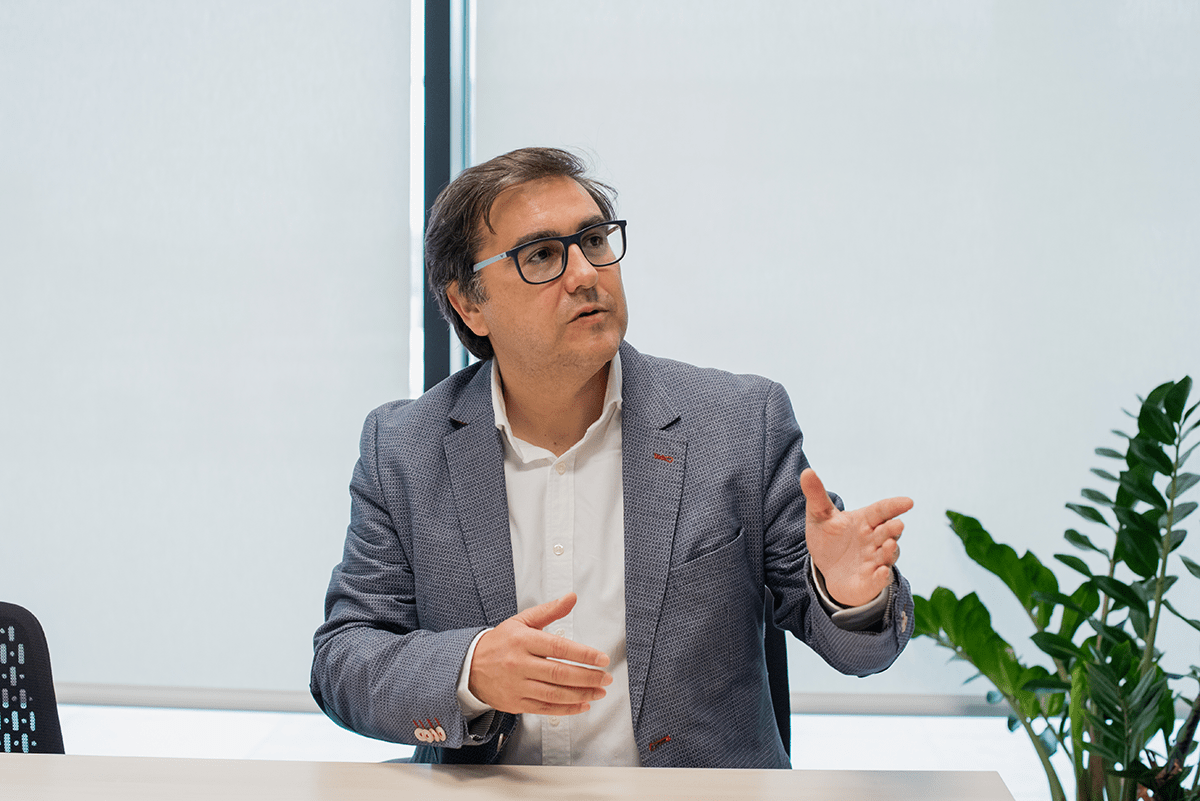
Mechanical engineer José María López has nearly two decades of experience at Ringo Válvulas, a company he joined in 2001 and where he has held various positions of responsibility until his appointment as Commercial Director in 2019. From his position, he has witnessed firsthand the international consolidation of the company, a leader in the design and manufacture of industrial valves. With over 20,000 valves installed in nuclear power plants across 24 countries and a strong export focus, Ringo Válvulas, a partner of Foro Nuclear, has been part of the European group SAMSON since 2013, further strengthening its global presence through an extensive commercial and technological network.
In this interview, José María López reviews the trajectory of Ringo Válvulas, its growth, and its focus on exports. All of this has been driven by its integration into the SAMSON group, which has allowed it to enter new markets and reinforce its strength, as well as by its presence in the nuclear valve market, which has raised its standards of innovation, safety, and quality. He also clearly defends nuclear energy as a "clean, stable, and competitive source", seeing it as key to decarbonization and the country’s technological and industrial development.
You studied Mechanical Engineering and have spent most of your career in the design and commercialization of industrial valves. What attracted you to this field?
Except for the first year of my professional career, my entire path has been—and continues to be—closely tied to the industrial valve sector. I entered this industry almost by chance, as I was open to exploring different professional opportunities at the time. However, from the start, two fundamental aspects attracted me: on one hand, the need for great flexibility to adapt to the technical and commercial requirements of each client; and on the other, the opportunity to work in an international environment. This combination not only represented a stimulating professional challenge but also an opportunity for personal growth through interactions with diverse cultures and global contexts.
From your early days at Ringo Válvulas to your current position as Commercial Director, how has your career evolved and what continues to motivate you professionally after more than two decades of experience?
I started my journey at Ringo Válvulas in the Sales Department, preparing technical and commercial proposals for different markets. At that time, the company was pursuing a strategy of geographical diversification, which gave me the opportunity to travel to various countries to identify local partners and position the brand in strategic sectors. This period was for me an exciting challenge and a deeply enriching experience.
Later, I took on greater responsibilities by leading a sales team covering several regions. Without stepping away from the sales field, I moved on to the role of Business Development Director for two years, until I was appointed Commercial Director in January 2019. I have headed this department since then, facing the challenges of an increasingly demanding market characterized by stricter technical specifications, higher quality standards, and constant global competition.
“The acquisition of Ringo Válvulas by the SAMSON group has been a strategically significant milestone for our organization”
The acquisition of Ringo Válvulas by the SAMSON group in 2013 marked a key boost for your company. How did you experience this integration process, and what has it meant for the brand in terms of growth and positioning?
The acquisition of Ringo by the SAMSON group has represented a strategically significant milestone for our organization. Becoming part of a group with more than 115 years of history, close to one billion euros in revenue, a global workforce of about 5,000 employees, and international presence through more than 50 subsidiaries — including 17 production centers — gives us a solid base of stability and confidence to face the future with full assurance.
As is common in business integration processes, the first steps were not without challenges. Ringo operated under a highly specialized business model focused on manufacturing customized valves, which meant its process management was significantly different from that of other companies in the group. Nevertheless, the integration was carried out in a structured and gradual manner and has proven to be highly positive.
On one hand, Ringo has contributed to SAMSON’s portfolio with solutions that fill specific technological gaps, as well as with a presence in strategic markets that were not part of the group's business, such as the nuclear sector. On the other hand, SAMSON has provided Ringo with a global commercial network covering practically every region in the world, facilitating commercial synergies and access to new clients and market segments.
“At Ringo we maintain a clear orientation toward international markets, with valves installed in more than 90 countries”
Today, Ringo Válvulas is one of the main Spanish valve suppliers for the nuclear sector and a prominent player in international markets. What factors explain this global expansion, and what role does exporting play in your business model?
At Ringo, we maintain a clear orientation toward international markets: approximately 90% of our sales are made outside Spain, and we have valves installed in more than 90 countries.
In some way, our export vocation has been a natural consequence of the characteristics of our product and the market we serve. Our valves are designed for applications in sectors such as energy generation, oil, gas, or mining, which tend to be concentrated in specific regions. In this sense, the domestic market—such as in Spain—offers limited scope for these types of solutions, apart from the nuclear sector or projects that Spanish companies develop in other countries. Thus, from the very beginning, exporting has not only been an option but a necessity to grow and consolidate the company.
What characteristics do you consider essential to building strong relationships with clients in highly regulated sectors like nuclear?
In the nuclear sector, client trust is built mainly through the perception generated about the competence and reliability of the multidisciplinary team involved throughout the contract cycle. The personnel assigned to these projects must have in-depth knowledge of applicable codes and standards, ensuring that every stage of the process—design, manufacturing, quality control, and documentation—complies rigorously with the established technical and regulatory requirements.
“In our company, we maintain a strong commitment to the continuous training of our professionals"
With this demand in mind, at Ringo we are firmly committed to the continuous training of our teams, ensuring that they keep their technical and regulatory competencies up to date. Additionally, we actively promote a transversal nuclear safety culture, reinforcing the awareness that every individual action has a direct impact on the compliance and reliability of the final product. This is something that clients in the nuclear sector value very positively.
What professional profiles work at your company, and what technical skills are most in demand in your field of activity?
The predominant profile at Ringo is highly technical. A significant percentage of our workforce—nearly 60%—is composed of engineers specialized in different disciplines. This clearly reflects our focus on excellence in the design, engineering, and manufacturing of highly complex industrial valves.
The most valued and necessary skills are directly related to advanced mechanical design and the ability to perform structural, fluid dynamic, thermal, and seismic calculations. We also have qualified professionals in project management, quality assurance, and regulatory compliance, which enables us to undertake complex contracts with clients who demand total traceability, exhaustive technical documentation, and compliance with international standards.
“We are leaders in the design and manufacture of valves for critical applications”
In the manufacturing area, we have a specialized team that includes welders certified in various procedures, assemblers, testers, and technicians skilled in performing Non-Destructive Testing. This comprehensive approach allows us to maintain a high level of performance and position ourselves as a benchmark in the design and manufacture of valves for critical applications.
With more than 20,000 valves installed in over 50 nuclear power plants across 24 countries, what technical and regulatory requirements differentiate the design and manufacturing of valves for nuclear installations from those in other industrial sectors?
The technical and quality requirements for designing and manufacturing nuclear valves are defined by various international codes and standards. These codes contain significantly stricter and more specific requirements than those applicable in other industrial sectors, mainly due to the need to ensure maximum reliability and safety over very long life cycles.
One of the main differences lies in the selection of materials. In nuclear applications, certain materials are restricted or outright banned due to their behavior when exposed to radiation. Another key differentiator is the level of quality control and traceability. In the nuclear field, each component must be fully documented, with detailed manufacturing, inspection, testing, and certification records. Furthermore, nuclear valves must pass specific qualifications that are not usually required in other sectors, such as mechanical, seismic, or environmental qualifications. Additionally, welding, assembly, and testing processes must be carried out by qualified personnel under approved procedures, and Non-Destructive Testing must comply with standards specific to the nuclear sector.
In short, while in other industrial sectors reliability is a goal, in the nuclear sector it is a non-negotiable condition.
Beyond the nuclear sector, you are also active in other industries. What technical and commercial synergies arise between these sectors, and how do they enrich the company’s experience?
In addition to the nuclear sector, we are active in industries such as petrochemicals, gas, oil, and industrial gases. However, unlike other manufacturers, our activity in these sectors does not focus on standard valves but exclusively on solutions designed for severe applications and critical operating conditions. This specialization means that the technical, reliability, and quality requirements we apply in these sectors are often comparable to those required in the nuclear field. This generates highly valuable technical synergies that strengthen our global capabilities.
Moreover, the fact that we hold specific certifications for the nuclear sector and have a proven track record in this market gives us an added level of credibility with new clients.
From a technological standpoint, how are valves evolving to meet new demands for safety, efficiency, and digitalization?
First of all, safety is ensured through strict compliance with all applicable codes, supported by a robust quality system that includes regular audits and active promotion of a nuclear safety culture throughout the organization.
As for efficiency, our R&D&I department continuously works on developing improvements that increase the effectiveness, lifespan, and performance of our valves. Finally, in terms of digitalization, we adapt to the specific requirements of each client. For example, some of our valves are equipped with Samson smart positioners that enable remote real-time monitoring and data management, as well as diagnostics and early detection of potential faults to facilitate predictive maintenance.
“Small Modular Reactors represent a significant opportunity for our company and are one of the fundamental pillars of our nuclear growth strategy”
The nuclear industry is turning its attention to technologies such as Small Modular Reactors and nuclear fusion. How are you preparing to meet these new demands for specialized valves?
We are always paying attention to new opportunities emerging in the sector, and SMRs are, without a doubt, among the most relevant. We are currently involved in several projects where we have already submitted proposals for our valves, and in other cases, we are in the process of qualification.
Within our strategy, the SMR market represents one of the fundamental pillars supporting our growth in the nuclear field over the coming years. We firmly believe in their potential, as SMRs are being presented as a strategic solution to meet the increasing energy demand driven by artificial intelligence—both from a technological and industrial development perspective—and we are committed to positioning ourselves as a key player in this emerging segment.
Looking at Spain, do you consider the planned gradual shutdown of Spanish nuclear power plants to be viable?
In my opinion, the planned shutdown of Spanish nuclear power plants is a mistake. Currently, nuclear energy contributes to more than 20% of the total electricity generation in Spain, and therefore, giving up this source without a clear plan to replace it with reliable alternatives is a serious error. There is a lot of talk about renewables—and of course, they are necessary—but we must take into account that they cannot provide the system with the same stability that nuclear energy offers.
Moreover, in 2023, the European Union confirmed the inclusion of nuclear energy in the category of green energy. Since this type of energy does not produce greenhouse gas emissions during its operation, it contributes significantly to decarbonization goals.
Is there anything you would like to add about the nuclear sector and its professionals?
It is essential to understand that the nuclear sector, beyond its role as a stable, clean, and safe energy source, represents a true engine of development. It is a driving force that decisively boosts the industrial fabric and a sector that pursues excellence, and that is reflected at all levels—from processes to people.
“We must strengthen the nuclear sector so it can continue to serve as a lever for economic, technological, and human development”
All professionals who have directly or indirectly worked in this field experience significant growth. They acquire skills, methodologies, and a quality culture that enriches not only their individual profiles but also the capabilities of the industry as a whole. Even when these professionals move on to other sectors, they bring with them that extra plus that provides added value.
That is why I believe that we should not allow the nuclear sector to weaken through the progressive closure of power plants—on the contrary, we should strengthen it. It is a strategic sector that can and must continue to act as a lever for economic, technological, and human development.
Faced with the challenge of deindustrialization in Europe, preserving and promoting the nuclear sector is key to ensuring the country's competitiveness, energy sovereignty, and sustainable development.