Dismantling of Garoña begins after Spanish government authorisation
The Spanish Ministry for Ecological Transition and Demographic Challenge (MITECO) has authorised the start of the dismantling of Santa María de Garoña nuclear power plant. The document also authorizes the transfer of ownership of the facility to Enresa, the responsible for the dismantling
Garoña’s 466 MW boiling water reactor began operations in 1971 and was deemed by the regulator, Nuclear Safety Council (CSN), to be suitable for operation until 2019 given certain technical upgrades. In September 2012, operator Nuclenor missed the deadline to submit an operating licence renewal application, meaning it had to be shut by the time its licence expired on 6 July 2013. However, the reactor was closed in mid-December 2012.
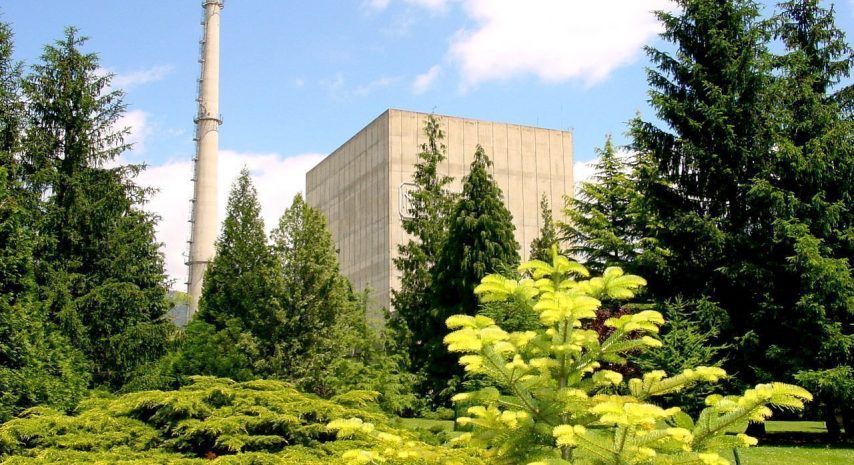
Santa María de Garoña nuclear power plant began operations in 1971 and was shut down in 2012
In February 2014, the industry succeeded in lobbying for regulatory changes that made it possible for a reactor closed for reasons unrelated to safety or radiological protection to be granted a new operating licence within 12 months of its shutdown.
Nuclenor submitted a licence renewal application for Garoña to the Ministry of Energy, Tourism and the Digital Agenda in May 2014, requesting a licence for Garoña to operate until 2031. The Ministry subsequently forwarded this to CSN for evaluation.
In February 2017, Nuclear Safety Council gave conditional approval for the restart and continued operation of Garoña, but said Nuclenor would be required to make a number of safety upgrades. However, in August of that year, the Energy minister announced that the government had decided not to approve the renewal of Garoña's operating licence.
In May 2020, Enresa submitted an application to the Ministry for Ecological Transition and Demographic Challenge for the transfer of ownership of the Garoña plant and the first phase of its dismantling.
A dismantling in two phases
Enresa has now began the preparatory work for dismantling and designing a project that consists of two phases and has a budget -without counting the management of spent fuel- of 475 million euros. Work is expected to last until 2033 and employ up to 350 people simultaneously.
The dismantling project consists of two phases, covers until 2033, is budgeted at 475 million euros and provides for up to 350 people to work on it simultaneously
In the first phase (2023-2026) the systems, structures and components of the turbine building will be dismantled, and the modifications to the systems and facilities necessary for the management of the resulting waste will be undertaken. At the same time, spent fuel will be evacuated from the pool to the Individualized Temporary Storage (ITS) of the plant.
Subsequently, in the second phase (2027-2033), with the fuel already in the ITS, the final dismantling of the radiological buildings will be addressed, continuing with the decontamination, declassification, and demolitions, to finally conclude with the restoration of the site.
The authorization from MITECO to start the dismantling work comes after the project was submitted to public information between March and April 2021, after the Nuclear Safety Council Plenary issued the mandatory favourable report last May and after having obtained the Environmental Impact Statement that establishes the conditions to which the project must comply.