More nuclear enables faster decarbonisation and greater security of supply
According to a new report, having more nuclear in Europe would lead to a faster reduction in CO2 emissions, lower energy system costs in the long term, a reduction in energy imports and greater security of supply.
The conclusions of the updated “Pathways to 2050 - the role of nuclear in a low-carbon Europe” report conducted by Compass Lexecon on behalf of nucleareurope highlight how, for example, 150 GW of installed nuclear capacity in the European Union (EU) by 2050 will:
- Save around 430 million tonnes of CO2.
- Save €310 billion in total energy system costs.
- Reduce gas consumption by about 180 billion cubic metres.
- Reduce dependence on hydrogen imports by up to 33%.
Having more nuclear in Europe would lead to a faster reduction in CO2 emissions and greater security of supply, says a new study
“Europe has three major challenges which it needs to find solutions for: achieving net zero, ensuring security of supply, and providing access to affordable energy” highlights Yves Desbazeille, nucleareurope Director General. “This report demonstrates how nuclear can help by ensuring a credible, secure and cost-efficient decarbonised energy mix whilst at the same time avoiding the lock-in of fossil fuels and CO2 emissions.”
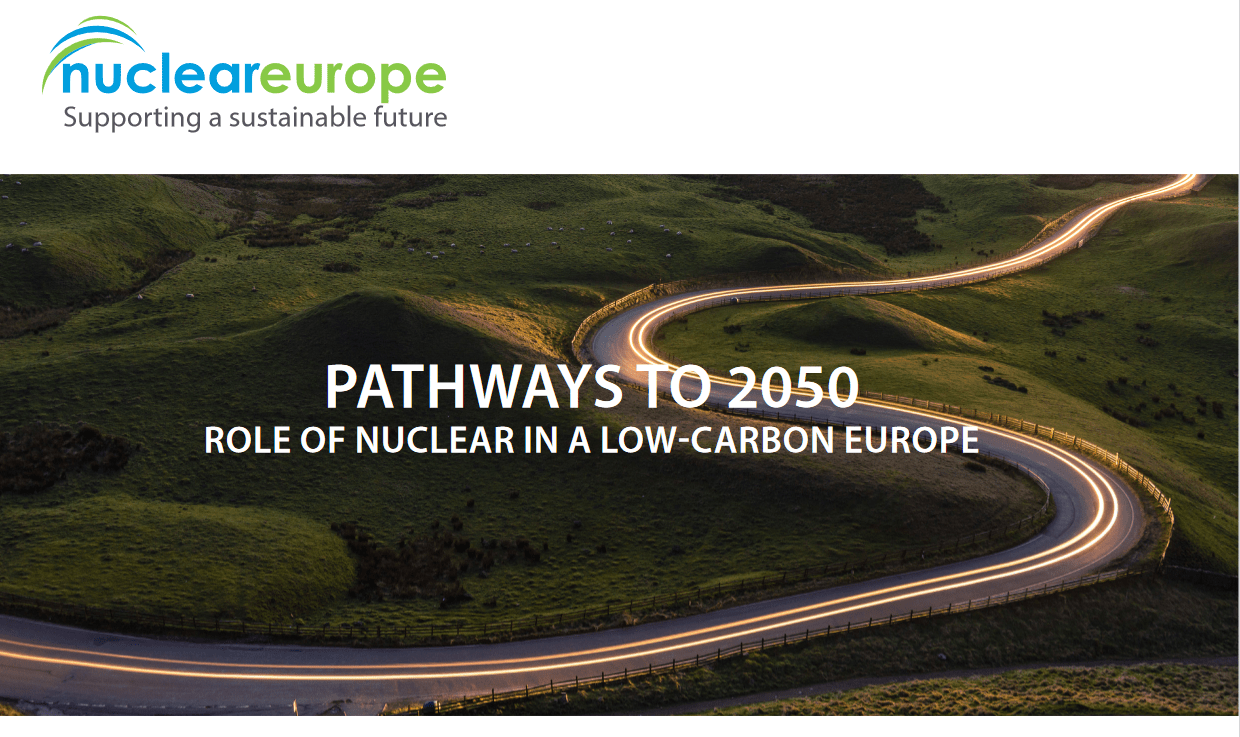
The latest version of this report incorporates recent developments, including the target set by the Nuclear Alliance of Member States of 150 GW of installed nuclear capacity in the EU by 2050.
The report highlights the fact that aggregated electricity demand is expected to increase significantly over the next three decades, with much greater demand for flexibility due to the increase in renewable energy sources. And this is before taking into account demand for clean hydrogen, which will also lead to a further increase in demand for low-carbon electricity.
The study compares three installed nuclear capacity scenarios in 2050, namely 100 GW, 150 GW and 200 GW. In this respect, the study clear shows how more nuclear can:
- Enable faster decarbonisation.
- Lower costs in the long-term.
- Support security of supply.
- Reduce dependence on clean hydrogen imports.
- And ultimately support greater EU industrial competitiveness.
In addition, the report looks at the potential impact of nuclear on the heat market, particularly in relation to Small Modular Reactors (SMRs) which are expected to bring significant benefits in the medium-and long-term.