The World Bank and the IAEA forge partnership to promote nuclear energy
The World Bank Group and the International Atomic Energy Agency (IAEA) have signed an agreement to promote the safe and responsible use of nuclear energy in developing countries. This is the World Bank Group's first concrete step in decades to reincorporate this source into its energy strategy.
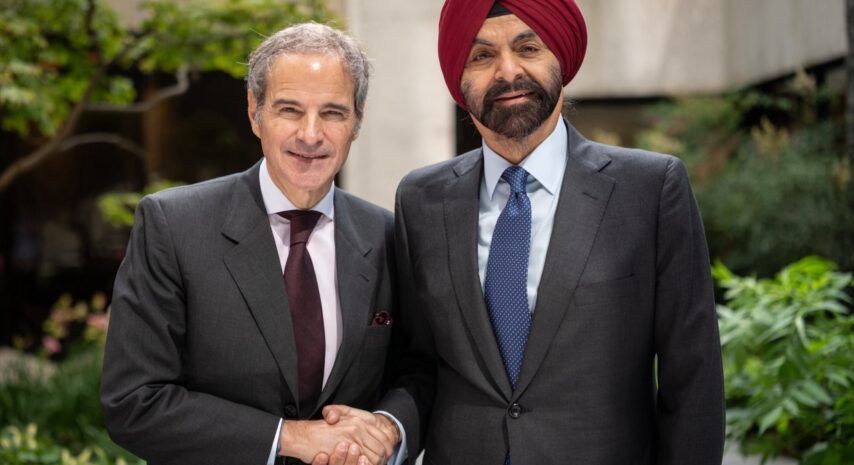
The memorandum, signed in Paris by World Bank President Ajay Banga and IAEA Director General Rafael Mariano Grossi, sets out a joint roadmap on three fronts: strengthening technical expertise, extending the life of nuclear power plants already in operation, and promoting small modular reactors (SMRs), an emerging technology that could be adapted to the needs of developing economies.
The World Bank sealed an agreement with the IAEA to reincorporate nuclear energy into its development strategy, focusing on reliable, low-carbon energy sources
World Bank Group President Ajay Banga advocated incorporating nuclear power into development policies as a direct response to rising energy demand in the countries of the global south. "The labor market needs electricity. So do factories, hospitals, schools and water systems. And as demand increases, we need to help countries supply it reliably and affordably. That's why we're betting on nuclear power as part of the solution" he said.
Ajay Banga emphasized that it is a source capable of providing continuous electricity, which he considers essential for “building modern economies”.
IAEA Director General, Rafael Mariano Grossi, welcomed the partnership highlighting that it “opens the door for other multilateral development banks and private investors to recognize nuclear energy as a viable means to achieve energy security and sustainable prosperity”. He added that this collaboration reflects a “more pragmatic approach to nuclear power”.
Currently, 31 countries generate about 9 % of the world's electricity through nuclear power, according to IAEA data. More than 30 countries - most of them developing countries - are initiating processes to incorporate it with IAEA assistance. This low-carbon energy source also offers continuous baseload supply, grid stability and a high potential for skilled job creation, making it a strategic option to support economic growth and facilitate the energy transition.

Small modular reactors emerge as a key technology for the energy transition
The IAEA Director General also underlined the potential of SMRs to accelerate energy access in regions with limited infrastructure: "They offer great potential to drive progress in a clean and reliable way and to fight poverty, but financing remains an obstacle”.
This agreement marks a new momentum for the integration of nuclear energy into sustainable development strategies, with a view to expanding access to reliable, low-emission energy for the coming decades.
Cover photo: World Bank Group