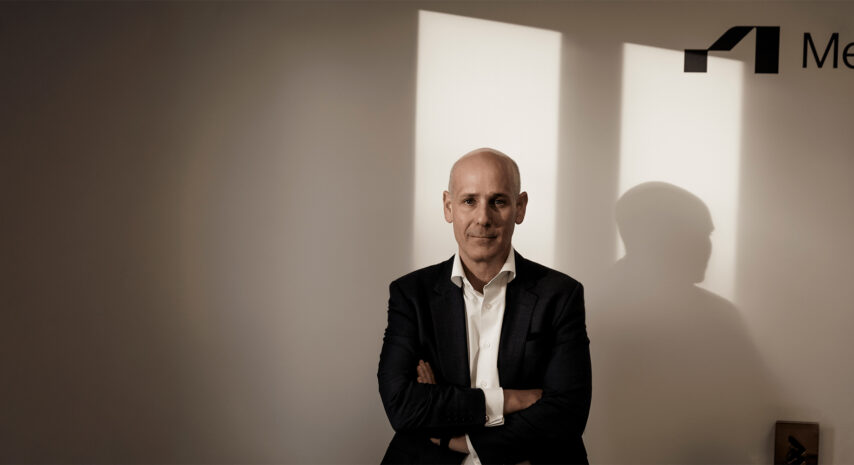
Miguel Solchaga
Partner at the consulting firm Metyis“We must promote a technical nuclear debate, free from emotional discussions”
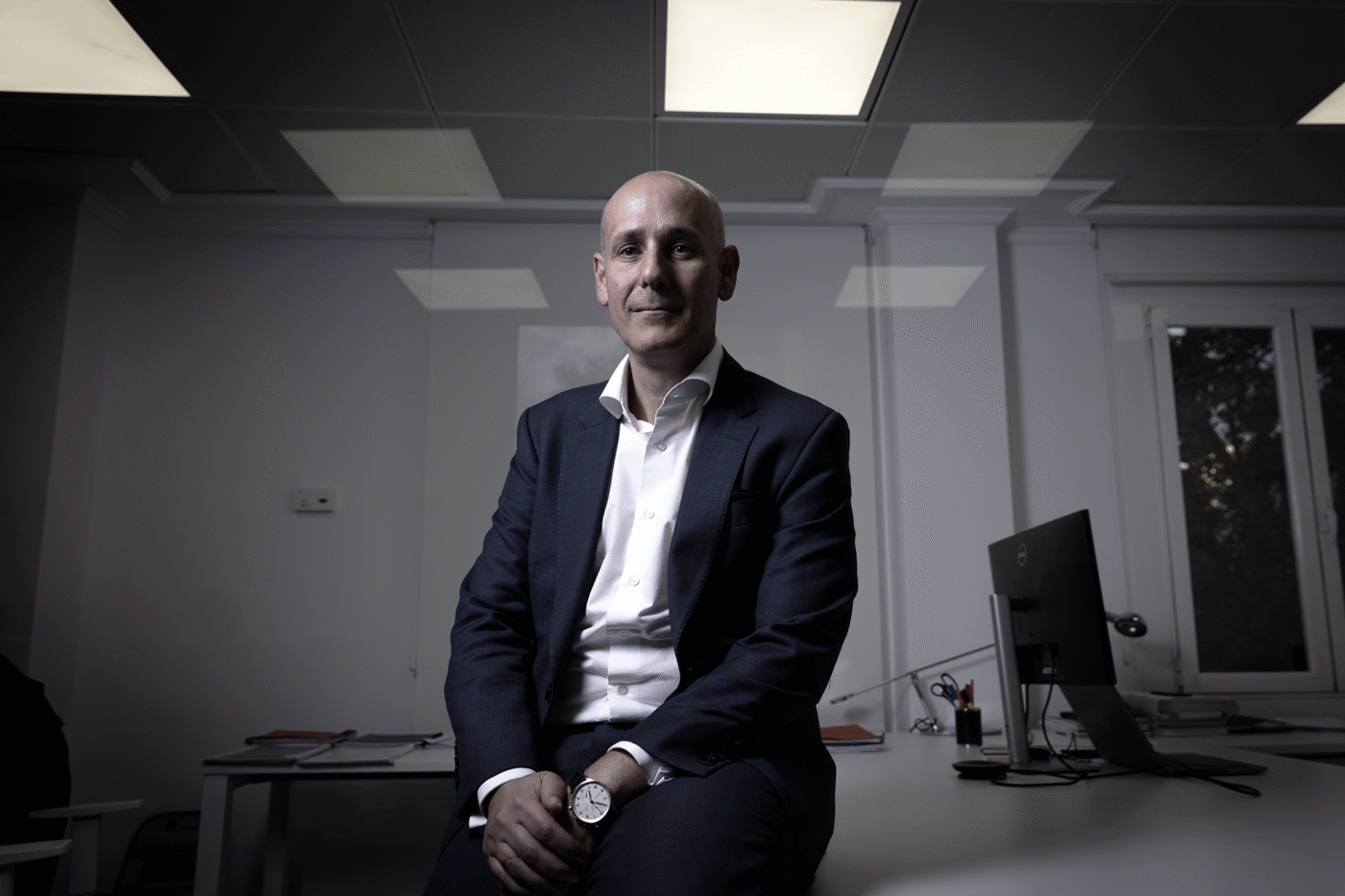
Miguel Solchaga is a partner at the consulting firm Metyis and has over two decades of experience in strategic consulting, business development, and organizational transformation. He has worked in sectors such as energy, banking, and consumer goods, leading complex initiatives in multinational environments.
Following the recent study on the economic, social, and energy impact of the Almaraz nuclear power plant, he believes that “the authorities are aware of the impact that closing Almaraz would have, and they are certainly concerned.” In his view, “the work of consulting firms in complex debates—such as the continuity of nuclear power plants—helps raise the level of discussion beyond ideological positions and unfounded opinions.”
You have led projects across multiple sectors and countries. What challenges does such diversity present, and what lessons are transferable between industries with very different dynamics?
Each sector and country has its own singularities, but the consultant’s role is not necessarily different—it’s always about understanding clients’ needs and advising them based on objective and verifiable data. It’s essential to develop sufficient sectoral and geographical knowledge to be credible as a consultant, but it is even more important to listen carefully, understand each client’s needs, and propose realistic solutions to help them. That is the truly transferable learning experience from one sector or country to another.
“It’s very important to listen, understand clients’ needs, and propose realistic solutions”
What kind of services does Metyis offer, and in which countries do you operate?
Metyis is a Dutch company with a presence in Spain, France, Italy, Switzerland, Portugal, Germany, Mexico, India, Turkey, and Saudi Arabia. We offer a wide range of services. On the one hand, we provide traditional strategic consulting services, including growth and innovation strategies, organizational transformation, talent and change management, operational excellence, asset management, sustainability strategies, and social and economic impact measurement.
On the other hand, we have strong capabilities in digitalization, from e-commerce to data analytics and artificial intelligence models applied to the sectors in which we work.
“Metyis is a Dutch company with a presence in Spain, France, Italy, Switzerland, Portugal, Germany, Mexico, India, Turkey, and Saudi Arabia"
What we like to think sets us apart in the market is not so much what we do as how we do it—by developing long-term relationships with our partners and clients.
What role should strategic consulting play in major social and economic debates?
Generally, when a strategic consulting firm is contacted to inform on social or economic debates, it is expected to provide a solid, data-driven perspective that helps understand a complex problem.
Of course, consultants don’t always have the right answers, but we do have a duty to carry out rigorous analyses—regardless of who the client is.
“Consultants have a duty to conduct rigorous analyses based on sound arguments and data"
In my opinion, the role of consulting firms in complex debates—such as the continuity of nuclear power plants—helps elevate the level of discussion beyond ideology and unsupported opinions.
Our analyses aim to produce conclusions based on clear, transparent arguments and data. This transparency allows for productive discussions that can lead to understanding among the various social stakeholders—whether they are companies, institutions, regulators, or the media. In the absence of data-based studies and analyses, all we have are opinions, and reaching common ground in such cases is extremely difficult.
You recently carried out an analysis on the economic, social, and energy impact of the Almaraz nuclear power plant. What were the most relevant conclusions?
The conclusions are what one would expect from the closure of any major economic activity—and Almaraz certainly is one. Currently, Almaraz's operating costs are €297 million, and it spends €435 million in taxes and fees. All that money would cease to flow into the economy if the plant closed, resulting in a decline in local, regional, and national economic activity.
Our estimates show that, locally, this would mean a loss of €124 million in Gross Value Added (GVA)—that’s 14% of local output. Regionally, about €207 million, or 1% of Extremadura’s GVA. Nationally, as much as €829 million in GVA every year
"Our analyses shows that closing Almaraz would result in the loss of more than 15,000 jobs nationwide”
Naturally, this loss of activity would come with a significant loss of jobs—over 2,100 in the vicinity the plant (around 15% of current local employment), more than 3,800 in Extremadura (1% of total employment in the region), and more than 15,000 across Spain.
Could you explain this job loss in more detail?
Any economic activity has a spillover effect. Businesses don’t operate in isolation—they have suppliers of goods and services, who in turn have their own suppliers. When a company ceases operations, it affects not only its employees and revenues, but also everyone involved in the supply chain.
This spillover effect is especially significant in the case of Almaraz due to its high fiscal contribution at local, regional, and national levels. The taxes and fees paid are what fund public works, schools, and healthcare. Losing that income means less public spending and the disappearance of all the economic activity tied to it.
All the workers employed by suppliers, public administrations, and related services are also consumers—they buy clothes, groceries, go out to eat... when they lose their jobs, they reduce spending in those areas, which in turn destroys more jobs.
“The Almaraz area has resisted rural depopulation trends more successfully than other regions”
The Metyis analysis notes that closing Almaraz “would accelerate population decline and aging in the area.” Do you believe this study has reached decision-makers and the Ministry for Demographic Challenge?
Indeed, the area of influence around Almaraz has resisted the tendency to rural depopulation better, and its population is younger than in other rural parts of the Cáceres province—largely due to the plant's pull effect.
I imagine the study has reached the Ministry for the Demographic Challenge, but even if it hadn’t, I’m convinced they’re well aware of the effects that the closure of power plants has in general. The “fair transition” programs launched in areas where coal-fired plants have closed clearly acknowledge the damage done and aim to reward projects that can best generate positive economic impact in those territories.
“Authorities are aware of the impact that closing Almaraz would have, and it certainly concerns them”
Can Almaraz’s socioeconomic impact be extrapolated to other regions with nuclear power plants? If so, can you share some indicative figures?
Broadly speaking, yes, since the activities and production functions are similar. Spanish nuclear plants share similar suppliers, staffing, and taxation structures. There are minor variations depending on each plant’s production function and the local and regional economic structure.
If we extrapolate Almaraz’s results based on installed capacity, the impact would be around €3 billion in lost GVA and the loss of over 50,000 jobs. These are rough figures based on a simple rule of thumb—without a rigorous study, a truly reliable estimate isn’t possible.
Based on your experience and analyses, how do you assess the role of nuclear energy in Spain?
From my perspective, nuclear energy plays a crucial role in the transition toward clean energy. A premature shutdown would mean replacing nuclear generation with other technologies that largely produce higher emissions and come at higher costs—making our power system both less clean and less competitive.
“Without nuclear energy, our power system will be less competitive and less clean"
Looking ahead, there are great expectations about a nuclear revival, significant technological advances are anticipated, and there’s already growing interest in nuclear technology from data centers.
In your opinion, what aspects should be reconsidered when thinking about Spain’s nuclear future?
Regarding the nuclear future—or the energy mix in general—the only thing we should rethink is how to promote a fully technical debate and avoid emotional discussions.
We want clean and affordable energy. We want energy independence. We want a scalable, resilient, and reliable power system. The components of that system will depend on the characteristics of the available technologies at any given moment. For example, 20 years ago, few would have bet on a significant role for solar power or batteries in the energy mix—yet today, both are highly relevant. New nuclear plants may eventually be built in Spain, but that will depend on how this and competing technologies evolve.
Is there anything you would like to add?
Simply to thank you for the opportunity and for giving visibility to rigorous work aimed at measuring economic impact—a factor often overlooked in decision-making or based solely on opinions and unsupported estimates.