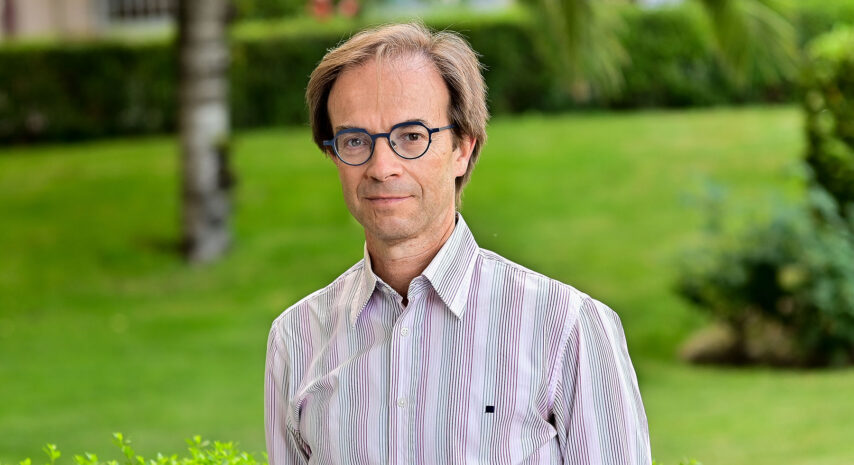
Fernando Sierra
President of the Spanish Society for Radiological Protection (SEPR)“Radiation should not be perceived solely as a risk”
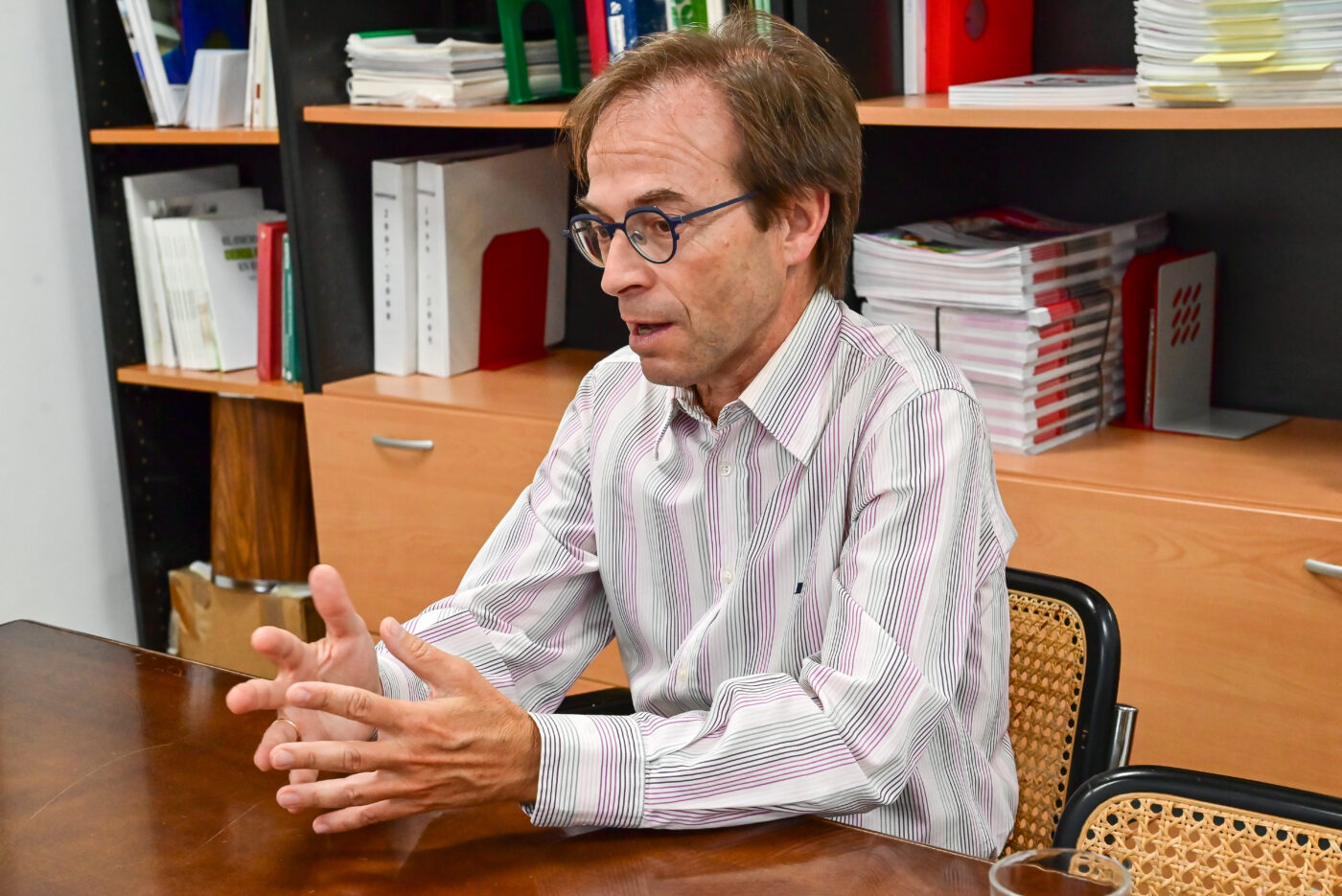
Fernando Sierra has a degree in Physical Science with a specialization in Hospital Radiological Physics, and has served as President of the Spanish Society for Radiological Protection (SEPR) since June 2025. This scientific society brings together more than 800 professionals, including physicists, biologists, chemists, engineers, and researchers. In his interview with Foro Nuclear, he explains that “at SEPR, we share the goal of guaranteeing the safe use of radiation and work to spread knowledge about radiation applications, their benefits and risks and the controls in place to manage them.” Asked about the future role of nuclear energy in Spain, he stresses that “it is essential to take into account the information and expertise provided by professionals and technical specialists.”
What is SEPR, and what types of professionals does it bring together?
The Spanish Society for Radiological Protection (SEPR) is a non-profit scientific and professional organization with more than 800 members. Its mission is to spread the knowledge, development and application of radiological protection in Spain.
SEPR brings together a broad spectrum of professionals; perhaps our greatest strength lies in this diversity. Our members include physicists, chemists, biologists, engineers, technicians and other specialists working in a wide range of fields, such as radiological protection in medical and industrial applications, nuclear energy production, and environmental radiation monitoring. We also include professionals from more cross-cutting disciplines, including dosimetry, safety management and emergency preparedness, technical and commercial activities related to instrumentation and services, as well as education and research.
Despite their varied backgrounds, all our members share a common goal: ensuring the safe use of ionizing and non-ionizing radiation while protecting people and the environment.
What goals have you established for your term as president of SEPR?
It is essential that all members see SEPR as a platform that is open to their concerns and initiatives. In an association that encompasses such a wide range of professional fields, it is important to emphasize that we are open and accessible to everyone, even though it is not possible for all disciplines to be represented within our governing bodies or communication channels.
“At SEPR we strengthen the continuous and specialized training of professionals, promoting a strong radiological protection culture across all sectors"
That said, the area in which we can undoubtedly make the greatest contribution is strengthening the continuous and specialized training of professionals while fostering a strong culture of radiological protection across all sectors.
Another priority is to enhance the visibility of SEPR both at the institutional level and among the general public, since we work in fields of interest to virtually every segment of society. In this regard, the involvement of young professionals is particularly important, given their strong connection to social media and emerging communication channels.
What role does SEPR play in the dissemination of knowledge and the training of specialized professionals?
SEPR plays a key role through the organization of congresses, training courses, workshops and seminars as well as by developing technical publications, many of which are produced by the working groups we lead or actively participate in. We also work closely with other scientific and professional societies, universities, hospitals and regulatory bodies to promote updated evidence-based training for professionals in the field.
Do you believe there is enough public awareness and understanding of radiation and its applications?
Generally speaking, public understanding remains limited and is sometimes influenced by perceptions not fully supported by scientific evidence, as well as by concerns or sensationalized information that can attract significant media attention.
“Public understanding of radiation is often shaped by perceptions that are not fully aligned with scientific evidence, as well as by fears and alarmist information"
Any initiative that helps to spread real knowledge about radiation applications, their risks and the controls in place to manage them can have a significant impact on society. This includes everything from integrating these topics into educational curricula or outreach projects at primary and secondary schools to ensuring that relevant content is continuously updated in vocational and university education.
At the same time, our scientific societies can serve as an important bridge between experts and the wider public. SEPR in particular aims to contribute to a better understanding of both the risks and benefits of radiation. To support this, we maintain a dedicated section on our website that seeks to address citizens’ questions and concerns about radiation and its applications.
"SEPR aims to contribute to a better understanding of both the risks and benefits of radiation"
What would you most like to change about the way we understand radiation?
I would like to see a shift toward a more balanced understanding of radiation—one based on knowledge rather than fear. Radiation should not be perceived solely as a risk, but also as what it is: an essential tool in medicine, industry and research, always used under strict safety standards and controls.
It would be valuable to see greater awareness of, and appreciation for, the work carried out in the field of radiological protection to enhance safety and reduce risks wherever radiation is used. This work plays a vital role across all areas in which radiation applications are present.
You have spent much of your career at Gregorio Marañón University Hospital, where you continue to work. How has radiological protection in hospitals evolved from the start of your career to the presnt day?
The evolution has been highly significant. I began my professional career in the mid-1990s, when the specialty of Hospital Radiological Physics was established as a healthcare profession. The training programme was based on a hospital residency system similar to that used for medical doctors. This qualification became a requirement for leading a Radiological Protection Service within a healthcare institution, representing a major step forward in both the training of radiological protection professionals and the development of their day-to-day activities.
Since then, the field has experienced virtually continuous progress. The number of professionals dedicated to radiological protection has experienced extraordinary growth, reflecting the increasing importance of this discipline within healthcare.
Looking further back, another key milestone was the creation of Radiological Protection Services in healthcare institutions during the 1980s. These services helped organize and systematize activities that had already been carried out since the 1960s, laying the foundations for the highly specialized and structured radiological protection systems we have today.
Over the lifetime of this specialty, one of the most important developments has been the establishment of far more robust procedures and working methods, based on standardized protocols that the entire professional community has helped to develop while remaining closely aligned with international advances and best practices.
I would say that, within the field of medical applications, we have built a very solid radiological protection system for both workers and the public. At the same time, this system has evolved alongside patient safety initiatives and quality assurance programmes, which focus on the continuous optimization of any procedure involving medical exposure to radiation. In short, we have moved from approaches that were largely reactive to models that are fully preventive and proactive.
"The radiological protection system for workers and the public is extremely robust"
What is the impact of artificial intelligence and emerging digital technologies on dosimetry and radiological protection?
The impact is highly relevant. In the case of digitalization, its effects are particularly evident in medical applications, where it has transformed the way clinical data is managed, enhanced computational capabilities and improved the optimization of procedures and real-time imaging. It has also enabled the integration of different diagnostic modalities, adaptive therapies and many other advances that deliver greater benefits while reducing risks and minimizing radiation doses.
As for artificial intelligence, it is already being applied as a valuable tool at many stages of our work, although a more integrated approach is still needed. It is probably too early to quantify its full impact with any degree of certainty, but its potential is likely immeasurable.
Medicine is one of the fields where ionizing radiation is most widely used. How is the balance between diagnostic and therapeutic benefit and patient protection ensured?
This balance is ensured through a strong commitment to the awareness, training and education of healthcare professionals who use radiation, as well as through their coordination within multidisciplinary teams that include specialists in medical physics.
The goal is to ensure that the fundamental principles of the radiological protection system applicable to medical exposures are always applied: justifying every exposure, which should only be performed when the expected benefit outweighs any potential harm, and optimizing the procedure to maximize the net benefit.
In diagnostic applications, this means obtaining the information required for diagnosis or follow-up using the lowest radiation dose compatible with achieving the clinical objective. In therapeutic applications, it involves delivering the prescribed dose as accurately as possible to the target area while minimizing exposure to healthy organs and tissues. All of this is made possible thanks to the support of a large community of medical physics and radiological protection professionals working in healthcare institutions, who are also committed to a culture of continuous improvement.
What are the differences between the public perception of radiological risk and the actual risk as established by scientific evidence?
There is probably a significant gap in many fields between public perception and the demonstrable reality behind numerous scientific and technological applications in our society. However, this gap is undoubtedly particularly pronounced when it comes to radiation and the risks associated with it.
Public perception tends to overestimate the risks of radiation, as discussions often focus immediately on accidents, military uses or other unfortunate events. By contrast, far less attention is paid to the benefits of radiation or to the new applications that continue to be developed. Even less attention is given to the substantial advances in safety and radiological protection at every level, including regulation, organizational practices, professional training and the instrumentation and technologies available to support our work.
"Public perception tends to overestimate the risks associated with radiation, while far less attention is paid to the benefits of emerging applications of radiation"
Of course, critical thinking should be encouraged, but it must be grounded in the best possible understanding of the facts. Our role is not only to explain the risks associated with radiation and ensure that established applications are managed safely, but also to warn against risks that may be underestimated or misunderstood. Rigorous evaluation based on scientific evidence is essential to placing these risks in their proper context and managing them appropriately with a graded approach depending on the risk.
What advances would you highlight in areas such as radiological dosimetry, monitoring and management?
Nowadays, we have information systems that enable in-depth analysis of dosimetric records, even in real time. In medical applications for patients, for example, they provide opportunities for traceability and optimization of procedures.
New therapeutic approaches are increasingly moving toward continuous monitoring of the application of radiation, in such a way that it is adapted to each individual patient and even to the changes that occur throughout the course of treatment.
Equally important are the advances in modelling and simulation tools, which offer valuable applications in radiological protection for both professionals and the general public by improving risk assessment, planning, and decision-making processes.
How significant do you think radiological protection will be in the context of the global expansion of nuclear energy and the development of new technologies?
Radiological protection must remain a fundamental pillar. The development of any new technology requires robust safety and radiological protection frameworks from the time regulators begin assessing new practices before their implementation. The stronger the radiological protection community and the greater the expertise it can contribute during these early stages, the better we will be able to ensure that technological development proceeds in a safe, responsible, and sustainable manner.
"The development of any new technology requieres robust safety and radiological protection frameworks"
Could you share your opi8nion on the role of nuclear energy in Spain?
Nuclear energy has played a major role in our energy system for many years, and it appears that we are once again at a point of reflection regarding the role it should play in the future.
"Nuclear energy has played a major role in our enegy system"
At scientific societies such as ours, we must work so that due consideration is given to the information and expertise provided by professionals and technical specialists in the field. Clearly, many different factors and perspectives must be taken into account, including planning, financial, environmental, ethical, and political considerations. However, the insights of science, research, and technological development must also play a central role in the discussion.
In the fields of nuclear safety and radiological protection, significant advances and improvements have been achieved that need to be added to the balance.
What do you think is driving the renewed global interest in nuclear energy?
Almost everything we see around us is contributing to generating this new interest in a stable source of energy: growing energy demands driven by developing economies and by the rapid expansion of artificial intelligence and the management of vast volumes of data across many sectors, growing concerns and environmental awareness and, finally, geopolitical instability that affects mostly certain energy sources, increasing the need for greater diversification of energy supply
Would you like to add anything?
There is still room for greater collaboration, for working in interdisciplinary teams across professional environments that, although diverse, can be mutually enriching.
Examples include the development of artificial intelligence in many fields, as well as the methodologies and frameworks used to manage safety. These approaches can often be transferred across different professional areas, such as nuclear energy production, radiological protection in other applications of radiation, and fundamental research into the effects of radiation. The radiological protection community can be mobilized and be present in many of them.