Fran Ramírez
Nuclear instructor and communicator"We are experiencing an unprecedented nuclear renaissance"
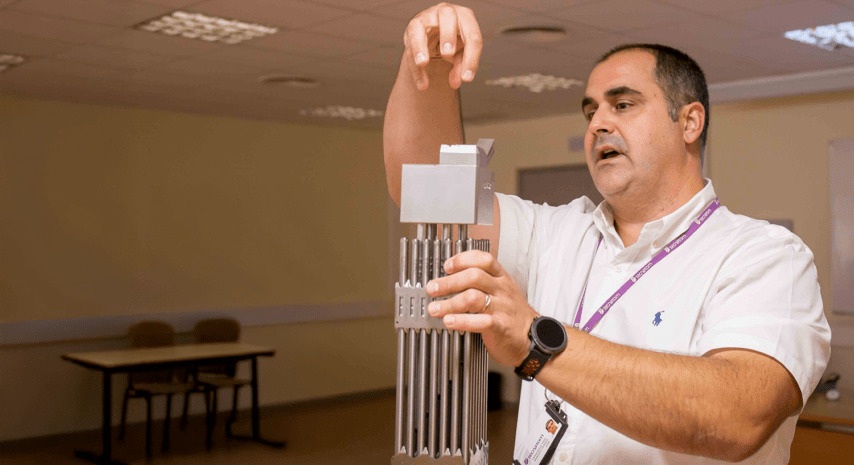
Fran Ramírez is a nuclear instructor with extensive experience in the energy industry, specializing in training and operation of nuclear power plants. In his over 18 year working in the field he has held various technical and training leadership positions at national nuclear facilities and participated in international projects. He trained as a nuclear reactor operation instructor specializing in pressurized water reactors at Westinghouse Electric Company Spain, where he has developed most of his career. Currently, he works as Training Lead, heading Westinghouse's training business for the Ascó-Vandellós II Nuclear Association (ANAV). Additionally, he is dedicated to sharing the latest trends from this technology on X under the pseudonym “Instructor Nuclear” @fruf82.
In this interview for Foro Nuclear he shares his passion for nuclear technology. After many years devoted to training nuclear professionals, he feels the need to contribute to nuclear communication in order to “bring this feared and little-known technology closer to the public.”
What is a nuclear instructor's greatest responsibility when training new professionals?
How has your educational approach evolved over the years in response to technological and regulatory changes in the nuclear industry?
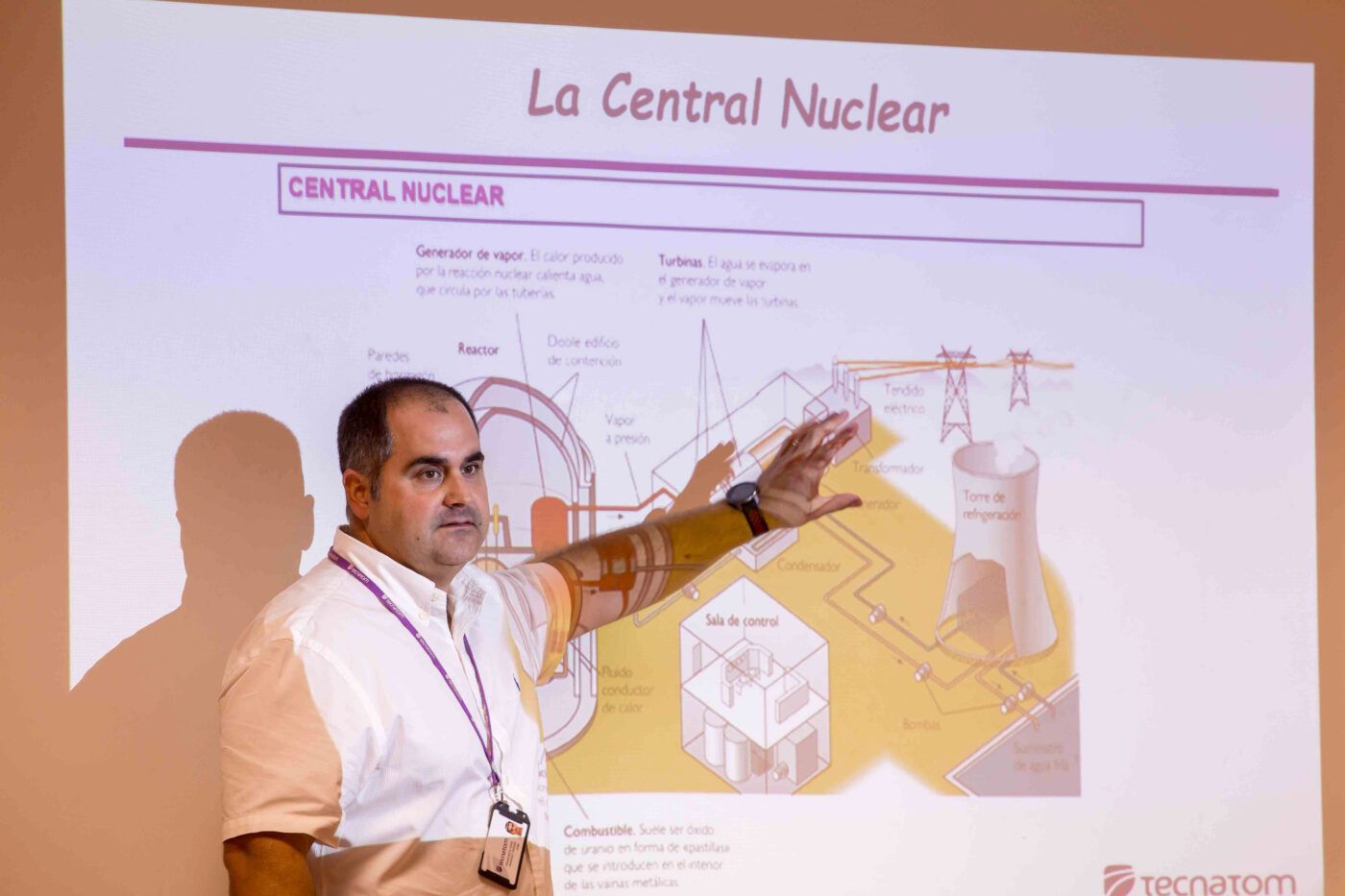
It is not only necessary for the instructor to have a technical understanding of the subject they teach; it is even more important to have good pedagogical abilities and interpersonal skills, such as active listening, motivation, coaching, mentoring, etcetera. This means that the instructor must be able to adapt their methods to the needs of each student. The generational shift in Spanish nuclear power plants has shown us that there is a social change in the learning methods and tools required by young professionals entering this industry. This has led us to incorporate new interactive tools (3D models, virtual reality, videos, games, animations…) and new teaching methods. Adapting to an environment where eLearning is playing an increasingly significant role has also required instructors to do their own learning.
What led you to pursue a career in nuclear energy and, more specifically, to become a trainer for nuclear operators?
The story is a bit embarrassing to tell, but also amusing. I started studying industrial engineering because my mother spent my entire childhood saying, “this boy will be an engineer,” since I was always taking things apart and building stuff. I started industrial engineering without a clear sense of vocation. In third year we could choose a specialization by selecting elective courses related to a specific area. Several classmates and I attended talks where each department highlighted the benefits of their specialization. When we attended the talk on nuclear energy, the professor used images from The Simpsons in his presentation, and a few of us chose the nuclear field. That professor left a lasting impression on me: Carlos Tapia, if you’re reading this, thank you for sharing your passion.
At university, I started cooperating in classes on various subjects as part of my final year project and the early stages of a Ph.D. that I never completed. I enjoyed interacting with people and I seemed to be good at it. I found the opportunity to join the team of instructors at Tecnatom [now Westinghouse] very interesting.
What training do nuclear plant operators need to undergo before becoming operators, and after earning the position?
“The psychotechnical profile of a nuclear operator is highly relevant in the selection process"
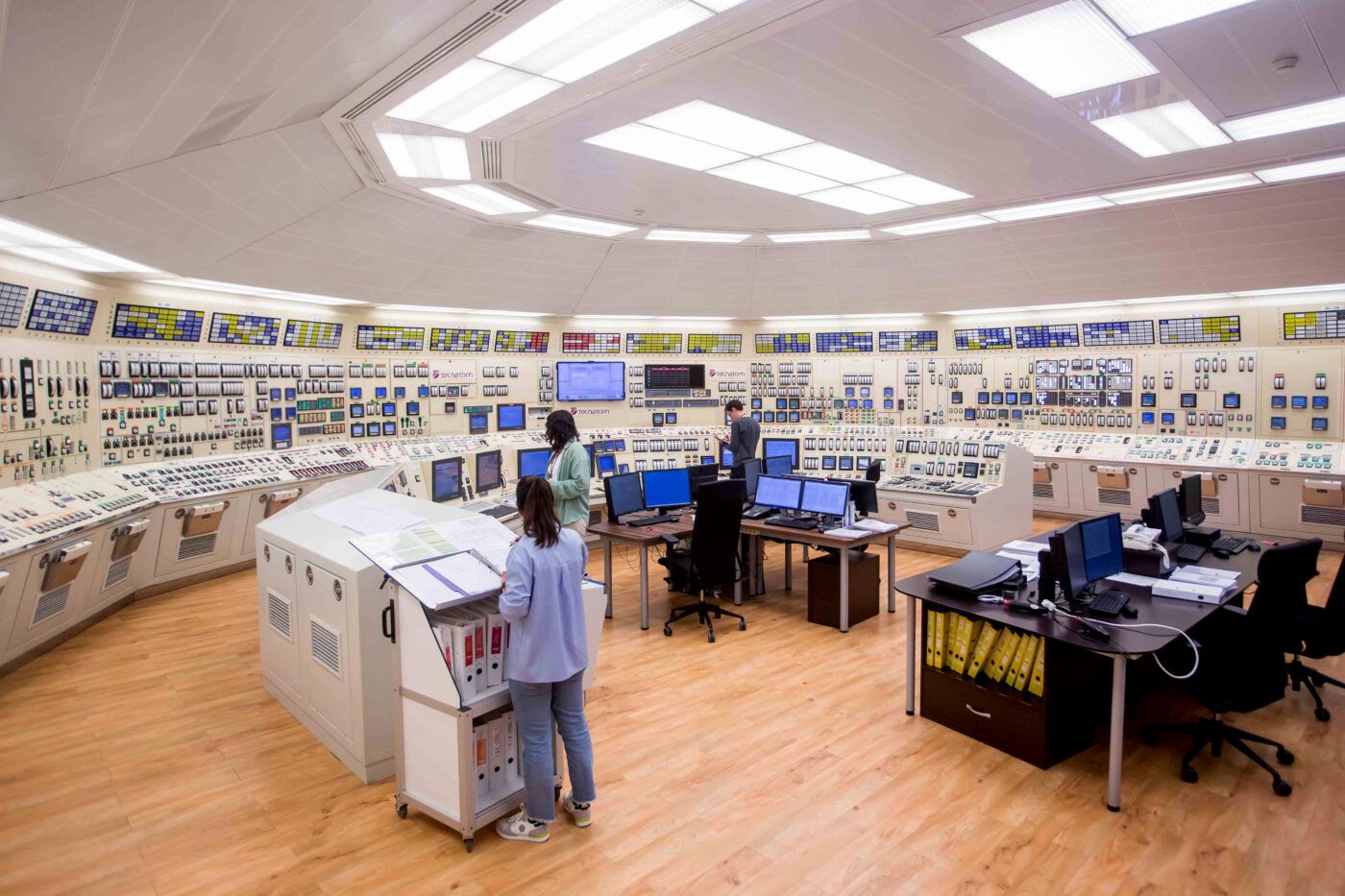
To keep your license active you must meet several requirements: be actively working in your position, undergo regular medical and psychotechnical exams and complete continuous training, which includes approximately 100 hours of classroom training and 50 hours of simulator training every year.
After a minimum of three years working as an operator you may start training to become a supervisor. This training lasts about two years. During this period the same exams are taken again, but with a broader scope.
What is evaluated during the initial training and, once the candidates are operators, during the training sessions?
"Practical exams in the simulator are the most challenging"
What techniques do you apply to keep your students motivated?
"To educate about nuclear technology, you must first break down the wall of fear and bias"
In your work as a communicator, how do you approach the task of demystifying and explaining this technology's features?
At first I thought it would be easy to put my knowledge to use in public communication. But, eventually, you realize that in order to effectively communicate you first need to break down the wall of fear and bias. No matter how much knowledge you have on a subject, if you do not tear down that wall you cannot connect with the audience. In the case of nuclear energy there are many walls and many fears, all of which stem from a profound lack of knowledge or a partial and biased understanding, often promoted by agents that benefit from the societal rejection of nuclear energy.
What is your opinion on the programmed closure of Spanish nuclear power plants?
As a nuclear professional who admires the technology and the people who make it possible for nuclear power plants to operate with high reliability and safety, it saddens me to even think that this might come to an end.
"The decision to end nuclear energy in Spain is not based on technical criteria"
As a person enthusiastic about understanding the electricity market, decarbonization and electrification strategies and power generation technologies, I get the impression that the decision, as outlined in the PNIEC, to phase out nuclear energy in Spain is not based on technical criteria—and perhaps not even on economic criteria.
The projected growth in demand is overwhelming (although we still have if it materializes). The development of renewable technologies and storage does not seem to be progressing at the expected pace. In this context, abandoning a technology that supplies 20% of the energy consumed in Spain and is also one of the most environmentally friendly is completely absurd.
I believe the programmed closure is simply driven by a political interest in appeasing the social majority that is (or was) against nuclear energy. However, we are witnessing that this strategy runs entirely counter to the trend in other countries, where an unprecedented nuclear renaissance is underway.
"Charges and taxes on nuclear power generation are being gradually increased to make it artificially uncompetitive."
Nevertheless, I believe that society is becoming increasingly informed and, sooner or later, the political interest in closing nuclear power plants will fade. I also think that, gradually, decision-makers are realizing the strategic value of this technology, which provides stability (both in energy and pricing), minimizes foreign dependency and creates an ecosystem of jobs, technology and knowledge that positions our country as an international benchmark.
What do you think would be the impact of closing down nuclear power plants on training and employment in the nuclear sector?
It would obviously have a direct and negative impact on certain jobs and specific profiles. In terms of training, it would initially need to be adapted to new tasks related to the decommissioning and closure of facilities. These tasks also require nuclear safety and radiological protection.
How do you think your work as an instructor contributes to promoting nuclear energy both within and beyond the industry?
We all contribute in our own way to making the nuclear industry safe, reliable and environmentally friendly. This is the best "publicity" we can provide as a sector to highlight the value of our nuclear plants.
"I encourage all instructors to incorporate into their daily life the best practices acquired in terms of error preventing techniques, safety and teamwork"
The instructor's primary goal is to instill in students a strong and solid safety culture, a capacity for self-criticism and a commitment to continuous improvement.
I encourage all instructors to incorporate into their daily life the best practices acquired in terms of error preventing techniques, safety and teamwork. It is also a good way to bring closer to the public something that makes us special: we are nuclear professionals.
Would you like to add anything else?
I would like to express my gratitude and admiration for each and every one of my collagues in the nuclear industry who demonstrate every day that we know how to do things right and, more importantly, that we strive to do even better.