Jenifer Avellaneda
Nuclear engineer and influencer"Effectively communicating nuclear breakthroughs is key to gaining public confidence"
Jenifer Avellaneda is a nuclear engineer specialized in Risk Analysis at Westinghouse Electric Company. In this interview with Foro Nuclear we highlight her experience at the International Atomic Energy Agency (IAEA) in Vienna, her participation as a speaker at the last Climate Summit and her passionate defence of nuclear energy through her social networks under the name @NuclearHazelnut. She insists that “it is essential that we change the public and political discourse on nuclear energy based on data and scientific evidence”.
How did your passion for nuclear energy and the environment begin?
I was 12 years old when I had two experiences that marked my path: the urgent need to find sustainable solutions to our energy problems and reading the novel “Angels and Demons” by Dan Brown, where I discovered nuclear technology for the first time. This curiosity led me to study Sustainable Development Engineering at Tecnológico de Monterrey (Mexico City). There, I learned about various energy sources and their environmental impacts. As I delved deeper into the subject, I realized that I was on the right track: the immense potential of nuclear to provide a clean, reliable and safe energy source is crucial to meet the growing energy demand and take care of the environment. Since then, I have dedicated myself to promoting this technology.
How would you describe your experience at the IAEA and what impact did it have on your professional career?
My experience at the International Atomic Energy Agency (IAEA) in Vienna was transformative. Working in an international environment with experts from around the world allowed me to broaden my knowledge and understand the complexities of global nuclear regulation and safety. This experience not only enriched my professional career, but also strengthened my commitment to safety and innovation in the nuclear industry.
What advice would you give other students or young professionals considering a fellowship at this Agency?
The opportunity to work at the IAEA is truly a unique experience that gives you a global view of the nuclear industry and also the chance to learn from leading experts in the field. I recommend constantly checking the website for scholarship or internship opportunities. Similarly, it is also important to be proactive, seek out mentors and participate in as many projects and activities as possible to maximize learning and professional growth inside and outside the Agency.
In 2023, you had the opportunity to participate in the 28th United Nations Climate Change Conference. What did it mean when nuclear power was included in the conclusions document as a path to decarbonization?
The inclusion of nuclear energy in the COP28 Climate Summit outcome document was a very significant milestone. It was definitely a victory for all of us who advocate for a diverse and balanced energy mix to achieve global decarbonization goals. Not only did the COP28 outcome document recognize nuclear power as a clean and reliable source of energy production for the first time in history, but 22 countries jointly signed up to triple nuclear input by 2050. I am sure that this recognition is due to the fact that every day more nations are suffering the consequences of climate change and are becoming more aware that a joint global effort is needed to fight this problem and continue to meet the growing need for electricity.
“During COP28, 22 countries jointly signed up to triple nuclear input by 2050"
At COP28 you participated in the NetZero Nuclear panel where innovations in the nuclear sector were discussed. Which one do you see as the most promising and why?
The innovation that I consider most promising so far is the development of Small Modular Reactors (SMRs). SMRs offer a flexible solution for nuclear power generation, with lower upfront costs and greater adaptability to different markets and energy needs. In addition, their modular design facilitates construction and operation, significantly reducing associated risks. I am particularly excited by the idea that SMRs can even be used off-grid, making them ideal for remote regions or in emergency situations.
“The technological innovation that I consider most promising is the development of Small Modular Reactors"

What are the main concerns about nuclear that need to be taken into account to achieve a better understanding?
Society's main concerns tend to be safety and nuclear waste management. I believe this is due, in part, to the long-standing smear campaign against nuclear power that began in the 1960s and early 1970s. Everything, from documentaries to cartoons such as The Simpsons, reflected a misconception of nuclear power, leading to the spread of inaccurate information and misinformation to the public.
"It is crucial to disseminate nuclear energy with transparency and data based on scientific evidence”
Today it is crucial to address these issues with transparency and data based on scientific evidence. The nuclear industry has made tremendous progress in implementing robust safety measures and developing technologies for waste management. Communicating these advances in a clear and accessible manner is critical to increasing public confidence, and having productive conversations with skeptics involves actively listening to their concerns and providing researched and balanced information.
“I devote my free time to sharing my knowledge and fostering enriching dialogues on nuclear technology"
You use social media to raise awareness about nuclear power. What other strategies do you consider effective?
In addition to social media, where I spend my free time sharing my knowledge and fostering enriching dialogues about this technology, I consider visiting nuclear plants, holding educational seminars and collaborating with academic and scientific institutions to be effective strategies for educating the public. Participating in public forums and debates and providing accessible educational resources are also excellent ways to inform and demystify.
You work as a nuclear engineer in risk analysis at Westinghouse Electric Company. What does your job entail, and how has safety evolved in nuclear power plants?
My job at Westinghouse is to assess and manage the risks associated with the operation of nuclear power plants, ensuring that the highest safety standards are met. This task involves a combination of technical analysis, simulations and reviews of operating procedures to identify and mitigate potential risks.
One of the most rewarding aspects of my job is collaborating with multidisciplinary teams and continuously learning from different approaches and cultures within the nuclear field. Through the implementation of advanced safety practices and the use of state-of-the-art technology, we work to ensure that nuclear plants operate safely and efficiently.
“Dedication to safety and constant improvement are fundamental pillars in the nuclear industry. I am proud to be part of this global effort"
Nuclear plant safety has evolved significantly over the years. Today, nuclear plants have multiple layers of protection and advanced safety systems. These improvements include redundant cooling systems, robust physical barriers and strict operating procedures designed to prevent accidents. In addition, the use of digital technologies and real-time monitoring systems has enabled more accurate supervision and rapid response to any anomaly.
“As an engineer, I can assure you that working in a nuclear power plant is much, much safer than working in many other industries"
Dedication to safety and constant improvement are fundamental pillars in the nuclear industry, and I am proud to be part of this global effort. As an engineer, I can assure you that working in a nuclear plant is far safer than many other industries. Strict regulation and rigorous safety practices in the nuclear sector ensure an extremely safe working environment.
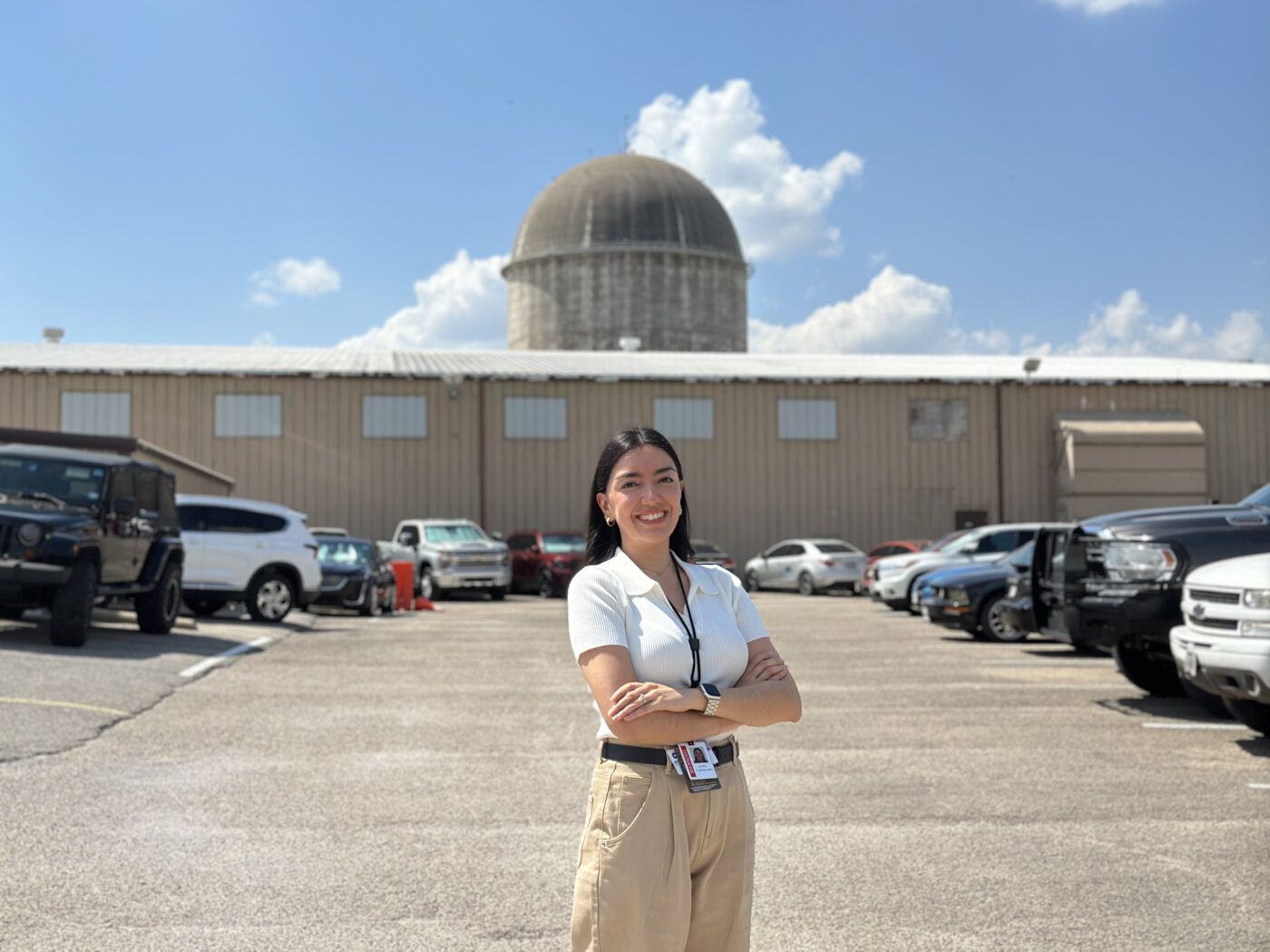
You live and work in the United States, a country that is committed to nuclear energy. However, in Spain we are facing a shutdown schedule. Why are there such different positions on nuclear power?
The status of nuclear energy in the world is a complex and challenging issue, mainly because decisions about its implementation and development are highly politicized. It is frustrating to see a technology with so much potential to contribute to global sustainability being hampered by political rather than technical or scientific considerations.
From a technical perspective, nuclear power is one of the cleanest and most efficient energy sources available. A single nuclear plant consistently and reliably supports all three pillars of sustainable development:
- Social: Plants are often the economic engine of local communities, employing between 800 and 1,200 people per reactor, promoting social development and improving quality of life.
- Economic: Nuclear plants not only generate direct employment, but also foster the creation of indirect jobs in a variety of sectors, from construction to services.
- Environmental: Nuclear power is a clean energy source that produces no greenhouse gas emissions during operation.
Despite these clear and tangible benefits, nuclear power remains the subject of political controversy. This politicization is often based on outdated perceptions and misunderstandings about nuclear waste safety and management. It is critical that we change the public and political discourse on nuclear energy, basing it on data and scientific evidence. We need to promote a more balanced and objective understanding of this technology, highlighting its contributions to sustainable development and climate change mitigation.
“We need to promote a more balanced and objective understanding of nuclear technology”
What is your opinion regarding a future in Spain without nuclear energy in 2035?
A future without nuclear power in Spain in 2035 could represent a significant challenge to the achievement of decarbonization goals and the security of electricity supply. Spain currently operates 5 nuclear plants with a total of 7 reactors, generating approximately 60 TWh annually, representing 20.8% of the country's total electricity production. Nuclear energy provides a stable, low-carbon source that is difficult to replace completely with other renewable technologies in its entirety.
The transition to a completely nuclear-free energy matrix would require a considerable expansion of renewables, a significant improvement in energy storage and an upgrade of the power grid infrastructure. In addition, the loss of this energy source could lead to greater dependence on fossil sources in the short term, which could counteract efforts to reduce carbon emissions.
“I believe it is crucial to re-evaluate the decision to close Spanish nuclear power plants to include nuclear as part of the long-term solution"
I believe it is crucial to re-evaluate the decision to close Spain's nuclear power plants and consider a balanced energy strategy that includes nuclear power as part of the long-term solution. Nuclear power can continue to play a key role in the transition to a more sustainable energy system and in ensuring a reliable electricity supply. I fully support the groups that are working to preserve nuclear power plants and join their efforts to promote an energy strategy that considers all available options to achieve a more sustainable future. Lets save Spain's nuclear power plants!