Juan Pedro Sánchez
President of AMAC"The population lives very much at ease near a nuclear power plant"
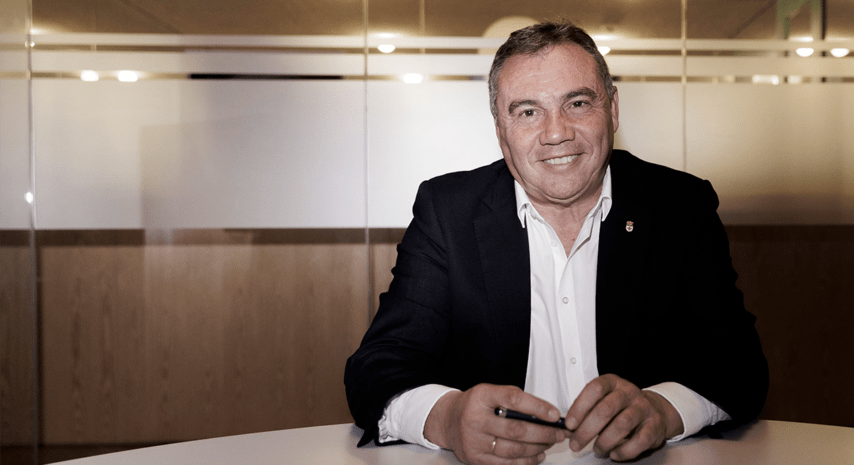
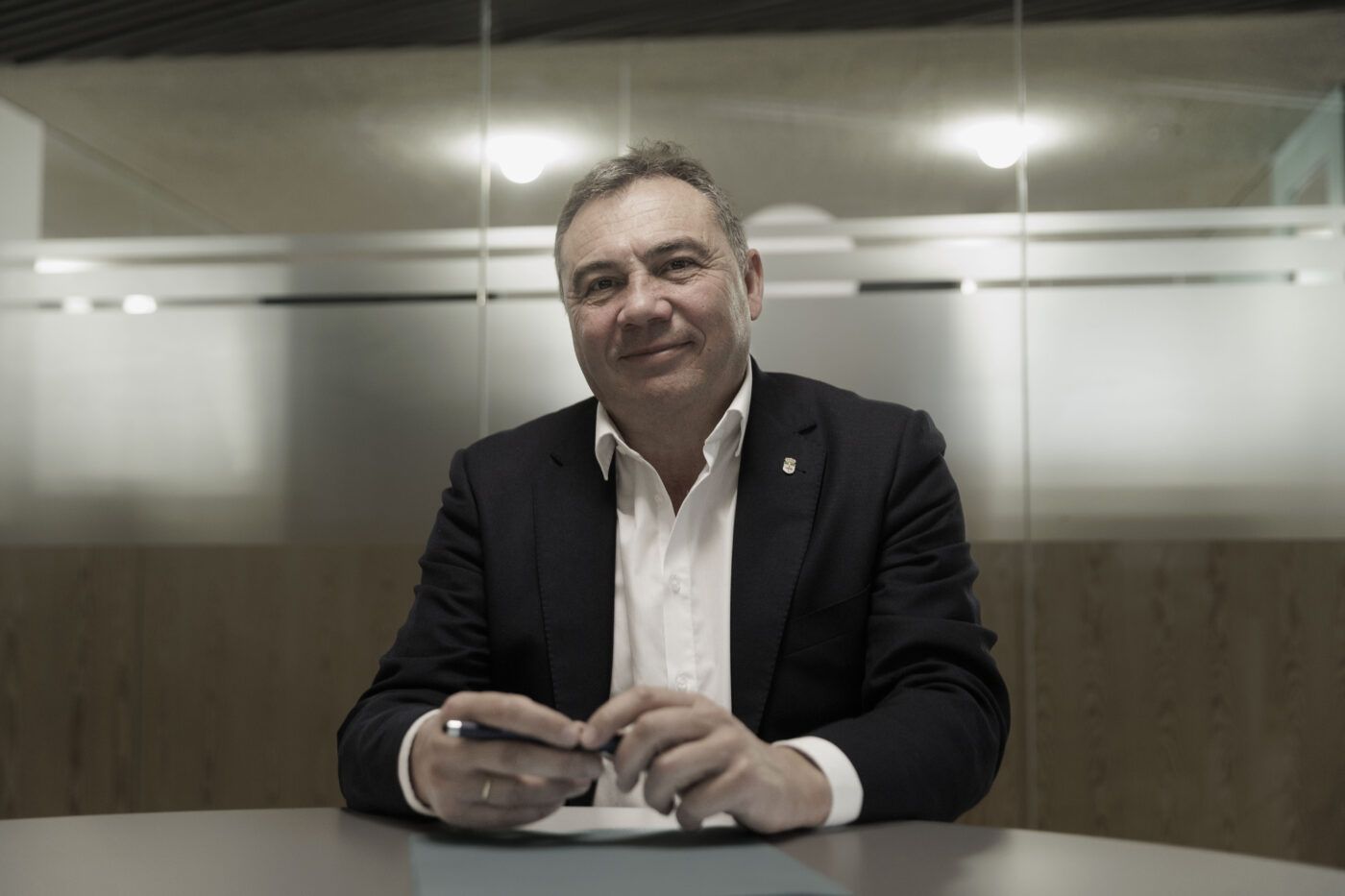
Juan Pedro Sánchez, Mayor of Yebra (in the province of Guadalajara), was re-elected in September 2023 as president of the Association of Municipalities in Areas with Nuclear Power Plants (AMAC). In this interview with Foro Nuclear, he stresses the importance of safety in nuclear facilities and states that the nuclear industry generates tremendous economic development, which also helps to stabilize the population. "In areas where nuclear power plants have been shut down, if you ask the residents what other industry they would like to see established there, they will tell you to build another nuclear power plant", he says.
What is AMAC, and who comprises it?
AMAC is an association comprised of 60 municipalities across Spain, representing the entire political spectrum, and located near nuclear facilities, be it nuclear power plants or waste storage sites such as the centralized facilities for very low, low and intermediate-level waste at El Cabril in the province of Córdoba.
What common goal do you pursue?
We are clear about our common goal, which is to uphold the foundational principles of the association. AMAC was founded in 1988 in Mont Roig del Camp (Tarragona, Catalonia), with three very specific goals: the main one is to ensure that the sites operate with safety guarantees, both for the workers and the general public, and specifically so that the residents of the nearest municipalities can perceive that there is real safety. The second goal is to promote information and transparency regarding the activities carried out at nuclear power plants and waste storage sites. We believe this is vital and essential to gaining the acceptance of the population in the vicinity. Lastly, but not less importantly, we aim to work on developing the economic and social aspects of these areas, encouraging alternatives to the nuclear industry.
We are also part of a European association, of which we were founding members, the Group of European Municipalities with Nuclear Facilities (GMF). In this group, we exchange a great deal of operation information with counterparts from other countries. This has proven to be quite useful and interesting.
What are your concerns regarding the nuclear shutdown planned for the coming years in Spain?
What we want is for technical experts to speak. We are logically concerned about the future of our areas because it is an industry that generates tremendous economic development, which also helps stabilize the population in our generally small municipalities. This is very important to us. However, we do not wish to prioritize any of these concerns over safety, given that we live in our small villages next to the nuclear power plant and everything that matters to us is there: our children, families and homes. For this reason, our most important demand is that the sites be safe.
And who can determine whether they are safe or not? We have one single point of reference, the Spanish Nuclear Safety Council (CSN), which offers us all kind of assurances regarding nuclear safety and radiological protection. As long as these facilities are safe, as long as the experts say it is safe, we see no objective reasons to bring forward the shutdown.
"As long as technical experts say they are safe, we see no reason to bring forward the nuclear shutdown"
Do people live at ease near nuclear power plants?
You live in the province of Guadalajara, precisely where the José Cabrera (Zorita) nuclear power plant, now dismantled, was located. In what condition do these areas end up??
"Nuclear power plants generate a great deal of direct and indirect employment, and a lot of economic activity"
When the sites close, these areas are left severely impacted. When you speak to the communities and say "we are going to offer you alternatives," they do not even wish to discuss this "just transition" because they will not accept it or embrace it. This happened in Zorita and Garoña, and now it is happening in Almaraz, which is next in line to be shut down according to the decommissioning schedule on the table. The disappearance of these sites is very hard on the population, and they do not want to come to terms with it. I completely understand, because it is their livelihood, the company that made it possible for them to live near their homes for many years. I would even go as far as to say that in many cases it is also a sentimental matter.
Does this just transition you mention come with sufficient support?
We are happy with the Institute for a Just Transition and the Ministry for the Ecological Transition and the Demographic Challenge (MITECO), but the aid provided is insufficient. There needs to be a significant combination of support and commitment from all government levels. Ultimately, realistically speaking, any industry will go where conditions are favourable for profitability, and this is normal. You cannot force a company to establish itself in a location if it does not find it attractive. In many regions, we have offered free land to encourage some type of industry to settle, but most of the time it is not worth it for them. It is much more advantageous to set up a factory or industry in well-connected areas close to large populations, to avoid longer commutes and have access to a larger pool of human resources.
What solution do you propose?
Yebra was one of the candidate municipalities to host the Centralized Temporary Storage (ATC) facility, whih has now been ruled out. Is that correct?
"With the ATC ruled out, efforst must now focus on finding a site for the Deep Geological Repository, which is the definitive solution for nuclear waste"
We know that technically there are no problems. The issue is social acceptance, and that is why we need to start working on it right now with sufficient time, prudence, common sense and political willingness. Together we could find the definitive solution for the management of high-level radioactive waste.
Recently you met in Extremadura with the president of the regional government to collaborate on the continuity of Almaraz
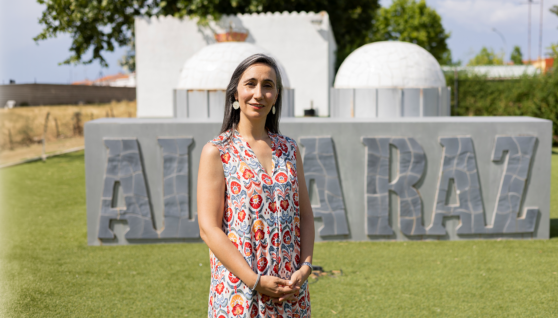
That is correct. We believe that those of us who think the Almaraz nuclear power plant can extend its operation need to come together and work toward this common goal. Currently, this position is shared by the Junta of Extremadura, the provincial councils of Cáceres and Badajoz, AMAC and countless groups who do not understand why the Almaraz nuclear power plant is set to close in 2027. Why should we shut down a site after 40 years when it could operate for 60 or even 80 years with favourable reports from the CSN? If tomorrow the Nuclear Safety Council were to issue a technical report stating that the site is not safe, we would not grant even three or seven years of extension. AMAC would immediately advocate for the closure to happen the very next day. I repeat, safety is a non-negotiable issue for the association with zero compromises.
However, if, as we are currently seeing, Almaraz’s performance indicators suggest it is one of the safest nuclear power plants in the world, I find it neither logical nor reasonable to close it within the planned timeframe. It strikes me as a lack of common sense to shut down Almaraz when it is among the safest internationally.
"It strikes me as a lack of common sense to shut down Almaraz when it is among the safest internationally"
Would you like to add anything?