Luca Oriani
President of APX (New Reactors) at Westinghouse Electric Company“Nuclear is essential for energy security, decarbonization and stable electricity prices”
Luca Oriani is President of APX at Westinghouse Electric Company. In this role, he leads the execution capabilities to deliver new plant projects across the world. He is accountable to oversee these global projects and support supply chain and related engineering and component manufacturing.
In this interview with Foro Nuclear he states that “even though Spain currently maintains a nuclear phase‑out schedule, political discussions evolve. What we see globally is a renewed recognition that nuclear energy is essential for energy security, decarbonization, and stable electricity prices. Our role is to ensure that Spain — and Europe — retain the skills, infrastructure, and trained workforce necessary for whichever decisions governments take in the years ahead.”
Westinghouse is celebrating its 140th anniversary this year. How can so many years of history be summarized in just a few lines?
This is a very exciting year for Westinghouse, marking 140 years of innovation and the people who made it possible. Since George Westinghouse founded the company in the late 19th century, we have been shaping how energy is generated and distributed – from establishing the modern use of alternating‑current electricity to pioneering commercial nuclear energy with the world’s first commercial pressurized water reactor. Today, more than half of the world’s operating nuclear plants are based on Westinghouse technology.
“Today more than half of the world’s operating nuclear power plants are based on Westinghouse technology”
What is the company’s current situation globally and, more specifically, in Spain?
As an industry leader, Westinghouse offers the most diversified portfolio to customers globally, covering the entire nuclear lifecycle. Servicing the operating fleet is at the core of our business – from maintenance and outage services to fuel and system upgrades. But we have seen tremendous interest in new plants, and in our flagship technology, the advanced AP1000 modular reactor.
We are seeing positive momentum in Europe for the AP1000, with projects in Poland and Bulgaria, a technology selection in Ukraine and interest in Slovakia, the Netherlands, the Nordics and Slovenia. We also have strong interest in North America, with the possibility of 10-plus AP1000 units in the U.S. and opportunities in multiple Canadian provinces. And in China, where we already have four AP1000 units in operation, there are 14 more under construction.
"There is positive momentum for the AP1000 in Europe and strong interest in North America. In China there are 14 more under construction"
In Spain, where Westinghouse has worked for six decades and supplied technology to five of the country’s seven reactors, we continue to invest — most recently by opening the AP1000 Training Academy in Madrid (San Sebastián de los Reyes), which will serve as our primary European training hub to prepare operators for the coming fleet.
The world is experiencing a renewed interest in nuclear energy. In your opinion, what factors are driving this global momentum?
There are two trends that stand out, and interestingly enough match closely the geographic areas where we see growth opportunities. First, in North America it is about the need to maintain a balanced energy mix while expanding electricity generation to meet the growing needs of artificial intelligence and hyperscalers. Secondly, there is Central and Eastern Europe, which are being driven strongly by geopolitics. In this region it is about energy independence – the importance of having reliable, carbon-free electricity production while minimizing an over-dependency on a single energy source.
“Europe needs reliable carbon-free electricity while minimizing an over-dependency on a single energy source”
What competitive advantages do Westinghouse’s AP1000 reactor offer in terms of operation, safety, costs and construction schedules?
The AP1000 is a ready now technology, as it is the only construction-ready advanced modular reactor available today. Six AP1000s have been built globally, which means we know exactly how to build them quickly and efficiently with none of the first-of-a-kind challenges. The design is complete, we have a proven licensing strategy that can be leveraged in any geography, and we have a mature global supply chain that is ready to scale to deliver new AP1000s.
In addition, the AP1000 reactor is the most proven Gen III+ reactor in operation globally. The four operating units in China and the two in the U.S. are setting industry records for efficiency, reliability and rapid refueling. This offers our customers superior performance that generates electricity reliably with a minimum of interruptions for maintenance and outages. This outstanding performance is extended through fully passive safety systems capable of maintaining safe shutdown without external power or operator action for at least 72 hours and an I&C platform that optimizes plant operations.
“Six AP1000s have been built globally, which means we know exactly how to build them quickly and efficiently”
The AP1000 is already operating in the United States and China and has new projects underway in these countries as well as in Europe. What would you highlight about its international deployment?
What we are creating with the AP1000 reactor is a global fleet that delivers synergies on a variety of fronts. The first is the cost and time savings you can achieve in procurement and construction efficiencies when you are building multiple units. For example, you can apply the lessons learned from the construction sequencing of multiple other units to speed the process for new units. Having an AP1000 fleet also improves the operation of plants, both through lessons learned and through economies of scale that drive down operational costs.
What role do you think large Generation III+ reactors like the AP1000 will play in the energy transition compared to other emerging technologies?
Nuclear will play a key role in the energy transition by offering abundant zero‑carbon baseload energy that will complement the variability of renewables with around-the-clock generation. Large output, modular Gen III+ plants like the AP1000 are the fastest way to drive decarbonization while enabling deeper penetration of renewables and the further electrification of industry. Smaller reactors will serve as a fast-follow technology that can offer additional flexibility for certain applications.
“Nuclear will play a key role in the energy transition by offering zero-carbon baseload energy with 24/7 generation”
You were in Madrid for the inauguration of the AP1000 simulator and training center, where operators who will run these reactors across Europe will be trained. Why was this location chosen in a country planning a nuclear phase-out?
Madrid combines world‑class nuclear expertise, six decades of Spain-Westinghouse collaboration and an excellent location to host Westinghouse experts from around the globe to share AP1000 learnings with the European nuclear industry. The AP1000 Training Academy is our European training hub to prepare operators for AP1000 units now being built in other countries, while keeping capabilities and jobs in Spain.
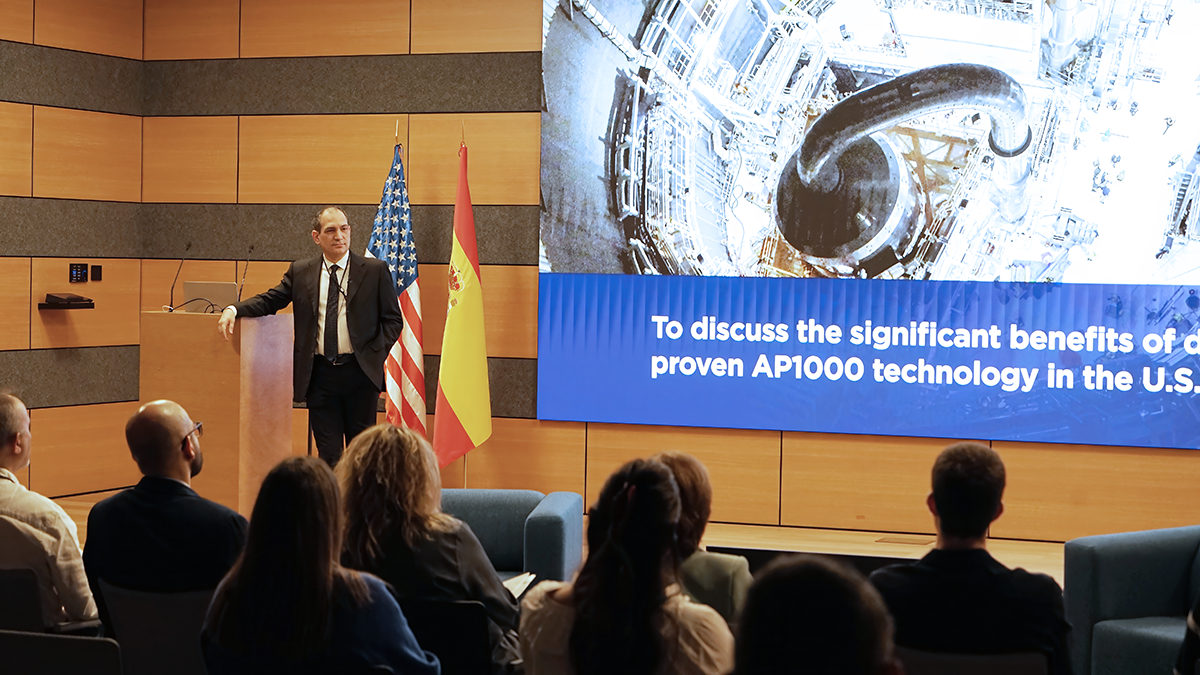
“The AP1000 Training Academy will prepare operators for future AP1000 units while keeping capabilities and jobs in Spain”
What specific training services will you offer your clients from Westinghouse Spain’s headquarters?
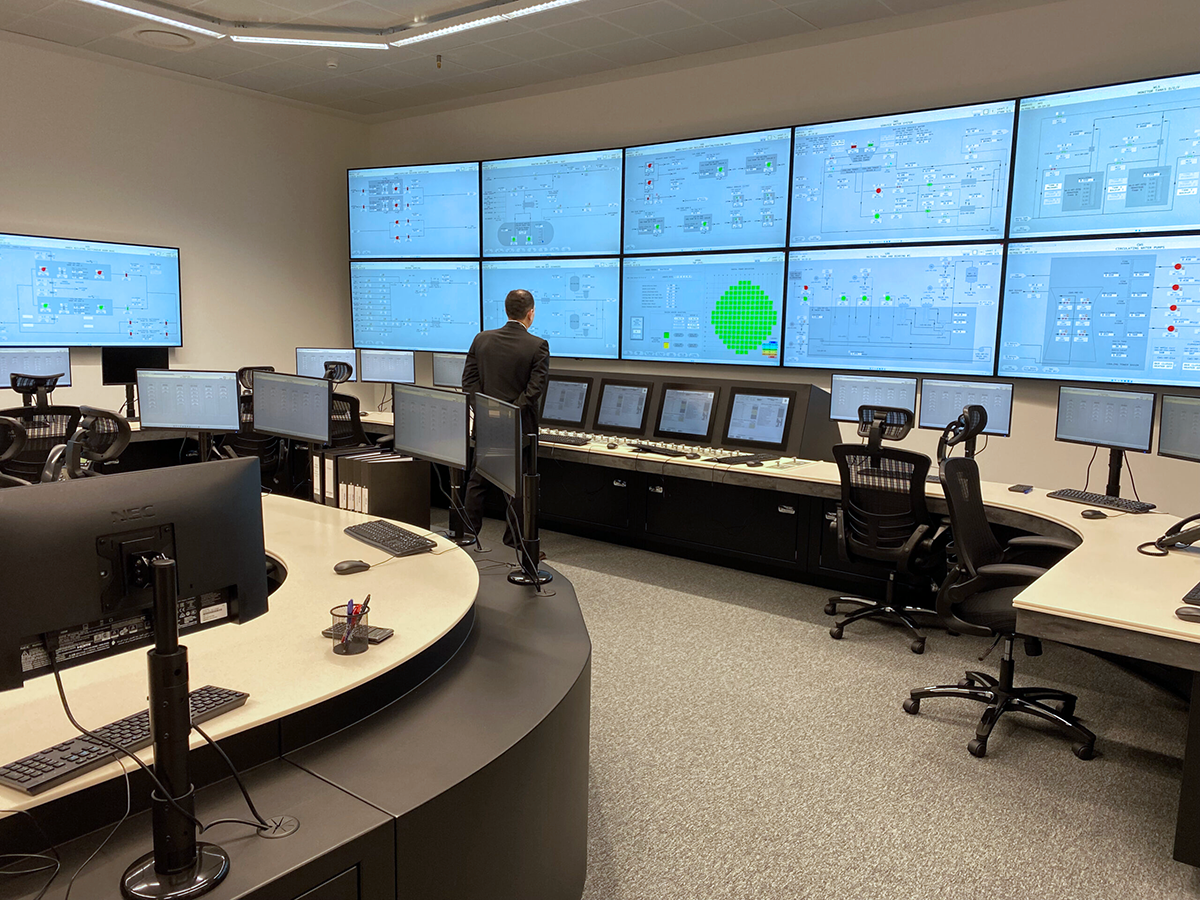
The Academy includes a full‑scope simulator — a one‑to‑one replica of the AP1000 main control room — to train and certify supervisors, reactor operators and turbine operators. Programs cover all plant procedures from startup to normal operations and shutdown, as well as malfunction and event scenarios; instructors monitor performance in real time, and the facility also supports system verification and testing.
In your opinion, will the growth of nuclear energy come mainly from large reactors, from SMRs, or from a combination of both models?
We believe that grid scale electricity will be anchored by compact, advanced modular reactors like the AP1000 fleet. These plants provide the most advanced economics in terms of the amount of material used per MWh produced, and are uniquely positioned to support the massive electricity demand increase associated with modern technology and Artificial Intelligence. SMRs are typically not as efficient economically when compared to grid-scale reactors, but they will provide a critical supporting function for specific applications and, for example, where the local grid and demand may not support a larger output.
Right now, the fastest path to adding new nuclear generation is through large units like the AP1000. The technology is mature and ready for deployment at scale now, offering lowest cost of electricity. In our view, SMRs are more likely to be fast followers in specific applications, which is why we have designed the AP300 based on the proven design of the AP1000. And we also continue to carefully follow the promise of micro-reactors for non-grid applications.
Do you think Spain will eventually opt for extending the life of its nuclear fleet and building new reactors in the future?
The Spanish nuclear fleet has been providing safe, reliable and cost-effective power to the country for decades, with some of the best run plants in the world, and a unique competency in training and development that has been globally recognized. Our expectation is that the excellence of Spain in the nuclear industry will continue to grow. Ultimately the decision to extend the life of nuclear plants is a decision for the Spanish people, plant owners and the Nuclear Safety Council. Spain today maintains a staged shutdown between 2027 and 2035, though there is an active public and parliamentary debate about long‑term energy security and lifetime extensions.
“The Spanish nuclear fleet has been providing safe, reliable and cost-effective power with some of the best run plants in the world”
Our role is to support Spain’s operators and keep skills and supply chain capabilities ready for whichever path is chosen. Our firm conviction is that this critical industrial asset has contributed greatly to Spain’s development and global recognition, and that will continue in the future.