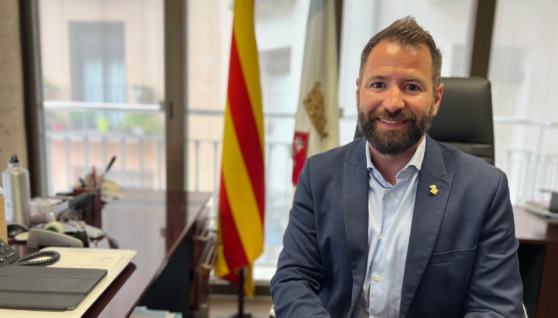
Eduardo Gallego
Professor of Nuclear Engineering at the School of Industrial Engineers at the Polytechnical University of Madrid"I don't think shutting down nuclear power plants to burn gas or carbon is acceptable"
Eduardo Gallego is a Professor of Nuclear Engineering at the School of Industrial Engineerings of the Polytechnical University of Madrid. He started as a doctor in industrial engineering. He teaches subjects related to nuclear safety, radiological protection and radioactive waste management. He also coordinates the Master's Degree Program in Nuclear Science and Technology at the Polytechnical University of Madrid, and leads the research group on advanced nuclear fission technology and science.
In his interview with Foro Nuclear, he indicates that students have shown a growing interest in nuclear power and, due to generational replacement, "there are many opportunities in the nuclear sector." "There is no unemployment in this sector," he says.
You have been a Professor of Energy and Nuclear Engineering for a many years. In these past few years, have you noticed changes to the students' perception of nuclear energy?
I came here as an intern, and I've been working here [at the Madrid School of Industrial Engineers] for nearly forty years. Yes, I have noticed changes. In the nineties and up to the 2000's, we had many students in the nuclear specialty that continued their education with courses, Master's degrees, etcetera. Then for a few years, interest declined and we noticed a very evident reduction of students, especially around 2015-2016.
“With the climate change problem, interest in nuclear energy has grown"
Now, however, we are back on track. Last year we had a record number of students. This is because we did some good promotion of the Master's degree, but also, I believe, because with the problem of climate change there is a greater perception that nuclear energy can help. Adding to this interest is the work of dissemination and communication from the Nuclear Young Generation, Operador Nuclear and other organizations including Foro Nuclear.
What career opportunities are the students finding?
There is no unemployment in the nuclear sector. Right now, all students that complete a Master's degree find jobs in the sector. Some decide to move on to a Doctor's degree, others, even before they finish their Master's Degree, already have internships or part-time contracts in companies. There are many opportunities in the nuclear sector due to generational replacement. Also, our students have the possibility of spending time in research centers abroad and cooperating with the International Atomic Energy Agency o la Nuclear Energy Agency at OCDE. This is thanks to their excellent preparation and because there is specialization in all areas: nuclear data, reactor engineering, thermohydraulics, nuclear safety, environmental impact, waste management, dosimetry, nuclear fusion...
“All the nuclear Master's degree students find jobs, even before they finish”
You lead the research group on advanced nuclear fission systems science and technology. What advances have been achieved in these types of reactors?
I would start by saying that right now, in terms of security, reactors are only slightly similar to how they were in the eighties. There has been much improvement because we have learnt a lot. Safety measures were added, fundamentally to prevent severe accidents, but these have already been integrated into new reactors being designed right now and in construction around the world. In this sense, they present a much better integrated security based on natural physical principles and using passive systems that make it physically impossible to have accidents that release dangerous amounts of radioactivity.
“With the new advances in fission, new reactors offer better performance of nuclear fuel and integrated security based on natural physical principles"
They also offer better performance in the use of fuel. Even fast reactors can allow us to burn and thus reduce the toxicity of spent fuel; for their part, Small Modular Reactors (SMR) present lower costs and faster construction. The industry wants to offer the possibility of serial manufacturing of SMRs. This way, most of the manufacturing is done at the factory and not on site. This shortens timelines and also presents more advantages for financing.
"Small Modular Reactors will offer lower costs and faster manufacturing"
Speaking of SMRs, what else can you tell us?
The power output of SMRs ranges from just a few to around 300 megawatts of electricity. To replace large reactors in a big country it would probably be more advantageous to replace a large one with another large one. However, there might be very interesting niches for SMR. In the U.S., for example, there are already SMR building projects in old carbon plant sites that make use of the electric park section and the location. By doing this you also replace a CO2-polluting technology with a clean technology. Another very promising application can be powering water desalination plants.
For isolated places, there are SMR systems still in the design stage that can practically work autonomously. Right now there are over 80 possible SMR designs on the table, and two operating in Russia and China. The Russian SMR is a floating platform, a large boat. They have taken it to a city in Siberia and it is feeding electricity to the city. The Chinese SMR is also a small high-temperature reactor, but it can be very promising because the high temperature also opens up another potential: using these reactors for industrial purposes such as glass, ceramic or cement manufacturing, producing hydrogen, metallurgy, etcetera.

“In the world there are 80 projects of different SMR designs and two are already operating in China and Russia"
What future does this have? I think it has a great future, but let's not fool ourselves: in the short term, ten years from now, we will only see a few operating SMRs, since the processes of design, licensing, proof of concept, manufacturing, etcetera require many steps in order to move forward safely. Also, in the case of large-scale electricity demand we either build many or combine many in one site, or we will continue to need the large reactors.

"I see a lot of future in SMRs, but for a large-scale electricity demand we will still need large reactors"
Do you think that there is misinformation in society about nuclear technology?
I think there isn't enough information, although there is more than a few years ago. The cultural level in Spain is growing, and with it the cultural level regarding nuclear. There is also a fact that I think has been an influence lately: what has happened in Germany. The decision to shut down nuclear plants hurriedly after the Fukushima accident led them to reopen coal plants and continue emitting CO2. They have made every possible effort to develop renewables, but in twelve years they did not succeed in making them fully replace fossil fuels because it simply cannot be done.
“Germany's hurried decision to shut down its nuclear power plants has led them to open carbon plants and emit more CO2”
What would you say to someone who is concerned about the safety of nuclear power plants?
Safety is certainly a concern for everyone, for those of us who work in the field, and especially for plant operators. If a nuclear power plant suffers a serious accident, the most affected will be the operating company. We must keep this very much in mind. There is no room for complacency or for relaxing safety. From my contact with industry sectors the Nuclear Safety Council, I am seeing a common and very serious effort to make plants work with all the safety assurances. Spanish nuclear power plants are performing at the highest level and even breaking operation and safety rate records. They are among the best in the world.
“Spanish nuclear powr plants are performing at the highest level and even breaking operation and safety rate records"
There are also peer review systems in place through IAEA and the World Association of Nuclear Operators (WANO) where nuclear power plants review each other and identify recommendations for good practices and possible improvements. Each plant has one of these visits from inspector groups every few years, and they must implement these recommendations by the next visit. In summary, this sector always has security in mind.
“The nuclear sector is always prioritizing safety. There is no relaxation in that regard"
Another issue that is also of concern for the population is radioactive waste management. What can you say regarding this?
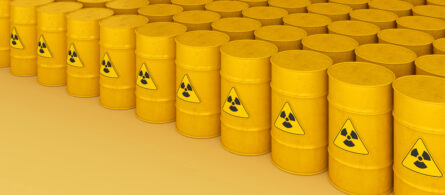
First of all, radioactive waste products have already been cooling off for years. Radioactive disintegration emits energy, subatomic particles, which is manifested in the form of heat. For this reason, they must be cooled. Spent fuel, the main waste product is a solid material that cools off with time. Its toxicity and the energy it emits are reduced as years pass. First it is held inside cooling pools while it is still very active, and then it can be transferred to dry containers that can even be out in the open. The container is secure in the event of earthquakes, potential impacts or attacks.
“We can rest assured regarding radioactive waste management"
In the future, the safest option will be to store them in a place not accessible to human and living beings. If we use an appropriate geological formation 1,000 meters deep and seal them off, we can rest assured that we are not leaving a toxic legacy for our descendants. This is known as a Deep Geological Repository (DGR).
This will take time, obviously. Finland is already building its DGR and Sweden is about to start. France already has a very advanced program as well, and every country with nuclear power plants will need to develop its own. In the case of Spain, there are talks about an operating DGR in the 2070's.
“Radioactive waste is always under surveillance and control”
Radioactive waste is always under surveillance and control. This surveillance and control will only stop when we have a repository that keeps them far enough from the biosphere.
Lastly, how do you see the future of nuclear power in Spain?
I think in the immediate future we should have our nuclear power plants operating with full safety, and of course with all the necessary inspections and maintenance; they should be operating as long as we cannot reduce dependency on fossil fuels.

“Spanish nuclear power plants must continue to operate”
I do not find it acceptable to shut down nuclear power plants and burn gas or fuel instead. The problem is CO2 and climate change, and nuclear power plants are helping us put a stop to it. We cannot shut down sites that are helping us reach our decarbonization goals.