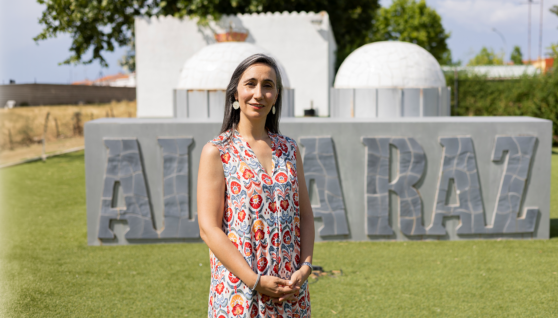
Zion Lights
Science communicator and author"Modern environmentalists should embrace nuclear energy"
Zion Lights is an award-winning British science communicator and environmental campaigner known for her distinctive journey from climate activist to prominent supporter of nuclear energy, and author of the new book Energy is Life: Why Environmentalism Went Nuclear. A former spokesperson for Extinction Rebellion, Zion later became an outspoken advocate for evidence-based policy and the inclusion of nuclear power as a key tool for decarbonisation. She argues that modern environmentalism should embrace nuclear energy and move away from misanthropic roots to focus more on issues that affect people directly, such as energy poverty.
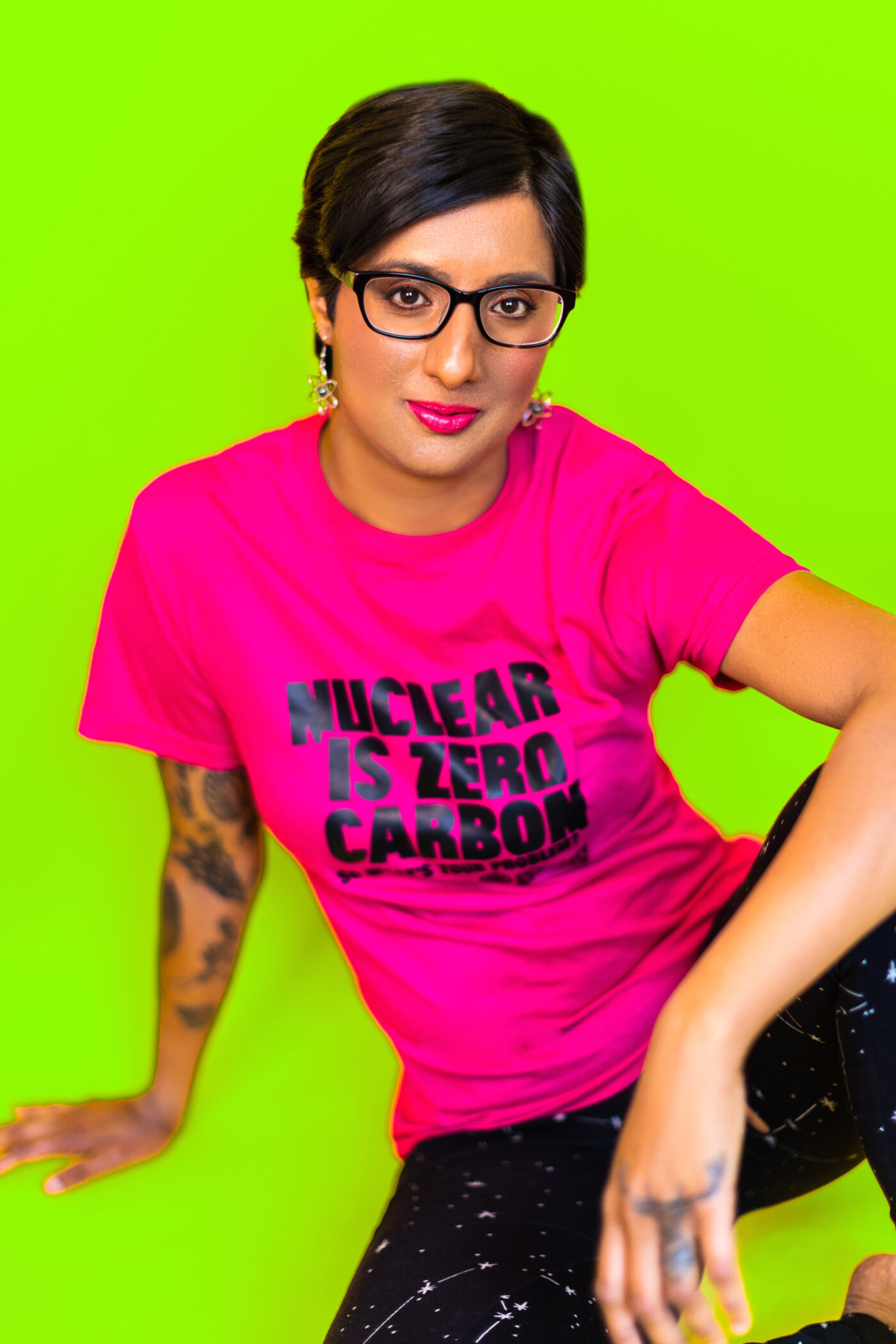
Zion is also the founder of the pro-nuclear environmental group Emergency Reactor and Patron of Humanists UK. She writes and lectures internationally on evidence-based climate action, the use of technology for the public good, and the role of reliable clean energy in addressing challenges including climate change, air pollution, energy security, and energy poverty.
Your career began in environmental activism and science communication. What first sparked your interest in environmental issues and climate change?
My interest in environmental issues began early in life. I’ve cared about the planet for as long as I can remember. I suffered from what would now be described as “eco-anxiety.” I remember learning about global warming – as it was called at the time – at school, and having nightmares that our home would be swept away by floods. The more I learned, the more worried I became, but at that time no one around me cared about the issue.
You were a spokesperson for Extinction Rebellion and deeply involved in climate activism. Looking back, what did that period teach you about the climate movement?
It was a mixed experience, which highlighted both the strengths and the weaknesses of the climate movement.
On the positive side, I experienced how powerful grassroots activism can be. When ordinary people come together in large numbers, it can be incredibly effective. Through Extinction Rebellion, we succeeded in getting climate change into the media and politics in a way that reports and academic papers alone had never managed to achieve. I had been speaking about climate change for years, but before the movement brought it into the mainstream conversation, it often felt like a lonely and sometimes fruitless endeavour. Suddenly, the urgency of climate change was being discussed everywhere - in parliament, in the press, and – most importantly - around kitchen tables.
Extinction Rebellion started off as a positive movement, and for a time it was wonderful to be part of that community. We had banner-painting parties, rallies dressed in fancy dress, and generally won people over with kindness. As the more active members devolved into negativity and infighting (as many social movements inevitably do), I realised this was not the right group of people to be pushing for solutions.
Solving any major issue, including climate change, requires a level-headed approach based on science, honesty about the data, and a willingness to focus on workable solutions, regardless of our own biases.
“Solving any major issue, including climate change, requires a level-headed approach based on science, honesty about the data, and a willingness to focus on workable solutions”
Your change of position on nuclear energy attracted significant attention. Was there a specific moment, article, or piece of evidence that triggered that shift?
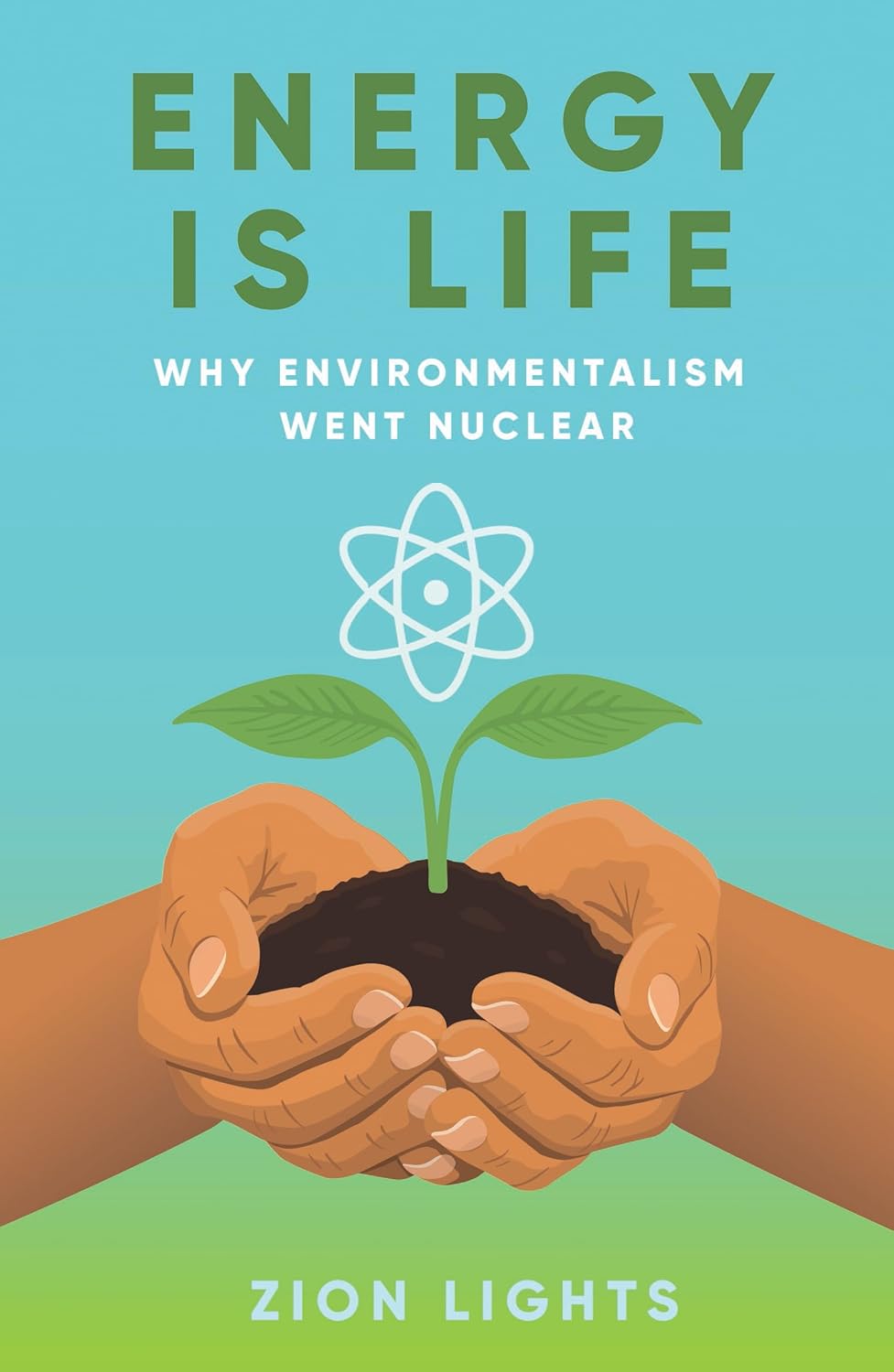
I have written about this in my new book, Energy is Life: Why Environmentalism Went Nuclear. Here is an excerpt:
As the years passed, I asked myself some unsettling questions: It’s been ten years, Zion, and you’re making the same argument that you were making a decade ago… that renewables will save the world. Where are those long-term batteries to back up wind and solar that you were promised? And why are you still advocating to reduce energy consumption when, despite years of campaigning to reduce energy usage, the world is using more energy, not less? The best behavioural scientists in the world haven’t been able to change this. This isn’t about The Man, it’s about human nature, and science… The best will in the world can’t change the laws of physics. Look at Germany… And so on.
I questioned everything, from the basis of all of my beliefs, how they had formed and who had helped to shape them. Above all, I worried that, for over fifteen years, my actions as an environmental activist may actually have done more harm than good to the state of the planet.
It was years later when I recognised that I could not do this any longer, and more, I had kept quiet for too long and, frankly, it had only made me miserable. I didn’t fit in with these groups. Perhaps I didn’t fit anywhere. It was time to challenge unscientific ideology loudly and boldly. It was time to wake up and speak out.
You are now a prominent public communicator about nuclear energy. What strategies do you think work best when engaging sceptical audiences?
Humans are storytelling creatures, and a lot of what I talk about is the need to tell stories that people can relate to. That’s not to say that we should make things up – some of the best stories are true! But by focusing on honesty, clarity, and empathy, we can find common ground, which is needed to build bridges. That’s the first step.
In my view, when people believe myths and misinformation, that is a societal failure, and we have let them down. I believe that, as educators, it is our responsibility to act.
“When people believe myths and misinformation, that is a societal failure, and we have let them down”
If asked, present the science clearly, with minimal jargon, and explain how it fits into practical solutions. Connect with people’s values and show respect for their concerns while grounding the conversation in evidence. This builds trust, which is far more effective than simply telling people they’re wrong.
Answer questions honestly and calmly. Remember that people don’t change their mind in an instant, but - aside from with a few fundamentalist disbelievers - you are likely adding to a cascade of thought processes that may lead to the person changing their mind in the future.
You founded Emergency Reactor to advocate for nuclear power. Can you tell us a bit about this organization?
When I started out in nuclear advocacy in 2020, I realised one of the reasons it had taken me so long to change my mind was because there was a dearth of accurate and fair information about nuclear in the media. I knew from experience that what really changes minds is activism and popularising new ideas using fresh language. So I seized the moment and set up Emergency Reactor.
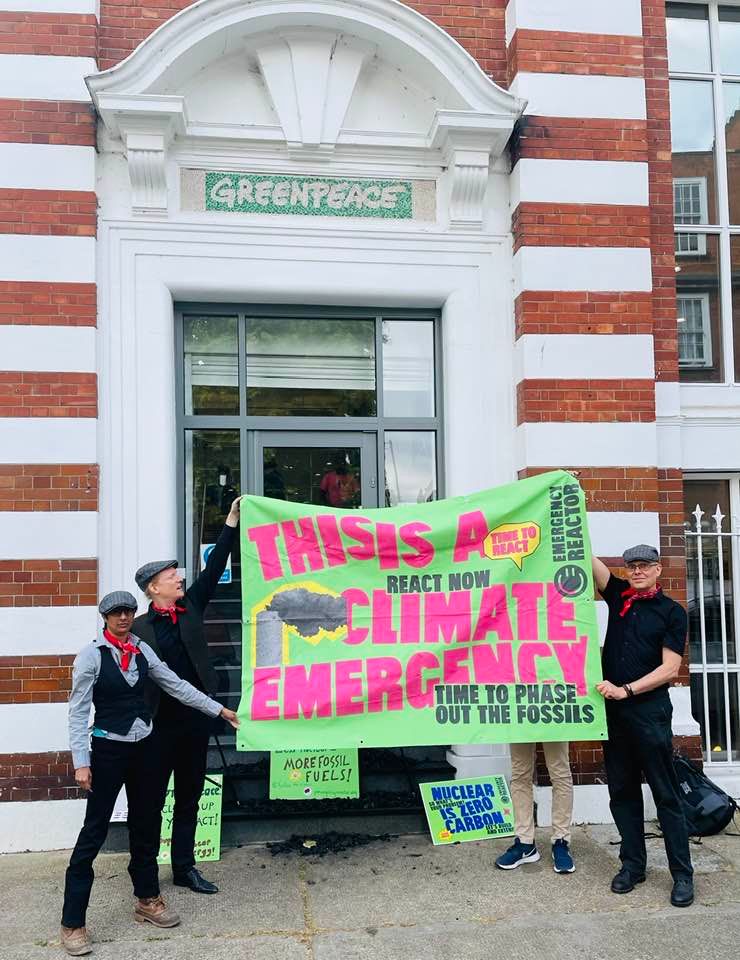
An unlikely alliance of climate activists and nuclear workers, we held public engagement stalls in UK cities where we handed out hundreds of bananas and educational leaflets. We dropped banners across London, encouraged politicians to speak up for nuclear, started petitions and wrote open letters, and even dressed up as chimney sweeps at Greenpeace headquarters in London to protest their protesting of nuclear energy, dumping charcoal on their doorstep to represent coal. At night, we lit up London with messages projected onto government buildings demanding that they build more nuclear power plants - an action that became a global trend and has since been repeated by other advocates in Paris, New York, Berlin, and other cities.
In several interviews you have spoken about the importance of evidence-based environmentalism. What does that concept mean to you in practice?
To me, evidence-based environmentalism means making decisions and advocating for solutions grounded in data, rather than ideology or fear. It’s about being honest about the risks and benefits of different approaches, whether that’s renewable energy, nuclear energy, gene-editing, or other technologies, and weighing them up rationally. In practice, it means being willing to adjust your position as evidence evolves and communicating clearly and respectfully with the public so people can make informed decisions.
“Evidence-based environmentalism means making decisions grounded in data rather than ideology or fear, and being willing to adjust positions as evidence evolves”
Ultimately, it’s about aligning environmental activism with reality, so that our actions actually reduce harm rather than just feel morally satisfying.
How do you respond to critics who argue that renewables alone can meet our future electricity needs?
First, we have to talk about what “renewables” means, because most people have been misled about that. So I acknowledge that “renewables” can play a role, but I also break down that renewables don’t necessarily mean clean, so first we have to talk about that.
“Renewables can play a role, but on their own they cannot reliably meet electricity demand without massive storage or backup systems”
Biomass is basically deforestation with a green label. It’s classed as renewable, but is also highly polluting, and overall bad for the environment. Hydropower is very reliable, but it’s geographically restricted, and has historically also been very deadly, however that’s not to say that we shouldn’t use it. Wind and solar are intermittent, and can play a role, but on their own they can’t reliably meet electricity demand without massive storage or backup systems. Scaling storage to cover periods of low generation is extremely challenging and expensive, and much of that cost is usually passed on to consumers. That’s why I argue for a balanced, evidence-based approach that includes nuclear energy, which provides consistent, low-carbon electricity and complements renewables to ensure a stable, decarbonised grid.
“Nuclear energy provides consistent, low-carbon electricity and complements renewables to ensure a stable, decarbonised grid”

What are the biggest misconceptions about nuclear energy among the general public?
Zion refers us to her article Greenpeace’s 10 favourite myths about nuclear energy, refuted where lists a few misconceptions, mainly the issue of radioactive waste:
“In reality, spent fuel is stored in impenetrable dry storage casks and is well-managed. All forms of energy generation create waste, including solar panels - and the toxic waste they leave behind usually ends up in landfill sites where it leaches dangerous chemicals into the ground, often in developing countries where it is dumped. Wind turbine blades face similar issues. And fossil fuel waste is being stored in the Earth’s atmosphere as you read this, while the related air pollution kills millions of people. Anti-nuclear activists have managed to keep the focus on nuclear waste, when it is comparatively the least harmful”.
“Anti-nuclear activist have managed to keep the focus on nuclear waste, when it is comparatively the least harmful”
Zion also points to the persistence of fears around safety, which she argues have shaped the reputation of nuclear technology despite evidence that it compares favourably with other energy sources:
“Safety is a buzzword that has come to taint the technology even though nuclear is safer than most of the alternatives, even wind power.”
Finally, she suggests that public concern is often amplified by a broader misunderstanding of radiation itself and its role in everyday life:
“Radiation is all around us, in all living things and some non-living besides. Without radiation, life on Earth would not exist in its present form. Nuclear medicine saves millions of lives. The likelihood of being exposed to a large amount of radiation in your lifetime is infinitesimally small, unless it’s in a deliberate attempt to save your life, for example, with radiotherapy. Radiation is not to be feared, but to be understood.”
“Radiation is all around us and is not to be feared, but to be understood”
In your writings, you sometimes speak about “energy abundance.” Why do you think that concept is important in climate discussions?
For a long time, people – myself included - fell for the narrative of “living with less” promoted by environmentalists, which I call “morality scarcity.” It is often the case that those who have only ever experienced abundance, and have never known true scarcity, are the loudest voices preaching poverty, and those with the power to do so, because their voices are heard. This is also true literally: having access to electricity, phones, and other resources that enable communication gives people a voice, while the millions of people who actually live in scarcity are not heard.
Discussing energy abundance is important because, to be frank, the scarcity narrative was a lie. Time and time again, history has shown how technological advances have actually brought down emissions – as countries attain wealth, they naturally choose to improve environmental standards. Abundance, rather than austerity, is what drives real decarbonisation and environmental protections. A clear example of this is France, which cut its carbon emissions dramatically in the 1980s thanks to an abundance of nuclear energy.
“Abundance, rather than austerity, is what drives real decarbonisation and environmental protections”
The idea of energy abundance frames climate solutions around what we can achieve, rather than what we have to give up. When people learn that clean, reliable energy can be plentiful without causing immense harm to the planet – i.e. nuclear energy’s low emissions, small land footprint, and relatively low resource intensity and environmental impact, it becomes easier to imagine and implement the infrastructure needed to address climate challenges. A better world is possible, but only if we reconsider our assumptions and let evidence, rather than emotions, guide our decisions.
You might be familiar with the situation in Spain, where the Government has made plans to shut down all nuclear power plants between 2027 and 2035. How do you define this strategy?
Phasing out all nuclear generation while expecting to decarbonise the grid confuses virtue with viability.
Spain’s plan to shut down its nuclear plants is a mistake, as Germany’s experience under Energiewende has shown. It assumes that intermittent renewables alone can reliably replace baseload power, which is a gamble that physics and history suggest is unlikely to pay off.
What are the reasons behind the current renewed impulse of nuclear power in most of the world?
Better communication, rising fossil fuel prices, geopolitical instability, and the pressing need to cut emissions have all accelerated the move toward nuclear. Hence today, nuclear is increasingly recognised as a practical, necessary, scalable solution for a clean, resilient energy system - which is exactly how it should be, and it’s about time.
Would you like to add anything?
If you want to explore and understand why nuclear energy has historically faced so much opposition, how ideas like morality scarcity and energy poverty shape our thinking, and why nuclear is now seeing a global revival, my new book Energy is Life unpacks all of this in depth. It also examines how to think with precision about technology, recognise some of the cognitive biases that skew our judgments, communicate more effectively using data, and explore evidence-based solutions that can save and improve lives while also protecting the planet.