The new global nuclear momentum
Nuclear energy has once again moved to the centre of global energy strategies as a key element for ensuring security of supply, price stability and the effective decarbonization of power systems. This is one of the main conclusions presented by World Energy Outlook 2025, the annual report from the International Energy Agency (IEA), which points to a profound shift in trend: nuclear power is experiencing a genuine comeback, driven both by growing demand dynamics and by the urgent need to reduce emissions in a context of rapid economic and technological growth.

A turning point
Following the Fukushima accident in March 2011, the global growth of nuclear capacity remained limited compared with other energy sources. However, the International Energy Agency report highlights that projections for the coming decades show a significant increase in installed nuclear capacity. Under the scenario based on current policies, global capacity is expected to rise from around 420 GWe in 2024 to nearly 728 GWe by 2050, representing an increase of at least one third compared with current levels.
This shift is driven by a combination of factors that reinforce the importance of nuclear energy: sustained growth in electricity demand—particularly from new energy-intensive industrial facilities and data centres—and the need to ensure a reliable and sustainable energy mix.
Under the current policy scenario, global nuclear capacity is expected to increase by one third between 2024 and 2050
Nuclear energy, an essential component of the transition
Various studies by leading experts agree that the global energy transition cannot forego sources capable of providing continuous, competitive and carbon-free electricity. With its ability to deliver stable and reliable baseload generation, nuclear energy remains one of the most effective options for meeting these objectives. Nuclear power currently provides around 9% of global electricity and more than 20% of low-carbon electricity, and these numbers could increase in the coming decades if the expected pace of investment and deployment is maintained.
The IEA highlights that more than 40 countries have already included or are expanding the role of nuclear energy in their energy strategies, promoting projects ranging from conventional reactor designs to next-generation technologies that include Small Modular Reactors (SMRs), which can complement power systems with lower upfront investment, greater flexibility and adaptability to emerging electricity markets.
A new cycle of investment and construction
The International Energy Agency’s report shows a significant increase in investment in nuclear energy, rising by more than 50% over the past five years, with annual figures exceeding $70 billion depending on the projected scenario. This investment is destined to conventional plants as well as new reactor designs and sizes, indicating a diversification of technological options and business models within the sector.
In addition, according to the IEA, more than 70 GW of new nuclear capacity is currently under construction—one of the highest levels seen in the past three decades—suggesting that the industry is beginning to turn into reality the potential that many analysts have anticipated for years.
There are over 70 GW of new nuclear capacity currently under construction, one of the highest levels from the past 30 years
The importance of SMRs in the nuclear revival
Small Modular Reactors have emerged as one of the main sources of innovation in the nuclear sector. They are expected to reduce construction times and costs, as well as offer greater operational flexibility compared with large conventional reactors. Although they are still in the early stages of commercial deployment, SMRs are attracting strong interest because they can be more easily integrated into smaller power grids and into markets where electricity demand is growing dynamically.

Small Modular Reactors have emerged as one of the main sources of innovation in nuclear energy, as they reduce construction times and costs
This technological approach speeds up the construction of reactors and opens the door to greater versatility in their applications, ranging from local power supply to industrial uses requiring high-temperature processes, hydrogen production or seawater desalination.
Future scenarios: tripling installed nuclear capacity by 2050
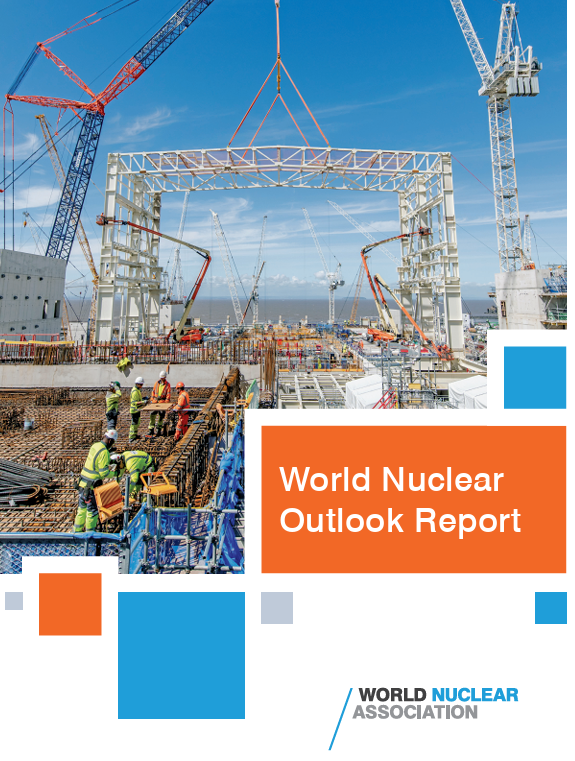
For its part, the World Nuclear Association (WNA) has published the first edition of its World Nuclear Outlook Report, which compiles national government targets for nuclear capacity by 2050 and assesses them alongside plans for lifetime extensions of existing reactors, the completion of those under construction, and the implementation of planned and proposed projects. The WNA concludes that these targets would far exceed the goal of tripling global nuclear capacity by 2050, which was proposed by 25 countries at the United Nations Climate Change Conference (COP28) in Dubai in December 2023 and later joined by eight additional countries at COP29 in Baku in November 2024 and COP30 in Belém in November 2025.
According to the report, global nuclear capacity would increase significantly by 2050 if the continued operation of existing reactors and the deployment of new nuclear power plants meet the targets set by individual governments. When all operating, under-construction, planned, proposed and potential reactors are taken into account, total global capacity could reach 1,446 GWe—well above the 1,200 GWe target established in the Declaration to Triple Nuclear Energy Capacity by 2050.
The report adds that most of the growth throughout 2030 will come from reactors currently under construction, planned projects will drive expansion to 2035 and proposed, potential and government-driven programmes will account for capacity growth after 2035.
It also notes that achieving the projected capacity for 2050 will require a significant increase in annual grid connections, rising from 14.4 GWe in the period 2026–2030 to 22.3 GWe in 2031–2035, 49.2 GWe in 2036–2040, 51.6 GWe in 2041–2045 and 65.3 GWe in 2046–2050. It points out that the latter figures are approximately double the highest historical construction rates recorded in the 1980s.
The WNA concludes that national targets for installed nuclear capacity by 2050 exceed the global goal of tripling current capacity and reflect strong alignment between collective ambitions and global decarbonization needs. Achieving these targets will require an unprecedented pace of construction, the strategic extension of the operating lifetimes of existing reactors, and significant reforms in policies, markets, supply chains and regulation. If countries deliver on their commitments, indicates WNA, nuclear energy will play a central role in ensuring the secure, affordable and low-emission energy needed for a rapidly expanding and increasingly electrified global economy.
The WNA report concludes that national installed capacity targets for 2050 reflect strong alignment between collective ambitions and global decarbonization needs
Retos por delante
Despite the positive momentum, the expansion of nuclear energy is not without challenges. The construction of new plants still faces barriers in some countries, particularly regarding costs and public perception. In addition, ensuring robust supply chains for fuel, components and skilled human capital will be essential to sustain the projected growth.
Furthermore, the integration of emerging technologies such as SMRs will require clear and reliable regulatory frameworks, continued investment in innovation, and pilot projects to validate scalable business models.
Nuclear energy is once again emerging as an essential player in achieving climate goals, ensuring energy security, and providing reliable and affordable electricity
New era
All these reports point to change of paradigm in the perception and role of nuclear energy within the global energy transition. After decades of limited growth, nuclear power is once again emerging as an indispensable player in achieving climate goals, ensuring energy security, and providing reliable and affordable electricity.
This renewed momentum reflects not only a fresh recognition of its technical and environmental strengths but also a response to current demand dynamics and the urgent need to diversify energy sources in a rapidly changing world.
Sources: IEA, WNN, WNA