Belgium's government seeks to reverse the nuclear phase out with a new power expansion plan
Belgium’s new coalition government has been formed after general elections in June 2024, followed by nearly eight months of multi-party negotiations. This new coalition has unveiled a transformative plan to reverse the country’s previous commitment to phase out nuclear energy. The decision comes amid increasing concerns about energy security, climate change, and the need for long-term stability in Belgian energy infrastructure. The government plans to repeal 2003 legislation that mandated a nuclear phaseout in Belgium, enabling the continued operation and expansion of nuclear capacity.

Energy Minister Mathieu Bihet stated that the government aims to double the nation’s nuclear capacity from 4 gigawatts (GW) to 8 GW. This will involve extending the lifespan of existing nuclear reactors and investing in constructing new facilities. The change reflects a growing consensus within the government that nuclear power is essential for meeting future energy demand and reducing dependency on fluctuating fossil fuel prices. Now, the government plans to repeal a 2003 legislation that mandated a nuclear phaseout in Belgium, enabling the continued operation and expansion of nuclear capacity.
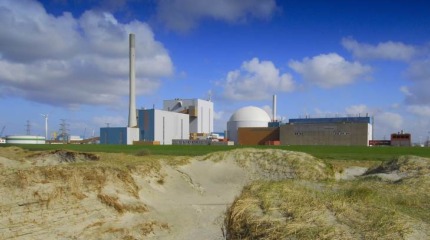
Belgium currently operates a fleet of five reactor units. Under current regulations, Tihange-1, Doel-1 and Doel-2 will remain operational until 2025. The coalition agreement confirmed the lifetime extensions of Doel-4 and Tihange-3 for at least 10 years, until approximately 2035. It will also involve lifting the ban on the construction of new nuclear capacities in the very short term, and taking all necessary measures to extend the life of units that meet safety standards. Specifically with regard to Doel 4 and Tihange 3, the agreement aims to extend their lifetime by at least 10 additional years in addition to the 10 years already agreed.
Belgium’s new coalition government aims to double the country's nuclear capacity to 8 GW. The strategy involves extending reactor lifespans and building new facilities
The coalition’s plan emphasizes a balance between traditional large-scale reactors and emerging technologies such as Small Modular Reactors (SMRs). Although SMRs are gaining international attention due to their lower costs and scalability, Belgium is choosing a diversified strategy that prioritizes a robust mix of reactor types.
Belgium seeks diversified technologies beyond SMRs to ensure future energy security
This policy shift builds on a 2023 agreement between the government and Engie, the operator of Belgium’s Doel and Tihange nuclear plants. Under this agreement, the operational life of the Doel 4 and Tihange 3 reactors was extended until 2036. However, the deal prompted an investigation by the European Commission over potential breaches of competition law. While Engie has shown caution regarding new investments, discussions with other partners, including EDF, are underway to explore further opportunities.
Despite these advancements, the government faces significant hurdles. Regulatory approval from the European Union, project financing, and securing public support remain key challenges. Nuclear energy continues to divide opinion in Belgium, with critics but proponents, however, argue that nuclear power is indispensable for achieving Belgium’s climate targets and ensuring energy security in the face of unpredictable market conditions.
Nuclear power is indispensable for achieving Belgium's climate targets and ensuring energy security
This initiative places Belgium among a growing number of European nations reassessing nuclear power’s role in the clean energy transition. By reversing its phase-out policy, the government is positioning the country to become a leader in sustainable nuclear development, contributing both to economic stability and climate resilience.
Sources: Reuters, NucNet and World Nuclear News