Canada plans to expand nuclear capacity and uranium production
The first-ever national nuclear strategy released by the Canadian government outlines a vision of new nuclear builds, expanded uranium production and a strengthened supply chain as the nation works towards becoming an "energy superpower".
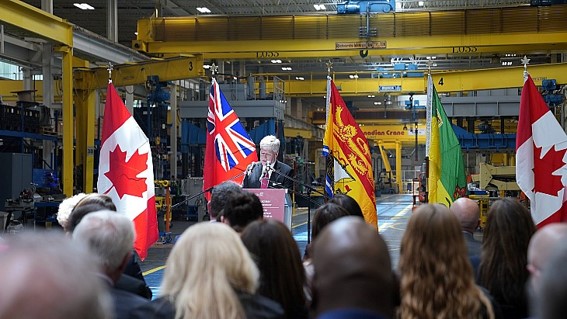
The Nuclear Energy Strategy for Canada, unveiled by Minister of Energy and Natural Resources Tim Hodgson, sets out how Canada intends to strengthen energy affordability, security and sustainability by leveraging its existing strengths, including CANDU reactor technology, world-class uranium deposits, a skilled workforce and supply chain, refurbishment expertise and medical isotopes. With 38 countries endorsing the Declaration to triple nuclear energy capacity by 2050, the strategy says Canada is well-positioned to benefit from the global nuclear renaissance.
Four pillars
Drawing on Canada's fleet of 17 operating CANDU reactors, its position as the world's second-largest uranium producer and its refurbishment experience, the strategy is built around four pillars:
- Enabling new builds
- Becoming a global supplier and exporter
- Expanding uranium production and fuel opportunities while supporting long-term waste management
- Developing new nuclear innovations
Key goals include enabling up to ten new large reactors, with two under construction by 2035 and five more planned or under development by 2040; at least one nuclear deployment outside Ontario by 2035; and demonstrating a Canadian microreactor by 2035.
The government plans to centralise federal support for new nuclear projects and release a financing policy by April 2027 covering instruments such as green bonds, Canada Infrastructure Bank participation and loan guarantees. It also aims to increase Indigenous equity participation and streamline regulation, targeting federal reviews within two years while adopting a fleet-based approach to reduce costs and risks.
Key goals in Canada include enabling up to ten new large reactors and a generation IV microreactor by 2035
Internationally, Canada will pursue a unified "Team Canada" approach, support existing CANDU projects beginning with Romania, target at least four new CANDU markets by 2040, and position its supply chain to participate in global SMR and large light-water reactor projects.
Uranium expansion
Canada also aims to strengthen domestic fuel security by 2032, double uranium exports by 2035, support new mine production and review uranium mining investment policies by 2027.
While Canada currently does not need uranium enrichment because CANDU reactors use unenriched fuel, future SMRs and possible light-water reactors could create modest demand. The strategy favours partnerships with trusted allies while continuing to assess the case for domestic enrichment.
It also supports responsible waste management, including continued progress on the Deep Geological Repository project for used nuclear fuel.
Canada has plans to double uranium exports and support new mine production
Innovation
The strategy aims to strengthen Canada's position as a Tier One nuclear nation by more than doubling private-sector nuclear R&D investment by 2032, establishing leadership in the fusion fuel cycle, demonstrating a Canadian-controlled Generation IV microreactor before 2035, expanding research reactor capacity and increasing Canada's share of the global medical isotope market. It also identifies replacing the National Research Universal reactor as a strategic priority.
Expanding research reactor capacity will increase Canada's share of the global medical isotope market
Powering up
"We are moving at speeds not seen in generations to get big things done and leveraging pre-existing strengths to become a modern energy superpower," Hodgson said. He described the strategy as an industrial strategy, a pillar of energy security and an instrument of foreign policy.
Cameco welcomed the strategy, highlighting Canada's role in supplying secure nuclear fuel and its portfolio of reactor technologies, including the AP1000. Atomic Energy of Canada Ltd said the strategy provides an important national framework to help turn Canada's nuclear opportunities into action, while AtkinsRéalis said it reflects the ambition and vision Canada's nuclear industry deserves and will help advance the country's nuclear advantage at home and abroad.
Source: World Nuclear News