Ignacio Araluce: “Nuclear energy is essential to the present and future of energy in Spain"
The President of Foro Nuclear presents the annual report on the nuclear sector’s results, highlighting the strategic role of Spain’s nuclear power plants and the need to review the nuclear phase-out agenda.
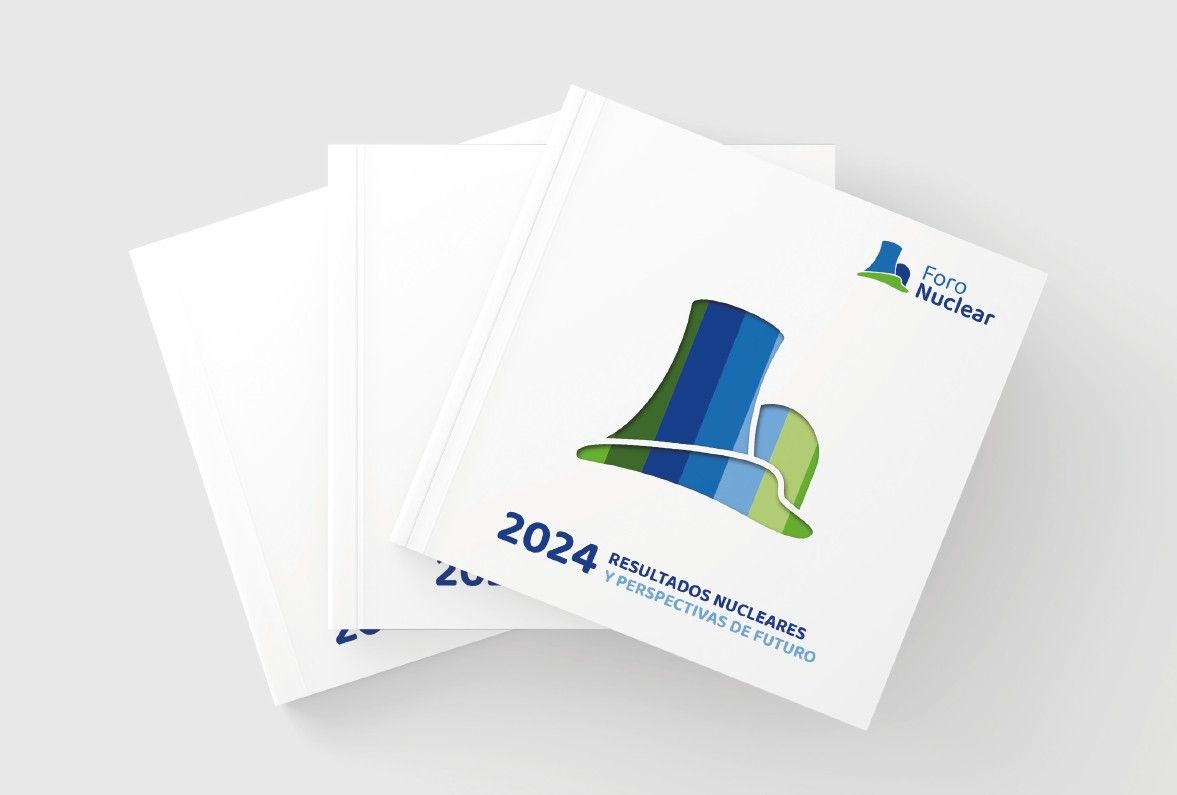
In his foreword to the publication Nuclear results in 2024 and future perspectives, the President of Foro Nuclear, Ignacio Araluce, reviews the nuclear sector’s achievements over the past year and calls for serious reflection on the role that nuclear energy should play in Spain’s energy system.
Araluce highlights that Spain's seven operating reactors have once again ensured a constant, reliable, and CO₂-free electricity supply—factors he considers essential in the current geopolitical and climate context. Despite no changes in installed capacity, nuclear power plants have continued to cover nearly 20% of the electricity consumed in Spain, operating to the highest standards of quality and safety.
Nuclear power plants have continued to cover nearly 20% of the electricity consumed in Spain, operating to the highest standards of quality and safety
“The Spanish nuclear industry keeps its facilities in excellent condition and ready for long-term operation thanks to the commitment of companies, workers, and operators that make significant investments yearly,” Araluce notes. He also points out that long-term operation has become the norm in most countries, and the Spanish industry is actively involved in international new nuclear projects.
In a context where the European Union is pursuing energy independence and decarbonization by 2050, the President of Foro Nuclear warns that all key reports—from the UN’s IPCC to the International Energy Agency—agree that reaching these goals will be difficult without nuclear energy. In this regard, he recalls that 31 countries have committed to tripling their nuclear capacity, and that major global financial players have expressed their economic support for this path.
Without nuclear energy, there will be higher CO₂ emissions, higher electricity prices, and greater dependence on foreign energy sources
Spain, however, stands alone. “It is the only country with operating reactors that has plans to shut them down starting in 2027, with the goal of eliminating nuclear production by 2035,” says Araluce. In his opinion, following a phase-out plan designed in 2019 without adapting it to current circumstances is inconsistent. “It does not seem logical to cling to a nuclear phase-out plan established in 2019, given that the current energy, environmental, and geopolitical situation is radically different from what it was then. The most reasonable course of action would be to revise the closure schedule,” he states, noting that phasing out nuclear would raise electricity costs by 23% for households and small businesses, and by 35% for industrial consumers.
“It does not seem logical to cling to a nuclear phase-out plan established in 2019, given that the current energy, environmental, and geopolitical situation is radically different from what it was then"
Araluce concludes his letter by thanking readers for their interest and the members of Foro Nuclear for their support, while calling for a serious dialogue with the government on the future of the sector: “A future that is also that of our country, our industry, and our citizens."