Westinghouse opens a new AP1000 training center in Madrid
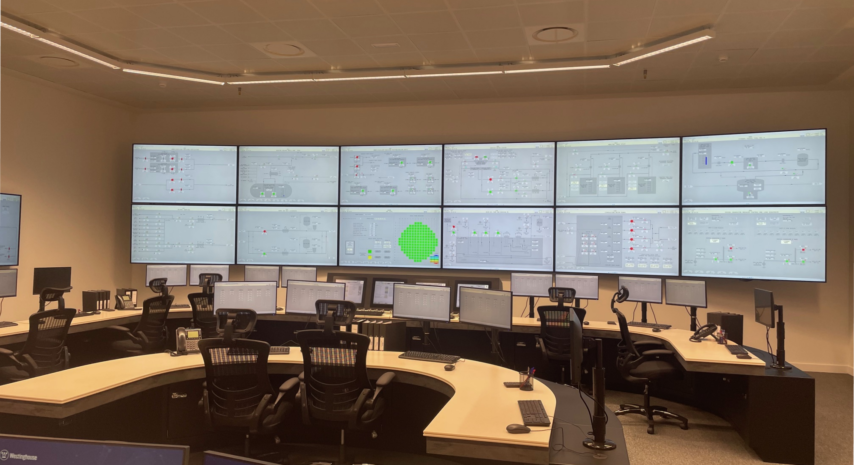
Westinghouse has opened a full-scale replica control room for a new AP1000 Academy in Madrid, designed to train and prepare operators for a planned European nuclear fleet of 14 or more units in the coming years. The simulator recreates the exact environment of an AP1000 control room and facilitates training across all plant procedures from startup to shutdown as well as the simulation of malfunctions, operator certification and system testing.
The new facility will train operators for a planned European fleet of 14 or more units in the coming years
According to Luca Oriani, President of Long Term Operations at Westinghouse, nuclear operator training typically starts around five years before a nuclear power plant enters operation. Since these plants operate continuously, utilities must develop a large pool of highly qualified staff to ensure 24/7 operation. While each future unit will eventually have its own replica control room, the new facility in Madrid is intended to serve as a long-term European training hub.
Westinghouse highlights the global momentum of the AP1000 technology. Four units are operating in China and two in the USA, with 14 more under construction. Contracts have been signed for nine units in Ukraine, three in Poland and two in Bulgaria. The AP1000 design has also been selected for six future units in India.

The Academy's location in Spain, a country without current plans for nuclear build, reflects its role as a regional center. The first trainees, future operators from other European projects, are already on site. Oriani remains optimistic about nuclear power in Spain, noting that "political debates change. Spain is going to build new power."
Xavier Coll, Managing Director of Westinghouse Spain, mentioned the potential for lifetime extensions of Spain's existing reactors, similar to the long-term operation trends seen in the United States, where "plants are being extended to 80 years, with the prospect of future extensions to 100 years."
Westinghouse acknowledges the potential for lifetime extensions of Spain's existing reactors
Looking ahead, the company sees strong demand for new nuclear capacity across Northern, Central and Eastern Europe. Standardization of the AP1000 design across projects worldwide is intended to control costs, according to Oriani. Projections, he added, indicated that the cost per megawatt produced by an AP1000 would be "between half and a third of the previous generation of plants." This design is also intended to be adapt to "an extreme range of conditions" which makes them suitable for any location from deserts to Arctic environments.
The AP1000, a two-loop pressurized water reactor of about 1.2 GWe, features modular construction and passive safety systems capable of maintaining safe conditions for 72 hours without external power.
Sources: World Nuclear News and Westinghouse