Germany's nuclear shutdown mistake: rising prices, increased emissions, and economic recession
In 2002, Germany passed its first law establishing a plan to phase out nuclear energy by 2022. Eight years later, in 2010, Chancellor Angela Merkel’s Christian Democratic government approved an energy transition plan known as Energiewende. Its goal was to replace fossil fuels—which had dominated the country’s electricity mix—with a massive expansion of renewable energy while postponing the nuclear phase-out until 2036. This authorized nuclear power plants to operate for an average of 12 additional years beyond the original schedule.
However, following the 2011 Fukushima accident in Japan, Germany accelerated the nuclear shutdown. Within six months eight reactors ceased operations; the were progressively phased out until the final three were shut down in April 2023.
In 2011 Germany had a nuclear fleet of 17 reactors, generating over 33% of the country’s electricity. Since then, nuclear power has been replaced by coal and imported natural gas, leading to a return to fossil fuels, an increase in greenhouse gas emissions, and greater reliance on foreign energy sources.
Since the nuclear shutdown, Germany has returned to fossil fuels, leading to an increase in greenhouse gas emissions and greater dependence on foreign energy sources
More CO2 emissions
According to an analysis by PricewaterhouseCoopers (PwC), if Germany had kept its nuclear fleet operational, 94% of its power generation in 2024 could have been emission-free, nearly eliminating fossil fuel-based generation.
If Germany had maintained its nuclear fleet, emission-free power generation in 2024 could have been 94%, instead of the current 61%, according to PwC
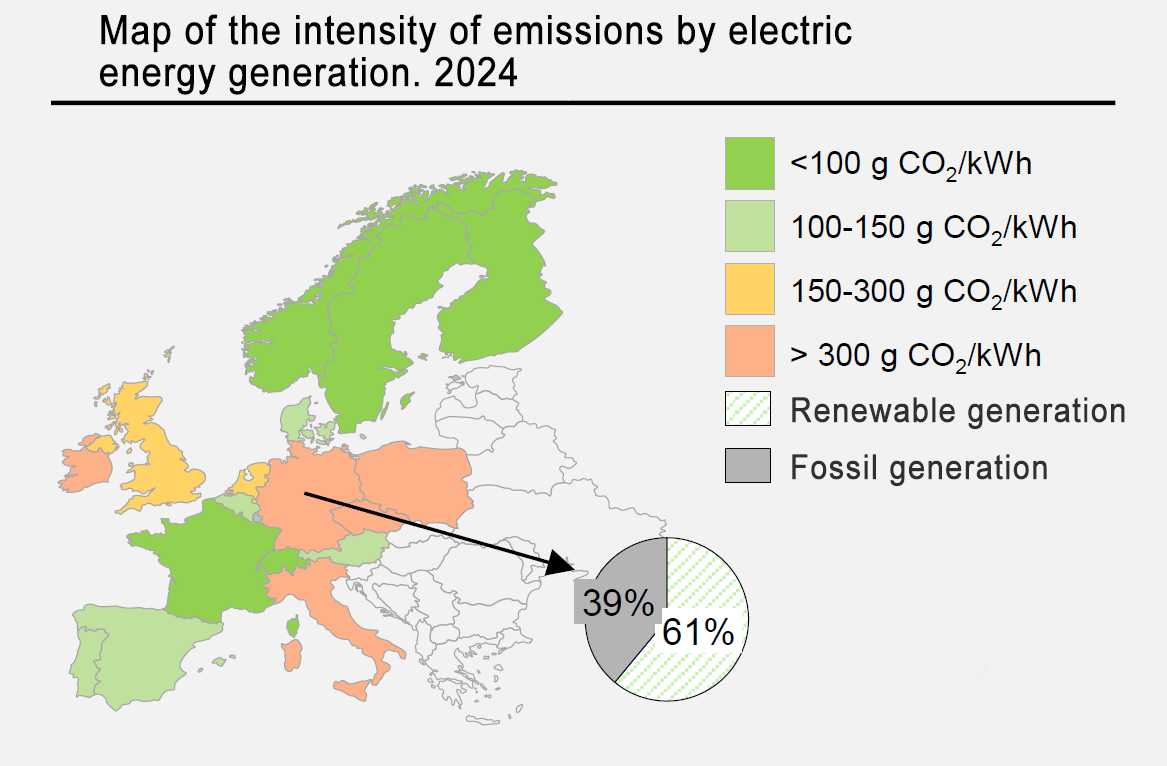
With the nuclear shutdown, the actual share of emission-free electricity generation in 2024 was only 61%, sourced from renewables, while the remaining 39% came from thermal power plants, reflecting a significant dependence on coal and natural gas.
Although Germany’s renewable energy expansion has reduced CO₂ emissions in its electricity mix by 37%, maintaining nuclear power this improvement would have been much more significant, up to 50 additional percentage points - which would add up to an 88% reduction in the intensity of emissions.

As a result, despite having 61% renewable generation, Germany’s electricity-related emissions remain much higher than countries with lower renewable shares but active nuclear fleets, such as France, Belgium, and Spain.
Higher electricity prices: economic recession
PwC’s analysis highlights another consequence of Germany’s nuclear shutdown: higher electricity prices. If nuclear plants had remained operational, the average electricity price in 2024 would have been 23% lower than the actual average. Specifically, if the nuclear fleet from 2010 had remained active, electricity would have been €18/MWh cheaper.

The shutdown of nuclear power plants has led to an increase in electricity prices, which in 2024 would have been 23% lower if the 2010 nuclear fleet had remained operational
The nuclear shutdown has led to a significant increase in electricity costs, contributing to Germany’s economic recession. This situation affects both households and industries, reducing purchasing power and industrial competitiveness.
Furthermore, the Energiewende energy plan approved in 2010 is expected to increase electricity system costs over the next two decades, which consumers will bear through higher electricity bills or increased taxes.
In periods of low renewable energy availability, Germany faces the negative consequences of its nuclear exit, relying on fossil fuels or electricity imports while experiencing prices exceeding €500/MWh.
Will Germany reconsider nuclear energy?
Germany began using nuclear energy in the 1960s, building a fleet that eventually comprised 33 operating reactors. However, the accidents at Three Mile Island (USA) and Chernobyl (Soviet Union) fueled growing public skepticism, leading to a strong anti-nuclear movement in the 1980s and the rise of the Green Party.
After shutting down its last three reactors—Emsland, Isar-2, and Neckarwestheim-2—in April 2023 under Chancellor Olaf Scholz, the energy crisis, marked by high gas and oil prices, increased foreign energy dependence, and CO₂ reduction goals, has reopened the debate on reviving nuclear power.
In December 2024, Chancellor Scholz lost a vote of confidence in the Bundestag the German Parliament. This prompted early general elections on February 23, 2025.
The election winner, Friedrich Merz, leader of the Christian Democratic Union (CDU), included a nuclear energy revival in his campaign that proposed the construction of new small modular reactors (SMRs) and potentially renegotiating the restart of the last three closed reactors. Leaders from the Christian Social Union (CSU) and Free Democratic Party (FDP) also support this initiative.
The debate on the return of nuclear energy in Germany has been reopened following the energy crisis and the change of government, which is proposing the construction of new small modular reactors
Source: PwC
Related links
- Germany and nuclear power: What were the consequences of shutting down the nuclear fleet? (in Spanish)
- Analysis by PwC of the consequences of shutting down the nuclear fleet in Germany
- More nuclear enables faster decarbonisation and greater security of supply
- Nuclear energy could have saved Germany €332 Billion, according to research