The ongoing progress of deep geological repositories
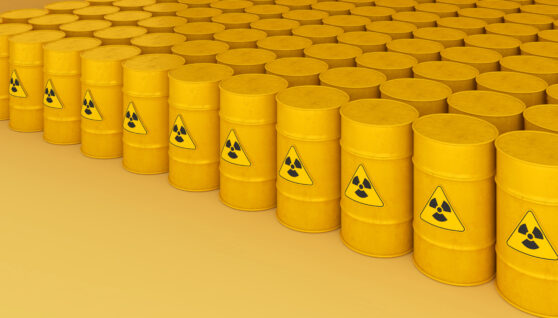
The safe management of radioactive waste is one of the key aspects for the long-term sustainability of nuclear energy. Although for decades spent fuel and other high-level waste have been safely stored on an interim basis in wet pools or in dry storage containers on the surface at nuclear power plant sites, the definitive solution lies in their disposal in deep geological repositories.
Even though Deep Geological Repositories (DGRs) require decades of planning, geological research and regulatory processes, several countries have already reached advanced stages of development, and significant progress continues to be made.
What is a Deep Geological Repository?
A DGR is an underground facility designed for the permanent disposal of high-level radioactive waste or spent nuclear fuel. These facilities consist of networks of galleries and tunnels excavated at great depth (typically 500 to 1,000 metres) in stable geological formations—usually clay, salt, or granite—which act as a natural barrier to the migration of radionuclides, thereby isolating the waste for extremely long periods of time. According to international scientific and regulatory consensus, this solution ensures that no harmful levels of radiation reach the environment.
This solution ensures that no harmful levels of radiation reach the environment
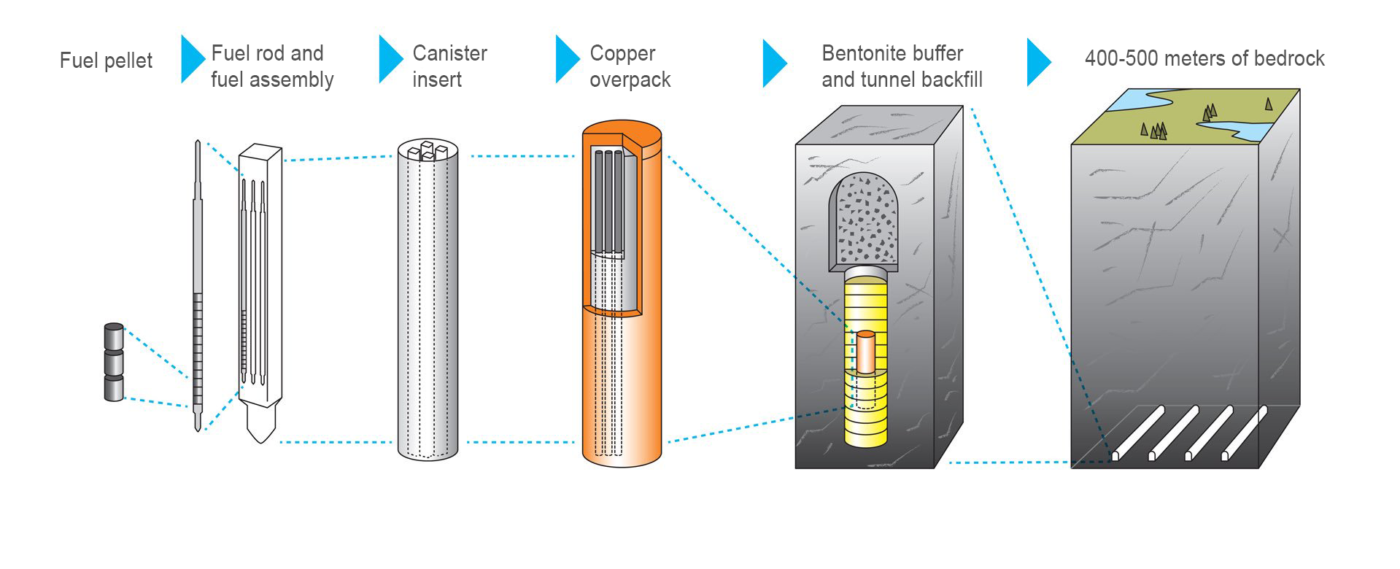
The design and safety of these repositories are based on the so-called multi-barrier system, which combines several levels of protection: the conditioned waste itself, the containers that encapsulate it, sealing materials such as bentonite, and finally the host rock in which the facility is constructed.
For decades, high-level waste has been safely stored in interim facilities while permanent solutions were being developed. Today, there is a broad international consensus that deep geological disposal is the safest and most sustainable option for final disposal.
Finland: the most advanced project
Among the countries working on the construction of this type of facility, Finland leads international development with the Onkalo repository, located in Olkiluoto.

This project, developed by Posiva, is the most advanced in the world and is already in its final licensing phase. The repository is located about 400 metres underground in crystalline bedrock and is designed to accommodate spent fuel from Finland’s nuclear power plants.
The Onkalo repository is the most advanced in the world and is already in its final licensing stage.
Onkalo could become the first facility of its kind to go into operation, which marks a milestone in the long-term management of radioactive waste.
Sweden and France move towards the construction stage
Other European countries are also making remarkable progress.
In January 2022, the Swedish government approved the construction of a repository for spent fuel in the town of Forsmark. The project envisages storing the fuel at a depth of about 500 metres in crystalline bedrock, using copper and cast-iron canisters surrounded by bentonite clay as safety barriers.
When fully developed by the 2080s, the complex will comprise around 60 kilometres of tunnels with the capacity to accommodate more than 6,000 canisters.

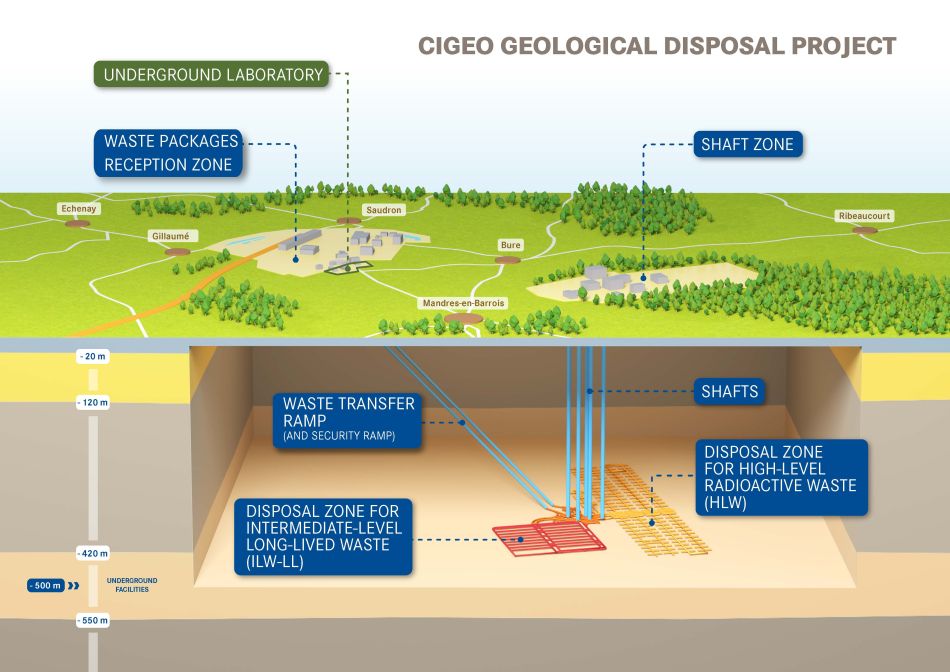
For its part, France is developing the Cigéo Project, a deep geological repository that will be located in the Meuse/Haute-Marne region. The project is currently in the construction licence review phase and plans to include a pilot phase before beginning large-scale operation in the next decade.
Sweden and France are making progress towards bringing their deep geological repositories into operation
Canada, Sweden and United Kingdom continue developing their projects
In Canada, the project led by the Nuclear Waste Management Organization (NWMO) has identified a potential site in the province of Ontario, following a site selection process based on the consent of local communities. The repository would be located 650 to 800 metres underground and is designed to accommodate spent fuel bundles from Canada’s nuclear program.

Switzerland has also recently selected the Nördlich Lägern area for its future repository, while the United Kingdom continues to evaluate potential sites as part of its deep geological disposal programme.

All these projects reflect a common trend: the need for permanent solutions for the high-level waste generated by nuclear programmes.
In this regard, when the European Union included nuclear energy in the taxonomy framework at the end of 2022, it indicated that Member States should establish roadmaps to have deep geological repositories in operation by 2050.
A process that could last several decades
The development of a deep geological repository is one of the most complex engineering projects in existence. From the initial studies to the start of operation, several decades may pass.
This process includes detailed geological investigations, environmental assessments, regulatory procedures, public participation and the design and construction of highly specialized underground infrastructures. For this reason, many countries initiated their programmes more than thirty or forty years ago.
The case of Spain
In Spain, the plans for the long-term management of radioactive waste are set out in the 7th General Radioactive Waste Plan (PGRR).
According to this document, Spain plans to develop a future DGR for the final disposal of spent fuel and high-level radioactive waste, which is expected to enter operation in 2073.
This timeline places the Spanish project several decades behind the most advanced programmes currently under development in other countries and behind the recommendations of the European Union.
Spain plans to develop a DGR that is expected to enter operation in 2073.
Una solución clave para el futuro de la energía nuclear
International experience shows that deep geological repositories are technically feasible and supported by a strong scientific basis. Although their development requires long timelines and broad social and institutional consensus, an increasing number of countries are moving forward with their implementation.
The commissioning of these facilities will mark a decisive step in the final management of radioactive waste and strengthen the long-term sustainability of nuclear energy as a low-carbon source of electricity.
Sources: World Nuclear News, MITECO