Nuclear techniques to enhance nutritional content in plants and protect soil health
Plants provide 80% of the food and 98% of the oxygen we need, making them crucial for planetary and human health. Soil degradation, partly caused by climate change, pollution and unsustainable agricultural practices, threatens to reduce soil fertility. There are nuclear techniques that help to preserve this fertility and keep the nutrients in the plants.
According to the United Nations Food and Agriculture Organization (FAO), one third of the world’s soils are deteriorated, and an additional 50,000 km²—an area the size of Costa Rica—are degraded each year. This has led to reduced vitamins and nutrients in fruits, vegetables, and cereals.
One third of the world's soils are deteriorated, and an additional 50,000 km2 become degraded every year
Nuclear technology in agricultural production
To improve soil quality, scientists use nuclear and isotopic techniques that provide detailed information about soil health. This aids in developing land management policies, adapting to climate change and countering the loss of fertility.
Soils have the capacity to store, transform and recycle the nutrients that we need to survive. Of the 18 nutrients essential for plants, three come from the atmosphere and are absorbed during photosynthesis, while 15 are provided by the soil as long as it is healthy. If plants lack these essential nutrients—including macro and micronutrients—they cannot develop properly, leading to scarcer crop yields and lower nutritional value. Nuclear techniques not only optimize the quantity, quality and nutritional value of crops, but also reduce greenhouse gas emissions.
Nuclear techniques not only optimize the quality of crops and their nutritional value, but also reduce greenhouse effect emissions
Nuclear techniques to improve soil health
By analyzing isotopes from carbon, nitrogen, phosphorus and other elements, scientists are able to calculate the exact amount of fertilizer plants need in a specific environment. When too much fertilizer is used crop yield decreases, and more greenhouse gases are emitted. The work of these experts helps to establish guidelines for farmers regarding fertilizer composition, dosage, and application frequency. Studies like these have improved agricultural production and contributed to fighting hunger and malnutrition globally, especially in regions with food scarcity.

Nuclear techniques have helped to improve agricultural production and contributed to combat hunger and malnutrition around the world
The effects of soil erosion
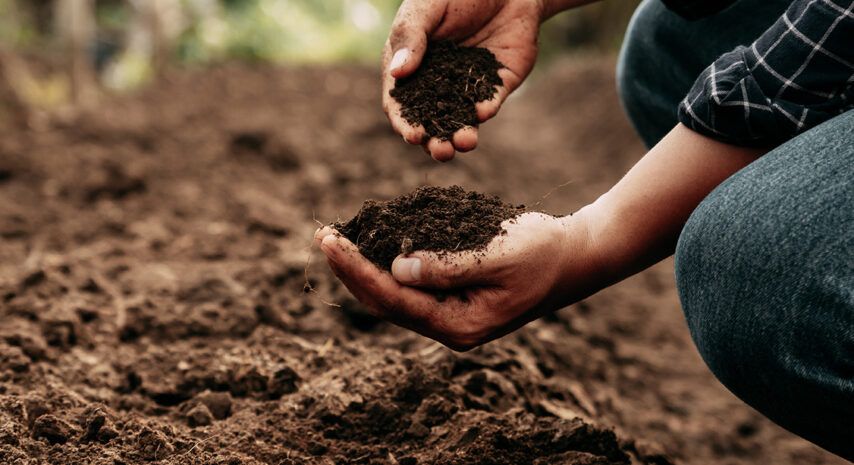
Soil erosion is the loss of the fertile top layer containing most of the nutrients and water necessary for plants. This layer is vital for agriculture, and its degradation reduces land productivity. While erosion is a natural process, it is exacerbated by human activities like deforestation and poor land management. This not only reduces soil quality and chemical composition but also affects water resources, as eroded soil is carried into rivers and lakes impacting aquatic biota and clogging water bodies.
Erosion reduces the quality and chemical composition of soils and impacts water resources

Nuclear techniques to mitigate erosion
There are two techniques to study and mitigate soil erosion: fallout radionuclides (FRN) and compound-specific stable isotope (CSSI) analysis.
FRNs like cesium-137, which are deposited in soil through rainfall, help measure erosion rates since their concentration decreases in eroded areas and increases in areas where soil is deposited. Experts quantify soil redistribution by comparing these concentrations with reference values in non-eroded soils, which makes this analysis more practical and affordable than other methods.
CSSI helps trace erosion sources and soil movement through the "signature" of stable isotopes like carbon-13. Each type of plant has a specific signature for this isotope, which is transferred to the soil as plant tissue decomposes; this helps identify sediment origins across large areas.
The data from these analyses support the development of policies and soil conservation practices, such as contour cropping, terracing, and other sustainable management techniques.
The FAO/IAEA Joint Centre
For six decades, the Joint FAO/IAEA Centre of Nuclear Techniques in Food and Agriculture, formed by the International Atomic Energy Agency (IAEA) and the FAO, has worked to help countries apply nuclear technologies in agriculture.
For instance, in Laos they increased rice yields by 60% through improved soil and nutrient management. In Kenya they contributed to better water and nutrient management, enhancing soil resilience. In Costa Rica the IAEA is currently collaborating to reduce greenhouse gas emissions and improve rice crops through more precise fertilizer use.
Sources: IAEA and United Nations